
From Soil to Sustainability: Agribusinesses in North Macedonia Go Green
North Macedonia’s agribusiness sector is turning green, driven by innovation, EU-aligned reforms, and private investment. Through the Swiss IME program, farmers and producers are adopting sustainable technologies, eco-friendly practices, and international certifications like Global GAP and Bio Suisse. Legal reforms and targeted support further enable this shift. While challenges remain, a resilient, competitive, and climate-smart future for agriculture is already taking root across the country.
AFS Newsletter - News by
Swiss Increasing Market Employability Program - IME
The Palladium Group
ContactIME@thepalladiumgroup.com
North Macedonia is a country in the Western Balkans whose agribusiness sector is a big economic driver of innovation, the third-largest economic sector after services and industry. Contributing 12–15% of the country’s GDP, the sector is now undergoing a green transformation. This is part of the country’s efforts for European integration and the reform process.
Very often, farmers and producers face unpredictable weather that disrupts production, rely on intensive farming methods that degrade soil, and compete for scarce water resources. They fight pests and diseases that threaten yields or deal with unpredictable prices and demand, making it hard to stay profitable. Limited access to modern technology often hinders efficiency.
Growing global emphasis on environmental sustainability is pushing agribusinesses to innovate and align operations with ecological principles. A combination of private sector innovation, adherence to international standards, and supportive legal frameworks can drive the transition to ecological practices. By fostering collaboration across these domains, the sector is becoming more resilient, competitive, and environmentally responsible.
Private Sector Engagement in Ecological Transformation
Through the Swiss Increasing Market Employability Program (IME), implemented by the Palladium Group, only private companies that invest in sustainable practices for their business activities are eligible for co-funding and technical assistance to strengthen their market competitiveness.
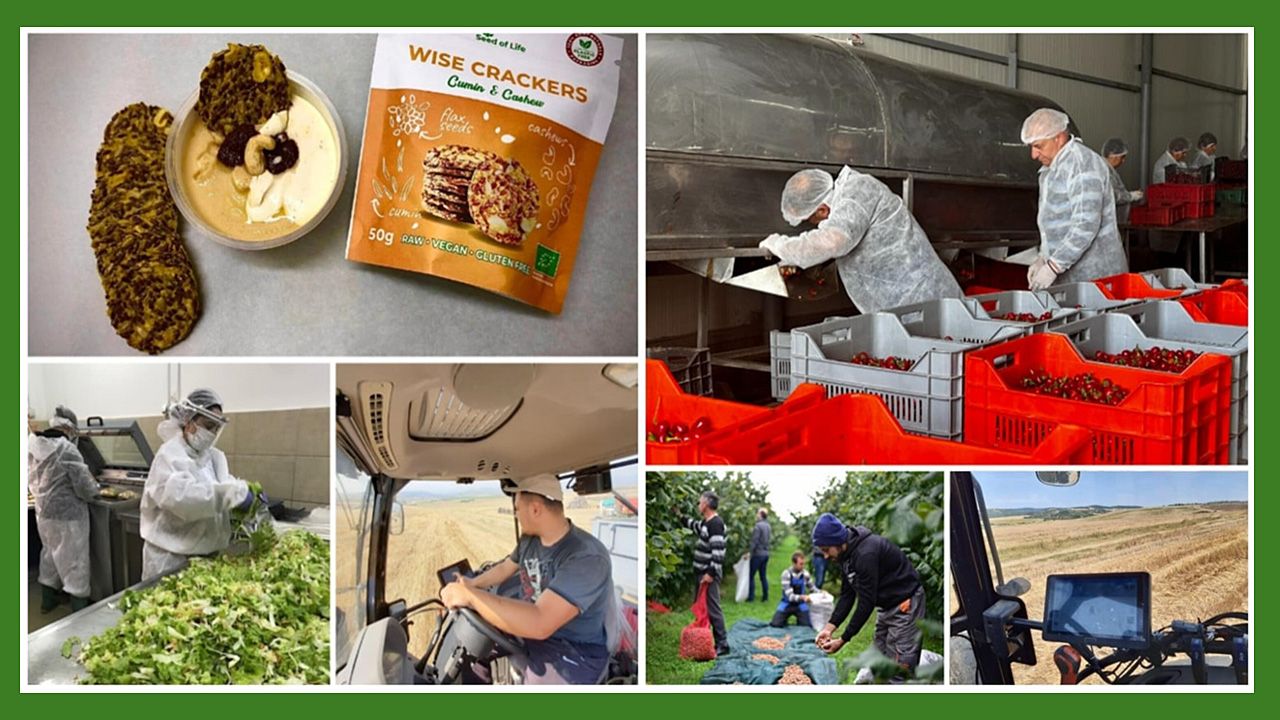
This Private Sector Engagement (PSE) modality creates a wide range of economic, social, and environmental opportunities for businesses. Some producers are introducing eco-friendly packaging to replace single-use plastics with reusable or compostable materials, while others invest in photovoltaics to save energy, and some of them engage in efficient waste disposal.
Moreover, digitalization in this context improves resource efficiency by enabling smarter use of resources, thus reducing waste, and enhancing overall productivity. The adoption of GPS-guided machinery, automated irrigation systems, and mobile applications is gradually increasing and enabling more efficient use of water, fertilizers, and pesticides, suitable for all crops. Small-scale farmers are starting with more affordable and simple solutions, while larger, export-oriented agribusinesses adopt more advanced technologies.
This means that with technology farmers and producers optimize yields while minimizing environmental harm, and data-driven decision making that enhances agribusiness management. Innovations in logistics and food processing are extending product shelf life and reducing waste, thus contributing to more efficient supply chains and reducing food loss. The use of more sustainable practices not only enhances brand value and builds consumer trust but also aligns with the growing global demand for sustainable goods.
Strengthening Private Sector through International Standards and Certification
International standards such as Global GAP, GRASP, and organic certifications are essential tools for ensuring that agribusinesses meet environmental, social, and food safety benchmarks. These standards not only guide best practices but also open access to global markets where sustainability is increasingly a prerequisite. Businesses are increasingly seeking certification under recognized organic standards, such as those aligned with EU regulations.
Certification bodies play a key role in knowledge transfer by engaging experienced foreign consultants to strengthen advisory services - both at the level of advisors, who guide and support farmers, and at the level of farmers, who adopt and apply sustainable practices on the ground.
To date, IME has supported the certification of numerous companies and farmers in organic production under national, EU, and international standards such as Bio Suisse. In addition, several companies have completed certification under Global GAP and GRASP, further aligning their practices with international market requirements. For farmers, the benefits are seen in better access to premium markets, higher product value, and greater trust from buyers.
North Macedonia continuously supports organic farming, certification and inspection systems. Local public and private inspection services are already in place. Farmers usually pay for the certification, but government programs help cover part of the cost. Cooperatives play an important role by helping farmers get certified more easily, offering technical support, and connecting them with markets.
Legal and Institutional Support for Organic Agriculture
A supportive legal environment is also crucial for scaling ecological practices in agribusiness. To harmonize with EU regulations, a new Law on Organic Agriculture was drafted in North Macedonia, which is currently in the final stage of adoption. It is grounded in the everyday practices and challenges of organic producers in the country. The law aligning national standards with EU Regulation 848/2018, will help agribusinesses by enhancing market access, building consumer trust, and strengthening export readiness through full harmonization with EU organic requirements.
To conclude, by carefully combining private sector innovation, adherence to international standards, and supportive legal frameworks, the Swiss Increasing Market Employability Program - IME contributes to a strengthened foundation for sustainable farming practices and sustainable agribusiness growth, marked by trained advisors, farmers, and companies successfully implementing Global GAP, GRASP, EU and Bio Suisse standards. Institutional capacities are also reinforced, enabling smoother facilitation of processes and a more effective green transition. These outcomes collectively contribute to a more resilient agribusiness sector, referring to the ability to adapt and withstand the impacts of climate change, such as extreme weather, shifting growing seasons, and water scarcity.
As for the overall state of agriculture and agribusiness in North Macedonia. It is fair to say the sector is somewhere in between - not at the beginning, but not yet fully transformed. There has been a good start, with progress in certification, technology adoption, and market access. Systemic challenges such as limited access to finance, fragmented land ownership, and the need for stronger value chain coordination remain.
To conclude, the Swiss Increasing Market Employability Program - IME is assisting the agribusiness sector growth by supporting the entire value chain - empowering local leaders who are eager to learn, work, and invest in new technologies and innovations, whether for their farms, businesses, or the broader supply chain. These efforts demonstrate that meaningful progress is not only possible, but already underway.