
Growing hope: transforming lives in Uganda
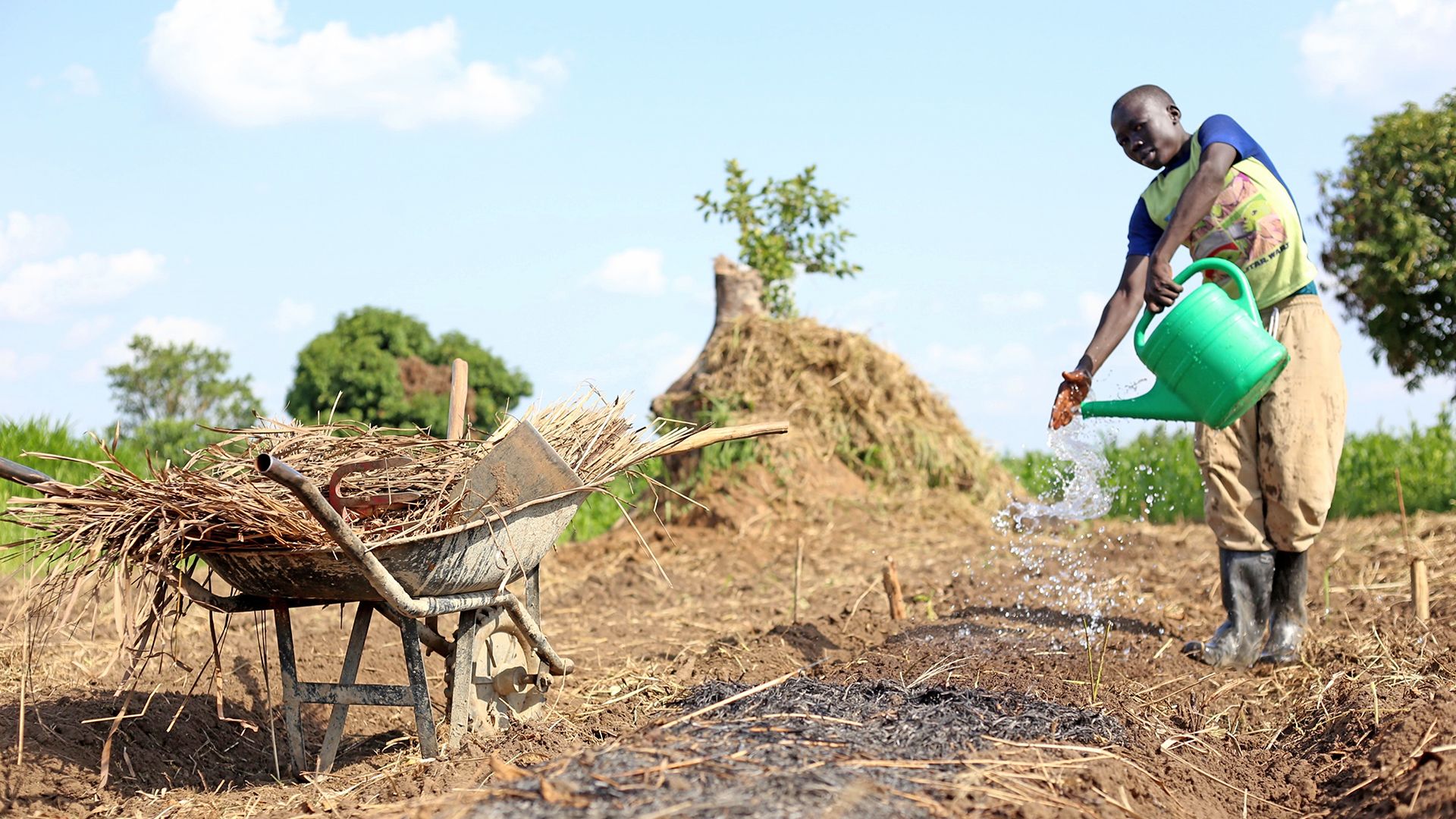
In the Gulu district of northern Uganda, an innovative project is using agricultural training to help street-connected youth rebuild their lives. The «Dongo Anyimi» ("Grow Your Future") project, run by Hashtag Gulu Initiative, combines agricultural skills development and intensive family mediation to help vulnerable young people reconnect with their communities. The project also strengthens local climate resilience while building financial sustainability for long-term impact.
AFS Newsletter - Member Article by
The streets of Gulu, northern Uganda's largest city, are home to over 1’000 young people, many bearing the deep scars of the region's troubled past. These street-connected children and youth (SCCY) face daily stigma and survival challenges, often rejected by both their families and society. The legacy of the 1987-2005 civil war still haunts this region, where many young people lost their parents to the conflict or were themselves forced to serve as child soldiers. Today, with a poverty rate above 45% - the highest in Uganda - the northern region's youth face particularly daunting obstacles in building stable lives.
«Most of these young people didn't choose the streets – circumstances forced them there,» explains Michael Ojok, Director of Hashtag Gulu Initiative. «Many are orphans from the civil war period, others fled domestic violence or extreme poverty. What they all share is a deep vulnerability and a lack of opportunities to change their situation. They are often viewed with suspicion by the community and face accusations for various problems in the city. This stigma makes it even harder for them to find legitimate work or support.»
However, a pioneering project is showing how agricultural training can become a powerful tool for transformation. The «Dongo Anyimi» project, which means «Grow Your Future» in the local Acholi language, is implemented by the Hashtag Gulu Initiative in partnership with Unité member Eirene Suisse . The project offers comprehensive four-month residential agricultural training programs at an educational farm in Paicho, about 28 kilometres from Gulu city.
«We don't just teach farming skills,» Ojok emphasizes. «We're building bridges back to families and communities. This requires patience, intensive mediation work that starts even before the training begins.» The project’s team conducts extensive family tracing and mediation, working to understand the root causes that led young people to the streets and addressing concerns on both sides. «Sometimes families are hesitant to accept their children back, fearing they haven't changed. Sometimes the youth themselves are afraid to return. We have to carefully rebuild trust, which can take months of dialogue and small steps forward.»
The process begins with careful beneficiary selection and family tracing, often starting two months before the training begins. «We spend significant time visiting families, understanding their concerns, and preparing both sides for the journey ahead,» Ojok explains. «Our community promoters play a crucial role in this process, helping to change negative perceptions and build support networks for the youth's eventual return.»
The agricultural training itself is carefully designed to maximize chances of successful reintegration. Participants learn practical skills in poultry keeping, pig rearing, and horticulture, along with agribusiness management basics. The curriculum is formally recognized by Uganda's Directorate of Industrial Training, ensuring graduates receive nationally recognized certificates. «When a young person returns home with valuable agricultural knowledge and an official certificate, it changes how the community sees them,» notes Ojok. «They're no longer just ‹street youth› – they're skilled farmers who can contribute to their families and community.»
The project also takes an innovative approach to community integration. Local farmers receive seeds, agricultural training, and access to services like a grain mill and a clean water source established by the project. The training farm serves as a community resource, providing employment opportunities and demonstrating sustainable farming techniques. «This creates a win-win situation,» Ojok explains. «The community benefits directly from having the training center here, which makes them more welcoming to our youth trainees. Meanwhile, our trainees get opportunities to practice their skills by helping local farmers, and building positive relationships.»
Climate resilience is woven throughout the training program, a crucial focus for northern Uganda where increasingly erratic rainfall patterns and prolonged droughts pose serious threats to agricultural livelihoods. The region has experienced significant climate-related challenges in recent years, with farmers struggling to adapt to unpredictable growing seasons and crop failures.
In response, the youth learn sustainable farming techniques and climate-smart agriculture practices, which they then share with community farmers. «In an era of increasing climate uncertainty, this knowledge-sharing builds resilience for everyone,» says Ojok. «Our trainees become ambassadors for sustainable agriculture in their communities, helping spread adaptive farming practices that can withstand changing weather patterns. This is particularly important in our region, where most families depend entirely on rain-fed agriculture for their survival.»
Importantly, the project also generates income through farm product sales – over 13 million Ugandan Shillings in the first year alone. This includes sales of live pigs, pork, chicken, vegetables, and other farm products. «This income helps us build financial reserves and reduce dependency on external funding,» Ojok notes. «It's crucial for our long-term sustainability as a local organization. Many development projects struggle when funding ends, but our model allows us to generate resources to continue supporting youth even between funding cycles.»
Early results are promising. In the first year, 65 young people (27 females and 38 males) have participated in the training program. Many have already begun reconnecting with their families through carefully facilitated visits and joint activities. The project has also constructed dormitories, training facilities, and water infrastructure that will serve future cohorts of trainees. «What gives me hope,» Ojok reflects, «is seeing a young person who once survived by begging now confidently explaining proper pig care techniques to their parent or teaching climate-smart farming to neighbours. That's real transformation.»
This project, supported by Eirene Suisse and the Geneva Federation for Cooperation (FGC), demonstrates how agricultural training can be much more than just skills development. When combined with intensive social support and community engagement, it becomes a powerful tool for helping vulnerable young people rebuild their lives and dignity, while simultaneously strengthening local food systems and community resilience.
Related resources: