
Building Agroecological Territories in Chad
In Chad, the CACOPA approach (Cadre de Concertation pour la Promotion des Pratiques Agroécologiques), supported by SWISSAID, is demonstrating that agroecology can be a driver of territorial transformation. By fostering communities’ involvement, this approach is building resilient, thriving agroecological territories.
AFS Newsletter - Article by

SWISSAID Program Officer for Climate Change Adaptation and Agroecology – Chad
j.clement@swissaidtchad.org l LinkedIn

SWISSAID Agroecology Thematic Advisor – Switzerland
f.ajena@swissaid.ch l LinkedIn
Chad, a landlocked nation in the Sahel, faces significant agricultural challenges. Its predominantly rural population depends on farming, yet contends with a harsh climate, further stressed by climate change. Erratic rainfall, persistent droughts, and depleted soils are commonplace. The promises of input-heavy conventional agriculture have largely failed to materialize, providing neither lasting resilience to climatic shocks nor ensuring the long-term profitability and sustainability of farms. The CACOPA approach (Cadre de Concertation pour la Promotion des Pratiques Agroécologiques), promoted by SWISSAID, is encouraging a more sustainable alternative, leveraging agroecology to create systemic change in Chadian agriculture and rural communities.
Initiated in 2016, the CACOPA approach builds upon a decade of SWISSAID’s agroecological work in Chad, collaborating with local organizations and communities. This approach prioritizes restoring soil health, enhancing climate resilience, and boosting farmer incomes by establishing a farmer-centric governance model for agroecological practices.
From farm to territory: the CACOPA approach
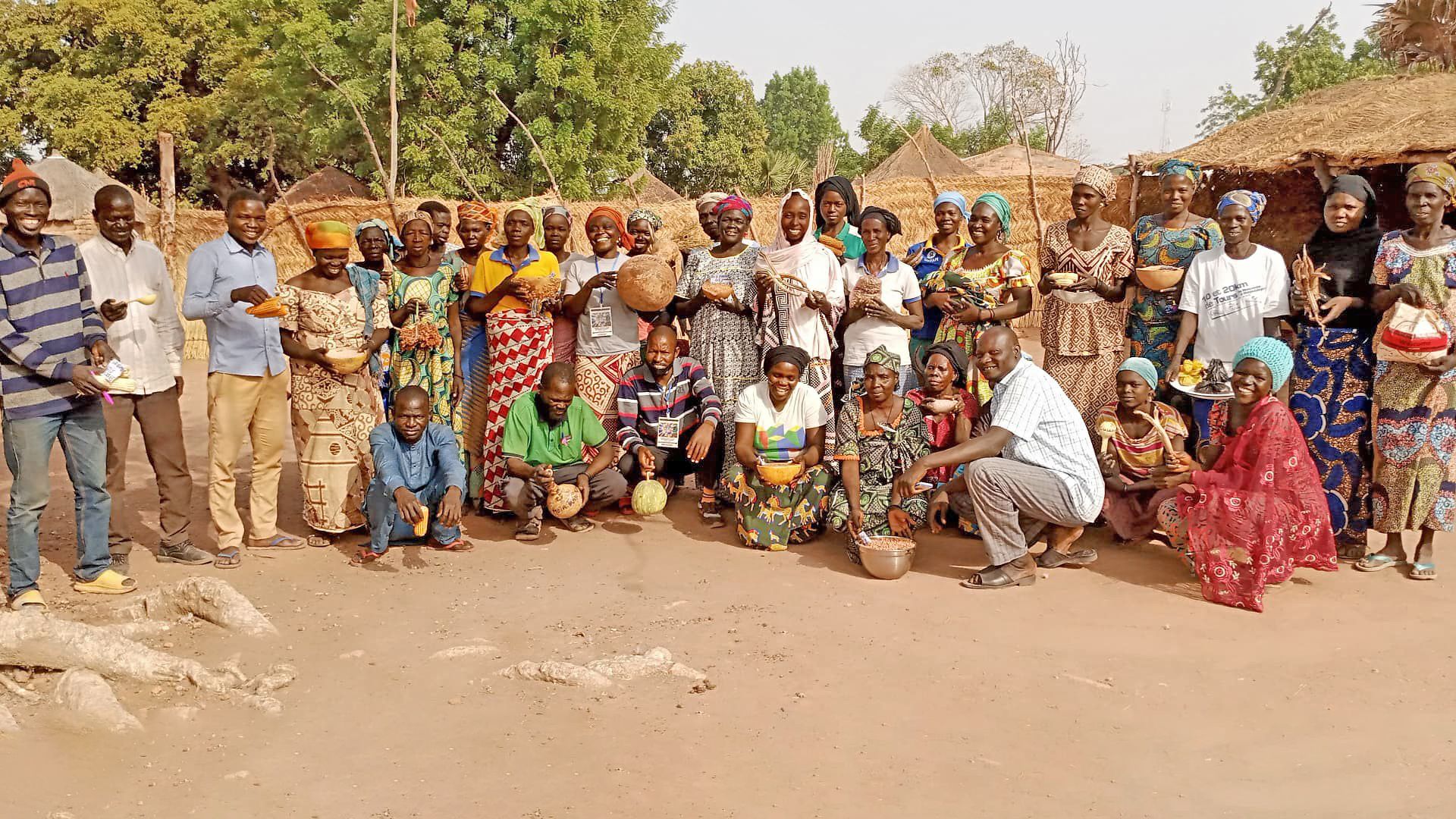
The CACOPA's strategy begins at the village level. Selection prioritizes villages with a population of around 500, ensuring sufficient scale for impact, and a demonstrable collective commitment to adopting new practices. This commitment is assessed through community assemblies, convened after consultations with village leadership. These meetings explain agroecology’s potential to address declining soil fertility and climate change impacts, primary factors contributing to poor harvests. Each participating village provides at least ten volunteers, representing a diverse cross-section of the community.
Initial training focuses on locally relevant agroecological practices. This encompasses areas such as: multiplication of resilient local seed varieties; production and application of organic fertilizers and biopesticides; agroforestry techniques to combat erosion and enhance soil fertility; and small-scale market gardening to diversify income streams. Demonstration plots showcase the benefits of treated versus untreated areas. Among each group of volunteers, four “systemic promoters” (two men and two women) are selected to implement a broader range of practices and serve as local “models”.
As community interest in agroecology grows, the focus shifts from individual experimentation to widespread community adoption. Initial volunteers, supported by project staff, present their findings at village assemblies, effectively recruiting new members. These assemblies lead to the formation of village-level CACOPA committees, which are self-governing and represent a variety of perspectives.
CACOPA’s architecture is designed for systematic territorial expansion. Starting with village-level units, the model scales up through nested networks at the cantonal, departmental, and provincial levels. This facilitates both widespread knowledge sharing among farmers and increasingly influential farmer-led advocacy for supportive policies.
This approach is also fundamentally participatory. While external expertise is provided, the emphasis is on local knowledge, ownership, and collective action. The “Cadre de Concertation” brings together farmers, extension agents, researchers, officials, traditional leaders, and civil society representatives in a structured dialogue. This collaborative environment, crucial for widespread adoption, moves beyond farm-level improvements to generate collective benefits across the territory.
The phased implementation – village selection, training, experimentation, formalization of CACOPAs, and inter-village networking – aims to ultimately connect producers to markets. A key endeavour is the development of territorial Participatory Guarantee Systems (PGS), allowing villages to collaborate on market strategies that capitalize on the superior quality of agroecological produce.
A model for sustainable rural development
The CACOPA initiative has yielded significant positive results. Crop yields have increased, often significantly, while dependence on chemical inputs has been reduced or eliminated. Some participating villages have declared themselves “pesticide-free zones,” resulting in increased demand for their produce in local markets. Farmers are reviving the cultivation of traditional, climate-resilient crop varieties, contributing to increased biodiversity and long-term food security. Women’s participation in CACOPA is significant, often exceeding 60%, promoting gender equality and contributing to improved household well-being. The initiative has also begun to influence local government policies, leading to greater recognition and support for agroecology.
However, challenges remain. The adoption of agroecological practices is not uniform; some communities and individuals are slower to embrace change, requiring ongoing training and support. Engaging young people in agriculture is a persistent concern, given the allure of urban opportunities. CACOPA is addressing this through targeted training programs and efforts to make agriculture a more attractive and profitable career path. Accessing formal markets for agroecological produce remains a hurdle, requiring continued efforts to raise consumer awareness and build robust market infrastructure. Finally, policy change is needed to ensure that agroecology is fully integrated into national agricultural strategies and support policies.
Despite these challenges, the CACOPA initiative in Chad provides a compelling example of a successful, community-driven approach to agricultural transformation in a challenging environment. Its emphasis on participatory governance and local adaptation offers a valuable model for other regions facing similar challenges. The evidence from CACOPA suggests that a strategy combining agroecological practices, bottom-up participatory governance, and a territorial focus represents a viable, and effective, model for sustainable agricultural and economic development.