Published on 16 December 2024

Agroecology

Agroecology is a legitimate vision to foster the needed transformation of food systems. Read about the SDC's approach, recommended key resources, projects and more.

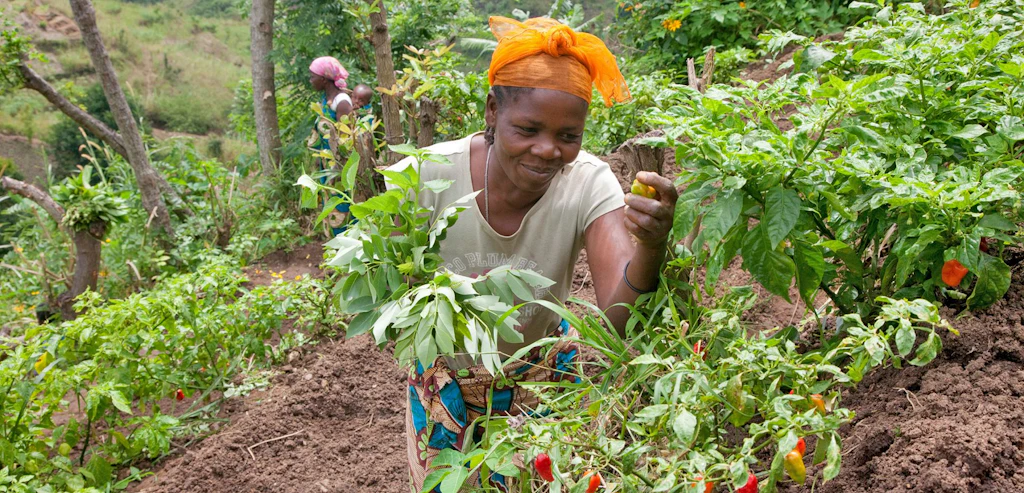
Hadija Kibwana and her farmer group were trained in organic farming methods supported by Sustainable Agriculture Tanzania (SAT) and Biovision

Context

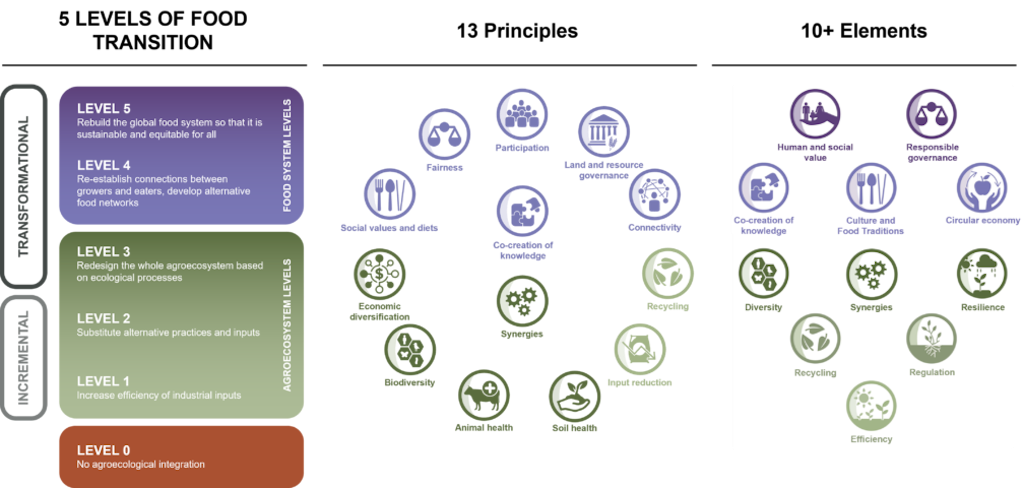
Food systems are at a crossroads: they are facing multidimensional and complex challenges that cannot be addressed using a «business as usual» approach. Only a profound transformation of the food systems can lead to improved nutrition and food security for all. These challenges are of various natures: environmental (increased pressure and competition over natural resources, climate change, biodiversity loss, land degradation, water scarcity) and socio-political (power imbalances, lack of transparency, accountability and democracy in governance). To shape the transformation of agriculture and food systems, two types of transitions should take place in a coordinated and integrated way (HLPE): incremental change (at agroecosystem level) and structural changes (consumers’ culture, institutions and norms at food system level).

Agroecology is a dynamic concept that has gained prominence in scientific, agricultural and political discourse in recent years. Agroecology – «the application of ecological concepts and principles to the design and management of sustainable agro-ecosystems» has three facets. It is a scientific discipline; a set of practices and a movement.

SDC's approach

Willing to contribute in addressing such global challenges, SDC’s Global Programme Food Security (GPFS) considers agroecology a legitimate vision to avoid the clashes and dead-ends the current evolutions of the food system are leading the world population into, and to foster the needed transformation of food systems. For GPFS, agroecology is a pertinent pathway towards sustainable food systems. Agroecology aims to apply ecological principles and to ensure a regenerative use of natural resources and ecosystem services while also addressing the need for socially equitable food systems within which people can exercise choice over what they eat and how and where it is produced.

Key resources

Agroecology Knowledge Hub
Food and Agriculture Organization of the United Nations

Policy recommendations on agroecological and other innovative approaches for sustainable agriculture and food systems that enhance food security and nutrition
Committee on World Food Security, 2021

Agroecological practices supporting food production and reducing food insecurity in developing countries
JRC Technical Report, European Commission, September 2020

The potential of agroecology to build climate-resilient livelihoods and food systems
Leippert, F., Darmaun, M., Bernoux, M. and Mpheshea, M.;
FAO and Biovision, 2020

Agroecological and other innovative approaches for sustainable agriculture and food systems that enhance food security and nutrition
HLPE, July 2019

10 Elements of Agroecology
Guiding the Transition to Sustainable Food and Agricultural Systems
FAO, 2018
Projects

Farming Systems Comparison in the Tropics (India, Kenya, Bolivia)

The project aims to establish a scientific basis for discussions on the performance and potential of conventional and organic agricultural production systems in the tropics.
Overview of context and aim (SDC project database) | Project website

ProEcoAfrica (Ghana, Kenya)

The project generates scientific evidence on the productivity and profitability of conventional and organic production systems in Ghana and Kenya with an emphasis on the gender dimension to farming.
Project website

Ecological Organic Agriculture (Africa)

This initiative seeks to mainstream Ecological Organic Agriculture into national agricultural systems by 2025 in order to improve the quality of life for all African citizens.
Overview of context and aim (SDC project database) | Project website

RUNRES (Ethiopia, Rwanda, DR Congo, South Africa)

This project seeks to improve the sustainability of food systems in four different rural-urban regions across Africa by encouraging the recycling of nutrients and waste through a variety of innovative processes.
Overview of context and aim (SDC project database)
| Project Website

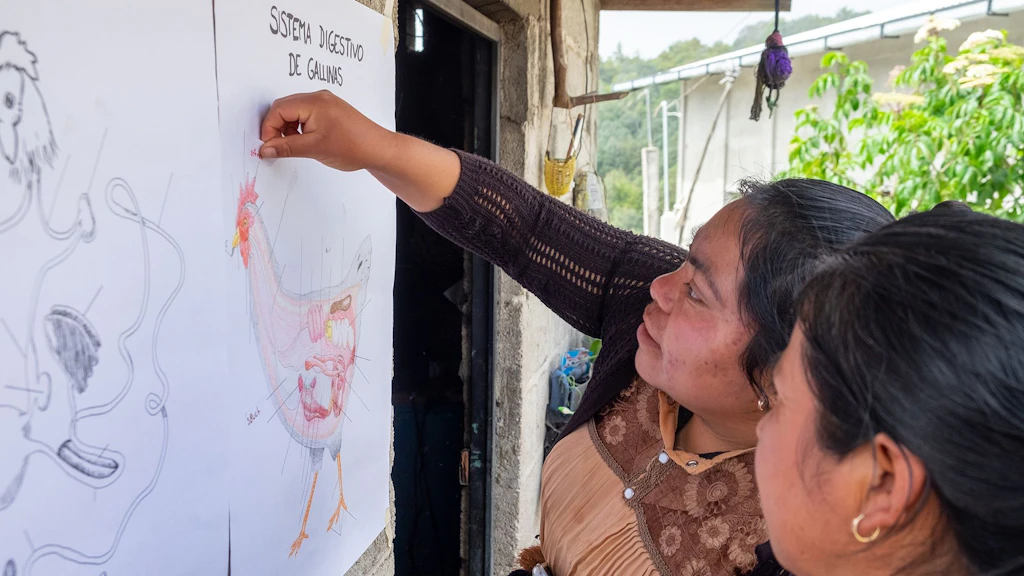
Atelier d’éducation sur l’élevage de poules, pour une alimentation riche des poulets

6 November 2025

Renforcer l‘agroécologie pour cultiver la résilience

Au Mexique, et principalement dans la région du Chiapas, la violence exercée au quotidien par le crime organisé se poursuit. Ce climat d’insécurité pèse sur les habitant.es, qui cherchent à renforcer leur autonomie pour faire face à cette instabilité. Avec le soutien de l’association suisse DM (membre d’Unité) et en collaboration avec le Séminaire interculturel maya (SIM), des initiatives locales d’agroécologie familiale voient le jour, favorisant la souveraineté alimentaire et la résilience communautaire.

6 November 2025

Agroecology and livestock policy brief

Agroecology offers a holistic approach to managing sustainable agriculture and food systems by integrating ecological and social principles. This policy brief explores how Vétérinaires Sans Frontières (VSF) Suisse applies agroecology in livestock systems across Sub-Saharan Africa to strengthen resilience and food security. By reducing costly inputs, enhancing soil fertility, and promoting indigenous breeds, VSF-Suisse helps small-scale farmers improve their economic situation and adapt to climate challenges. The brief highlights pathways for transitioning toward localized, sustainable food systems - showing how livestock matters for agroecology and contributes to nutrition, biodiversity, and community resilience.

Organic Caravan campaign held in Nairobi

6 November 2025

Expanding Kenya's organic sector: the AOMD project

The Accelerating Organic Market Development (AOMD) project, led by the Research Institute of Organic Agriculture (FiBL), has successfully concluded after three years of advancing Kenya’s organic sector. Funded by the Leopold Bachmann Foundation, the project expanded market opportunities for farmers, enhanced the institutional capacity of the Kenya Organic Agriculture Network (KOAN), and increased consumer recognition of the Kilimohai organic mark. Its integrated approach, combining capacity building, market development, partnership building, and leadership support, strengthened the foundation for the sustainable growth of Kenya’s organic sector while opening new opportunities for organic markets in East Africa and beyond.

Contact - Agroecology

Stéphanie Piers de Raveschoot
SDC Food Systems Section