
Case Study of MetKasekor
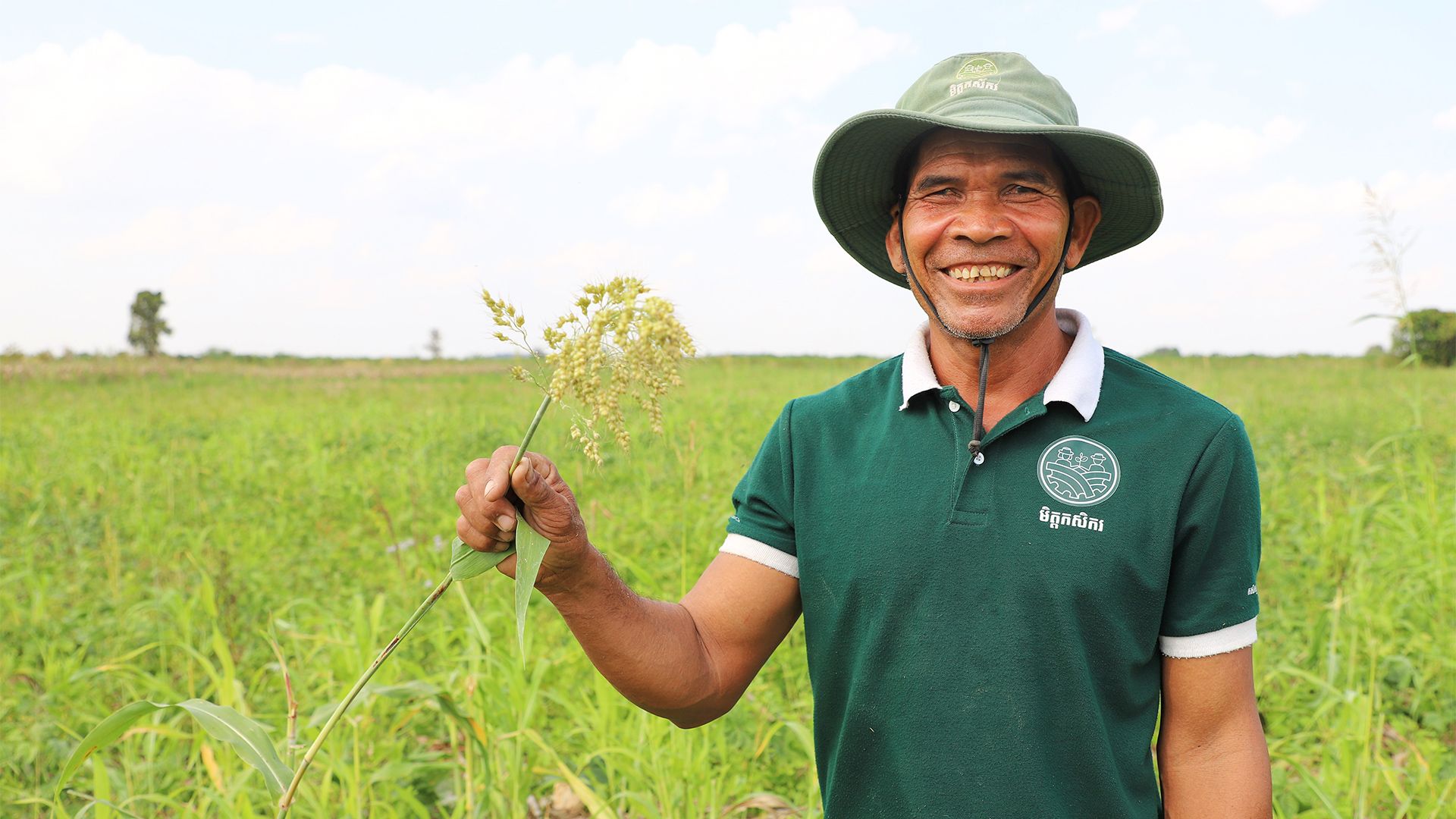
Smallholder farmers face declining productivity and low profits due to limited awareness of sustainable practices. MetKasekor is the solution, bridging farmers, private companies, and government agencies to drive Conservation Agriculture (CA) adoption. Through hands-on training, field showcases, and strong public-private collaboration, farmers access essential knowledge, services, and technologies. This transformative approach boosts yields, reduces costs, and enhances soil health, ensuring long-term profitability. MetKasekor isn’t just a model, it’s the future of sustainable farming in Cambodia.
AFS Newsletter - Article by

1. Context of agroecology
Agriculture is vital to Cambodia’s economy, employing 31% of the population and supporting 70% of households. However, the sector remains vulnerable due to dependence on monsoon rains, land degradation, declining soil fertility, and monocropping. To ensure sustainable growth, Cambodia must transition from land expansion to regenerative agriculture and sustainable intensification.
The Royal Government of Cambodia (RGC) aims to modernize agriculture through innovation, mechanization, and improved irrigation, as outlined in key strategic documents. Since 2004, Conservation Agriculture (CA) has evolved from research to commercialization, with initiatives like MIGIP, ISA, and CASF boosting private sector involvement. By 2021, policy dialogues and extension services, led by CASIC and MetKasekor, further advanced regenerative agriculture.
CASIC plays a key role in coordinating agroecology efforts, addressing technical gaps, improving extension systems, and fostering private sector investment to drive the adoption of sustainable farming practices.
2. Innovation for Sustainable Agriculture (ISA)
The Innovation for Sustainable Agriculture (ISA) I project, succeeding MIGIP, supported 11,006 smallholder farmers (32% women) and 97 students (45 women) by improving access to machinery, inputs, and extension services. It also benefited 5,538 farmers (2,603 women), increasing annual incomes by 229 CHF. The project strengthened public-private agricultural extension models, partnered with agribusinesses, and addressed the shortage of skilled labor through the InGuider internship program at the Royal University of Agriculture.
Funded by the Happel, Symphasis, and Leopold Bachmann Foundations, along with Swisscontact and SDC, the project concluded in 2024.
Since 2004, Cambodia has advanced CA and regenerative agriculture, demonstrating improved soil fertility, reduced labor, and higher yields. However, private sector engagement was essential for long-term adoption. Between 2018 and 2020, the MetKasekor initiative, emerging from MIGIP and CASF, promoted regenerative agriculture in Battambang’s Ratanak Mondul district. Its success in agricultural extension led to its integration into Cambodia’s national extension system.
MetKasekor, meaning “farmers’ friend” in Khmer, is an early adopter-led extension model promoting regenerative agriculture and private sector investment in Sustainable Intensification. It operates through a six-step approach, fostering collaboration between government agencies, private companies, and farmers to expand CA adoption.
At the national level, DAEng, DALRM, and DEAFF provide technical expertise and train PDAFFs, who then collaborate with private companies to extend CA services to farmers. The three departments act as advisors, ensuring effective knowledge transfer.
Launched in 2021 as a four-year pilot, MetKasekor is supported by CE SAIN, Kansas State University, CIRAD, and Swisscontact. Managed by DEAFF through PDAFFs, it works with private sector partners to scale regenerative agriculture services and products across Cambodia.
3. Genesis of MetKasekor
The Innovation for Sustainable Agriculture (ISA) project identified key challenges for Cambodian smallholder farmers (SHFs), including low productivity, limited profits, and lack of awareness about sustainable practices and soil health. Limited technical knowledge, weak coordination, and inadequate private sector engagement further hindered agricultural extension efforts.
To address these gaps, a public-private extension model was developed to promote CA technologies. The MetKasekor initiative was designed to activate the CA market by raising awareness, engaging private companies, and fostering collaboration among farmers, service providers, and cooperatives. This approach aims to enhance productivity, sustainability, and market access for SHFs.
4. What is Metkasekor?
MetKasekor's six-step approach ensures the widespread adoption of CA.
- Identification – Target communes, villages, and farmers are selected through local interviews, with data entered into the MetKasekor IT platform. In the first year, 591 farmers (40% women) from 9 communes and 9 villages were identified.
- Demand Creation – PDAFF-led meetings introduce CA, comparing costs and benefits with conventional farming. Farmers engage with cooperatives, input suppliers, and microfinance institutions. So far, 43 meetings have reached 1,507 farmers (573 women).
- Field Showcases – Early adopters host live demonstrations to generate interest before investments in machinery and cover crops. To date, 79 showcases have attracted 2,236 farmers (949 women).
- Large-Scale Demonstrations – Commercial events promote CA to a wider audience, allowing companies to market products. Six events have drawn 1,444 farmers (712 women).
5-6. Annual & Promotional Meetings – Progress evaluations and private sector engagement expand MetKasekor’s impact.
This structured approach fosters greater awareness, adoption, and investment in sustainable farming.
5. Impact
Since 2021, MetKasekor has been implemented in Battambang and Preah Vihear, reaching over 5,780 smallholder farmers. Currently, more than 870 farmers actively practice CA on 4,800 hectares of land. The initiative has supported the sale of 27 agricultural machines, introduced 20 CA technologies, trained 100 farmers, engaged 12 service providers, and facilitated the production of 22 tons of cover crops.
In 2024, the Innovation for Sustainable Agriculture (ISA) initiative conducted an impact assessment with 220 smallholder farmers, 97 early adopters and 127 general farmers, to evaluate CA adoption and its benefits. The findings provide valuable insights into CA’s impact on productivity, profitability, and long-term sustainability for smallholder farmers in Cambodia.
- Knowledge and Adoption of CA Practices: ISA training has effectively increased awareness of CA principles among SHFs, with 55% of respondents recognizing techniques such as no-till farming, cover cropping, and crop diversification. However, only 20% of the randomly selected farmers actively practiced CA, hindered by barriers such as limited access to machinery, complex farm management requirements, and inadequate training support.
- Soil Quality Improvements Perceived by Farmers: The majority of CA adopters (82%) reported improvements in soil quality, including enhanced fertility, texture, and water retention. These outcomes are attributed to practices such as minimal soil disturbance and cover cropping, which reduce erosion and improve soil moisture retention. Such improvements contribute to long-term soil health, supporting sustainable crop production.
- Yield Changes Following CA Adoption: CA practices produced varying yield results across different crops. Rice farmers experienced the most consistent gains, with 60% reporting increased yields. For maize and cassava, results were mixed, with around 50% reporting improvements. The benefits are largely linked to CA’s positive effects on soil conditions and water retention, though outcomes depend on crop type, environmental factors, and local practices.
- Financial Implications of CA Practices: CA practices significantly reduced input costs for 58% of adopters, particularly for water, pesticides, and fertilizers. Practices like no-till farming and soil cover reduced the need for frequent applications and preserved soil moisture. Higher yields led to increased profits, especially among rice farmers (81%), maize farmers (82%), and cassava farmers (56%). These findings underscore CA’s potential to enhance profitability, particularly for crops well-suited to its methods.
- Market Access and Ease of Selling CA-Grown Crops: Market access improved for nearly half of the farmers post-CA adoption, although prices remained unchanged. Improved produce quality, such as better size, appearance, and resilience, was reported by 69% of farmers, highlighting potential for better reception in sustainability-focused markets.
- Sustained CA Practice Adoption and Implementation: Long-term adoption of CA remains challenging. While 75% of adopters retained some practices, many faced barriers such as limited access to machinery and technical support. CA practices require time and experience to integrate into farm routines, creating an initial hurdle. Nonetheless, many farmers expressed willingness to continue CA if they received sustained support, training, and affordable machinery access, highlighting the need for enhanced mechanisms to ensure long-term success.
- Household Economic Context and Gender Roles in Decision-Making: CA’s economic benefits extended to household well-being, with improved financial stability reported due to increased yields and reduced costs. Gender roles in financial decision-making showed that men typically managed major purchases and farm investments, while women oversaw daily expenses such as food and childcare. Both genders shared responsibilities for social obligations, indicating a balanced approach. Engaging both men and women in CA training could foster shared decision-making and greater adoption of CA practices, maximizing household benefits.
- Market Access and Ease of Selling CA-Grown Crops: Market access improved for nearly half of the farmers post-CA adoption, although prices remained unchanged. Improved produce quality, such as better size, appearance, and resilience, was reported by 69% of farmers, highlighting potential for better reception in sustainability-focused markets.
- Sustained CA Practice Adoption and Implementation: Long-term adoption of CA remains challenging. While 75% of adopters retained some practices, many faced barriers such as limited access to machinery and technical support. CA practices require time and experience to integrate into farm routines, creating an initial hurdle. Nonetheless, many farmers expressed willingness to continue CA if they received sustained support, training, and affordable machinery access, highlighting the need for enhanced mechanisms to ensure long-term success.
- Household Economic Context and Gender Roles in Decision-Making: CA’s economic benefits extended to household well-being, with improved financial stability reported due to increased yields and reduced costs. Gender roles in financial decision-making showed that men typically managed major purchases and farm investments, while women oversaw daily expenses such as food and childcare. Both genders shared responsibilities for social obligations, indicating a balanced approach. Engaging both men and women in CA training could foster shared decision-making and greater adoption of CA practices, maximizing household benefits.
6. Lessons learned and Recommendations
The impact evaluation of the ISA project demonstrates that CA practices have delivered significant benefits to smallholder farmers (SHFs) in Cambodia. Improved soil health, reduced input costs, and increased yield stability have contributed to enhanced household financial stability. The positive economic and environmental outcomes highlight CA’s potential as a transformative tool for sustainable agriculture in Cambodia, laying the groundwork for resilience against environmental and economic challenges. MetKasekor has been instrumental in driving this progress.
However, the evaluation also pin-pointed persistent challenges. Barriers such as limited access to machinery, financial constraints, and underdeveloped markets hinder widespread CA adoption. Sustained implementation remains inconsistent across different crop types and households, emphasizing the need for adaptive approaches tailored to local conditions. To address these issues and fully realize CA’s potential, the following recommendations are proposed:
- Expand Access to Machinery and Cover Crop Seeds: Improving access to CA-compatible machinery, such as no-till seeders, land levelers, seed braodcasters and roller crimpers etc. is essential to reduce entry barriers. Shared machinery models, public-private partnerships, and loan programs can enhance affordability for SHFs. Efforts should also focus on increasing the availability of high-quality cover crop seeds by partnering with local seed suppliers or cooperatives. These farm inputs are critical for promoting CA adoption and ensuring its long-term sustainability.
- Strengthen Ongoing Technical Support and Peer Networks: Continuous support is vital for sustained CA adoption. Establishing peer learning groups within communities can facilitate knowledge sharing, problem-solving, and encouragement among farmers. These groups can serve as platforms for discussing challenges and exchanging successful strategies. Regular advisory visits, follow-up training, and the involvement of experienced farmers as “champions of change” can further reinforce CA practices and encourage broader adoption across communities.
- Develop Market Linkages and Promote CA Awareness Among Buyers: Many CA farmers are unable to capitalize on price premiums due to a lack of differentiation for sustainably grown produce in conventional markets. Building direct connections with sustainability-focused buyers, such as restaurants, specialty markets, and exporters, can create more profitable opportunities for CA farmers. Collaborations with Modern Agricultural Cooperatives (MACs) can help negotiate better terms and establish reliable markets for CA products. Introducing a certification or branding system for CA-grown crops would allow farmers to showcase the environmental and quality benefits of their produce, fostering consumer trust and potentially securing higher prices.
- Support Inclusive Training and Household Engagement: Given the critical role of gender in household decision-making, CA training should target both male and female household members. Inclusive training sessions that address household budgeting, resource management, and CA planning can empower families to adopt CA practices collectively, leading to more sustainable outcomes. Integrating financial management skills into training programs can further enhance families’ ability to track expenses, reinvest earnings, and maximize the benefits of CA.
- Adapt CA Approaches to Local Environmental and Economic Conditions: Since rice and maize have shown the most positive responses to CA practices, future interventions could prioritize these crops to maximize impact. Developing location-specific recommendations tailored to local soil conditions, climate, and water availability will help farmers adapt CA practices effectively. This targeted approach can increase productivity, ensure sustainability, and enable gradual expansion to other crops as practices are refined and adoption increases.
By addressing these key areas, the ISA initiative can strengthen CA’s adoption, maximize its benefits, and promote long-term resilience for Cambodia’s smallholder farmers