
Enhancing Food Security Through Caterpillar Breeding
The Salvation Army, in partnership with the Congolese NGO “Songa nzila” has launched an innovative caterpillar breeding project in the Democratic Republic of Congo. This initiative aims to enhance food security by providing a sustainable, protein-rich food source while also creating new income opportunities for communities.
AFS Newsletter - Article by

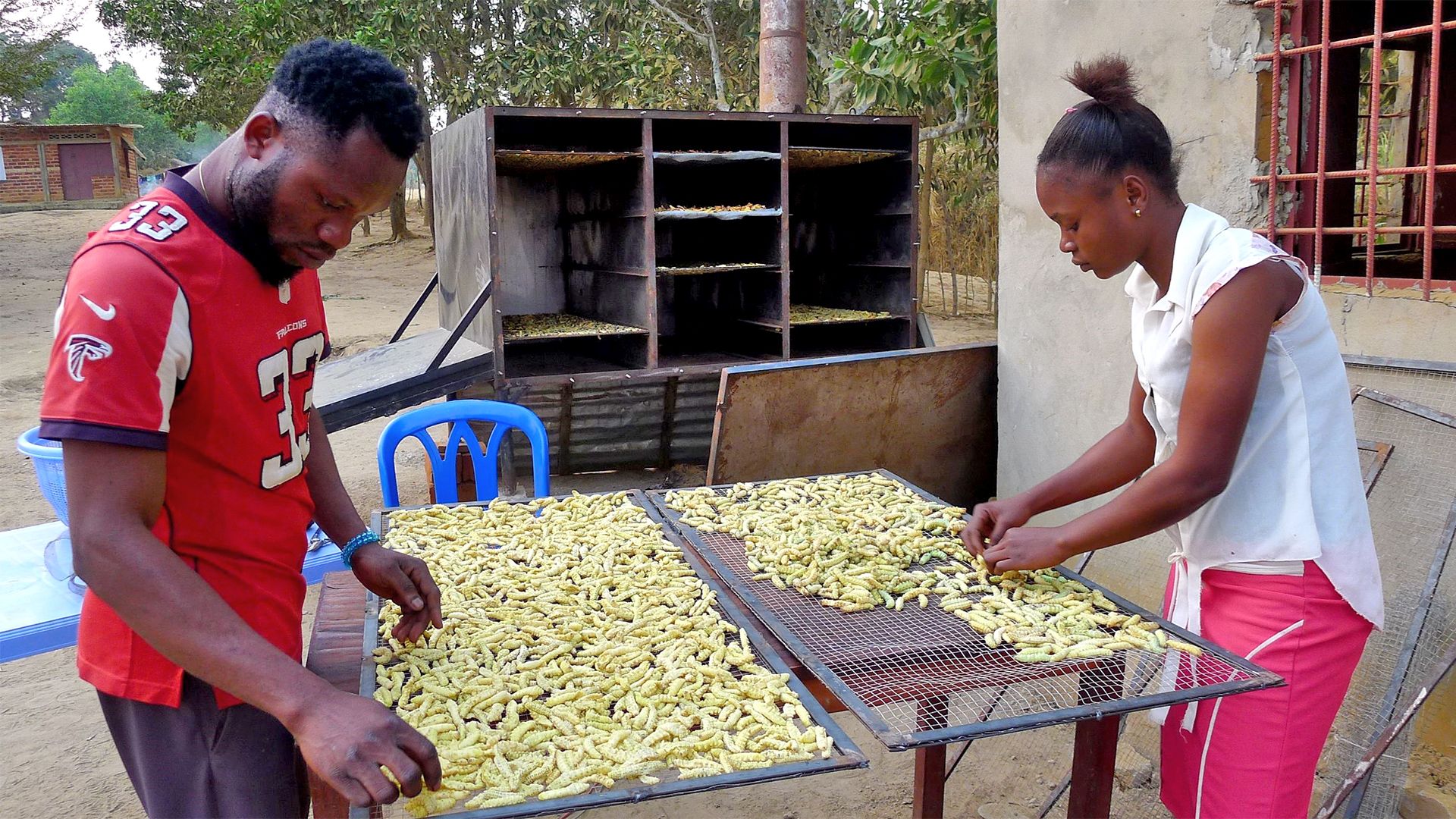
In Congo-Central Province, DRC, the availability of naturally occurring, protein-rich food has decreased in recent years. Deforestation, slash-and-burn practices and soil degradation have led to a decline in edible insects such as caterpillars. In response, The Salvation Army, in collaboration with the Congolese NGO ‘Songa nzila’ and engaged citizens, is driving change. An innovative project for breeding protein-rich edible caterpillars at home has been launched. The initiative aims to restore a vital food source, improve nutrition, and provide new income opportunities for local communities. Furthermore, the project aims to protect, preserve and reforest the remaining forests, the original habitat of the caterpillars. Beekeeping plays an important role in this.
Caterpillars are a rich source of protein and iron and can cover the daily protein requirement. They are a valuable local resource in the Democratic Republic of Congo, culturally accepted and cheaper than other animal protein sources. The Salvation Army project is spreading knowledge about caterpillar breeding through training. This improves the nutrition and income of 10,000 people in 30 rural villages.
One person who has been able to improve the food security of his family through the Salvation Army’s caterpillar breeding project is Nsumbu Kalemba Njawu. He is 51 years old, lives in Kinseka, a small village with around 150 inhabitants, about a six-hour drive from the capital, Kinshasa. He is married and has 13 children.
Before he started breeding the caterpillars, he mainly worked in the fields and sold the produce of his crops. “I buy and plant various fruit trees. I sell the fruit and oils they produce at the local market. I also keep goats and chickens. However, it was difficult to eat a balanced diet,” Nsumbu explains.
After learning that the Salvation Army was organising a training course on caterpillar breeding for teachers in local schools, Nsumbu contacted the Salvation Army project and asked if he could participate – even though he was not a teacher. “My main motivation was my interest in providing my family with good, balanced nutrition. It also allows me to help meet the nutritional needs of my village,” Nsumbu says.
He was allowed to take part in the four-day training course. “After completing the training, I started breeding edible caterpillars at home in a simple cardboard box,” he explains. Breeding the caterpillars has improved the nutritional situation of the entire family. “In the rainy season, when the caterpillars can grow well, we eat them daily as a side dish – they contain important proteins and vitamins. A breeding phase – from egg to edible caterpillar – takes 43 days. This way, I can grow six to seven generations of caterpillars per year. I have already bred a total of 32 generations of caterpillars.”
Neighbourhood assistance of a special kind
“If there are enough caterpillars, I also like to share with the neighbours in the village,” Nsumbu continues. Furthermore, Nsumbu is keen to share his knowledge and skills in this area so that as many people as possible can start breeding caterpillar. So far, he has taught five people.
In Kisendi, a village not far from Kinseka, the Salvation Army project is also contributing to improving the nutritional situation of the residents. Mafuta Nlungu, father of six children, also took part in a training course on caterpillar breeding in 2022. After the training, he passed on his knowledge to three other people in his village, including Matendi Mbala. “We were both immediately interested in breeding the caterpillars. Unfortunately, they have no longer been present in the forest in recent years. We have been breeding caterpillars at home continuously since the training two years ago,” Mafuta explains. Both are also part of the village caterpillar committee, which was formed in 18 villages in 2016. The committees are tasked with raising awareness among villagers about protecting the local forest and monitoring whether the native caterpillars return to the forests. According to reports, the awareness-raising has worked and no more trees are being cut down in the protected area.
Ants – the main enemy of caterpillar breeding
The biggest enemy in caterpillar breeding are ants. These attack the caterpillars and kill them. In the event of an ant infestation, the entire breeding process can be quickly lost. This is what happened to Nsumbu: “One day, all my caterpillars were attacked by ants and died. After they had gone, I contacted the project staff and received new eggs. This enabled me to resume breeding the caterpillars. I was even able to return the favour when the project's breeding suffered the same fate.”
Caterpillar breeding as a future source of income
During the rainy season, when he has a lot of caterpillars, Nsumbu also sells them in the neighbouring village. However, rearing the caterpillars has not yet had a major impact on the family’s financial situation.
“In the future, I would like to further increase my caterpillar production and expand my knowledge,” explains Nsumbu, adding: “To achieve this, I need additional training in caterpillar breeding and financial management. To increase production, I would also need more and better equipment, such as larger plastic boxes.” Mafuta and Mantendi also have plans to expand their caterpillar breeding. Mafuta explains: “We work in the fields and grow peanuts, cassava and pili-pili. We would like to breed more caterpillars. However, to do that we would need better equipment and further training. If production went well, we would like to sell the caterpillars to earn some money. I would invest the money and buy a mill. I could then use the mill to produce flour from the dried caterpillars and also grind other foods. For example, cassava roots to make fou-fou out of.”