Agricultural Adaptation: The Climate Challenge in Mali
In the Kita region, in the west of Bamako, Malian farmers must rethink their farming methods to improve their yields, transform their crops, and sell them. Despite difficult conditions, solutions exist and are already being implemented such as processing centres for their products. Caritas Switzerland supports the farmers of the region through its climate adaptation project KITA III.
AFS Newsletter - Member Article by
Loucine Maugère
Caritas Switzerland
LinkedIn | lmaugere@caritas.ch
The national context in Mali is challenging. Nearly 70% of the population depends on agriculture, and almost half live in extreme poverty. The country faces extreme climate events, conflicts, and political and security instability, making populations even more vulnerable.
Recent harvests in the region of Kita have been good, but challenges remain. During periods of drought or in the face of violent storms, it is crucial to adapt. Farmers are transforming peanuts and corn to sell on various markets, which allows them to buy grain such as sorghum and millet when their own production is insufficient and prices rise.
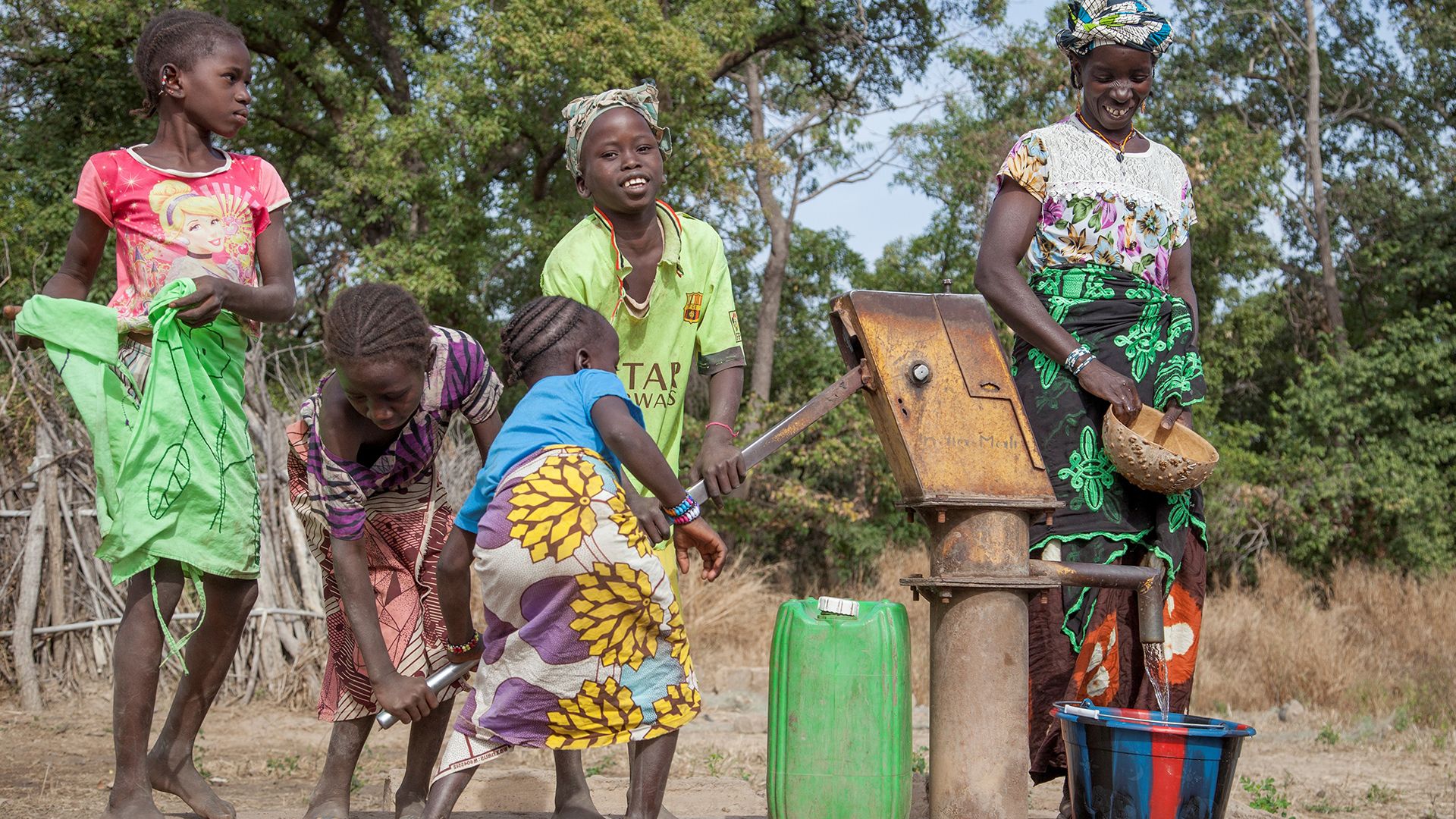
Solutions exist for small-scale producers, both men and women, to secure food for their families year-round. At 54, Fanta Diakité, a villager from Bougaribaya, leads by example. Married and a mother of six children, she is not afraid to learn and adapt. «Progress has been modest so far,» she admits. «My sales of processed products are still low, but I have a lot of hope for the coming years.» Meanwhile, her older sons work in artisanal gold mining sites to support the family. Despite health issues, Fanta co-founded the local agricultural cooperative and serves as its president.
Women such as Fanta Diakité are increasingly involved in this project, supported by Caritas Switzerland. Fanta is pleased with the recent opening of a processing centre in her village, equipped with small machines. These centres, built with durable enclosures, include a processing room, a storage facility, a shed, a toilet, a mill, a potable water supply system, a lighting kit, and other processing equipment. Two additional centers have also been inaugurated recently.
Practical sessions have been held to train participants in the processing of corn and vegetable by-products, such as corn grits, semolina, corn cakes, dried tomatoes, and enriched foods. Moreover, knowledge transfer activities from relay producers to members of their agricultural organizations are bearing fruit. The goal of this knowledge transfer is to enable small producers to adopt more sustainable agroecological practices that benefit both the environment and their income. Members of agricultural organizations are learning, among other things, to produce their own biopesticides, liquid compost, and seed soaking products, which have a less harmful impact on the environment and their production than the products they previously used.