
Climate resilience through seed system
The Climate Adaptation and Rural Development Project (CARD) is a five-year development project, implemented by Helvetas in Ethiopia, with support from the SDC and other donors. The project aims to strengthen communities’ resilience to the impacts of climate change. One key strategy is the establishment of seed security initiatives to ensure access to quality crop seeds, even during periods of climate stress. A robust seed system can empower farmers by providing them with access to improved varieties, information, and resources, enabling them to make informed decisions about their crops. Developing and promoting climate-resilient seeds (e.g., drought-tolerant or flood-resistant varieties) helps farmers adapt to changing environmental conditions.
AFS Newsletter - Article by

The Climate Adaptation and Rural Development (CARD) project in Ethiopia is making significant strides in improving the resilience of smallholder farmers in the areas of Wag-Himra Zone in which the project operates. CARD is implemented by Helvetas with financial support from the Development Fund of Norway, SDC program contributions, and other donor contributions. Quality seed that is adapted to local conditions is not easy to obtain in the project area. A key initiative is therefore the promotion of a robust seed system, which includes the establishment of two community seed banks and the strengthening of seed loan programs through 51 rural cooperatives.
Through the CARD project, farmers have received technical training, material support, and opportunities for experience sharing - all designed to enhance their capacity to produce and manage seeds. Seeds of improved, drought-tolerant, disease-resistant, and early maturing crop varieties have been provided as a startup for seed multiplication via the seed loan system.
Today, these community seed banks are thriving, multiplying seeds locally and facilitating access to quality improved seeds for smallholder farmers. They are evolving into vital production markets, with primary rural cooperatives enhancing their capacity for market linkages and serving as reliable sources of income for farmers.
Farmers are now purchasing improved seeds from their local seed banks and cooperatives, confident that these will both boost their productivity and be more resilient to changing climatic conditions. As a result, these cooperatives are generating income from the seed market, transforming the seed system into a sustainable source of income and an alternative investment opportunity. This initiative is effectively bridging the gap in seed access in the project areas, fostering resilience and economic growth among smallholder farmers.
Key Achievements:
- Crop Production Improved: Over the past four years, the seed banks and cooperatives have successfully distributed 72,650 Kg of improved seeds through a loan system supported by the project, benefiting 6,142 smallholder farmers. These farmers planted the seeds on 3,741 hectares of land, resulting in a total crop production of 3,705,300 Kg.
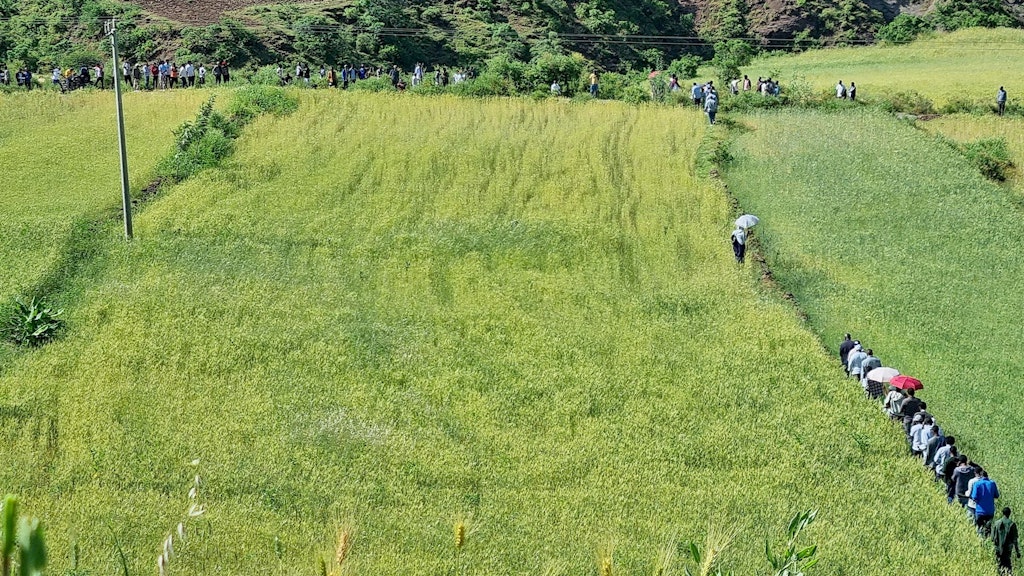
- The capacity of community seed banks on securing seed access improved: The Chila seed bank multiplied 161,200Kg of wheat, lentil, sorghum and teff using their members’ land. It has become the source of seed for 12 kebeles (wards) and more than 6,000 households in the surrounding area.