
Cultivating community and sustainability in North Macedonia
Established with the vision of uniting local farmers, particularly grape growers, Bojane Agricultural Cooperative embodies a model of collective effort and sustainability. Comprising ten permanent members, it serves as an organised platform designed to address the multifaceted challenges faced by farmers while equipping them with the knowledge and tools necessary to thrive in a dynamic agricultural environment.
AFS Newsletter - Member Article by
Ema Jakimovska
Swiss Increasing Market Employability Program - IME
ema.jakimovska@thepalladiumgroup.com
Established with the vision of uniting local farmers, particularly grape growers, Bojane Agricultural Cooperative embodies a model of collective effort and sustainability. Comprising ten permanent members, it serves as an organised platform designed to address the multifaceted challenges faced by farmers while equipping them with the knowledge and tools necessary to thrive in a dynamic agricultural environment.
At the helm of this initiative is Fexhri Selami, an accomplished expatriate from Switzerland, whose remarkable journey and unwavering dedication have transformed the cooperative into a powerful force for local agricultural development. His personal journey - from Switzerland to North Macedonia - is marked by a profound commitment to fostering a community, leveraging his experience to promote sustainable practices and empower local farmers to maximise their potential.
Visionary Leadership and Unified Approach
Fexhri Selami has over a decade of experience in project implementation, successfully leading various projects, enhancing the agricultural landscape in the Bojane region. His passion for sustainable agriculture and community development is not only theoretical; it is evident in his hands-on approach and his commitment to fostering a collaborative environment.
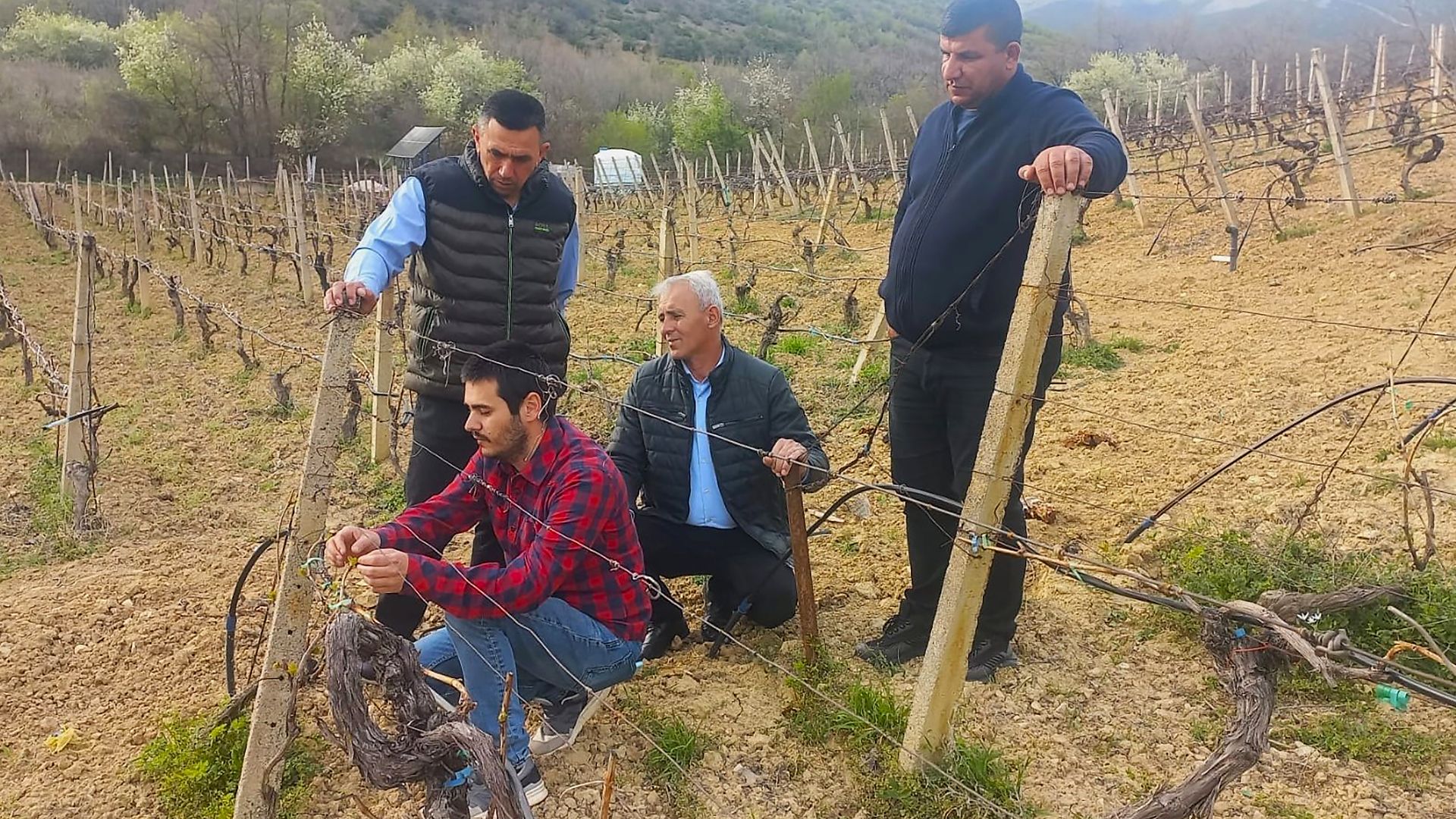
Under his guidance, the cooperative has embraced innovative practices aimed at strengthening local agricultural supply chains. One of the most notable initiatives has been the introduction of solar-powered irrigation systems, paired with modern agronomic practices that are supported by the Swiss Increasing Market Employability Program - IME. These pioneering initiatives have proven transformative, reducing the reliance on conventional energy sources and enhancing climate resilience in the region. By addressing critical issues such as water scarcity and limited electricity access, the cooperative is paving the way for a more sustainable agricultural future.
He further emphasizes the crucial role of education and collaboration in this transformation. «The trainers from the Macedonian Institute of Agriculture contributed a lot to our cooperative,» he explains, «providing hands-on support and fostering a culture of continuous learning among our growers.» This commitment to education has led to a more informed and resource-efficient farming community, where knowledge is actively shared and utilised to improve agricultural practices.
Empowering Local Farmers
The cooperative's efforts have significantly improved the livelihoods of local farmers, creating a tangible impact on their productivity and income. Based on a sample of four members of Bojane Agricultural Cooperative, a yearly increase in income of 20,2% and a decrease in costs of 3,7% were determined because of the new practices. In general, the data shows a positive trend in the production of table grapes in 2024 compared to 2023, with increased yields and incomes, but with reduced costs and marginal prices, indicating improved efficiency and profitability of production.
Resul Sejfulai, a farmer and grape grower, underscores the benefits of the training received from the Macedonian Institute of Agriculture, stating, «During the training, we learned a lot about protection, use of pesticides, and disease prevention.» The emphasis on precision and effectiveness has enabled farmers’ transition to using higher-quality pesticides more judiciously. This has not only reduced the overall quantity of pesticides applied but has also enhanced the health and quality of the crops produced.
The results of these efforts are evident. Selami reports that during the most recent season, none of the growers experienced disease in their vineyards - a remarkable improvement from previous years when issues like powdery mildew and downy mildew were prevalent. «I must say that this season, none of the growers found any disease in the vineyards, which was not the practice before,» Selami notes. As a result, both the quality and yield of grapes have seen significant enhancements, positioning the cooperative to explore new market opportunities and expand its reach.
Building Sustainable Practices
The introduction of a hydrometeorological station, developed in collaboration with the Macedonian Institute of Agriculture, has further bolstered the cooperative's initiatives. This advanced station provides crucial data that helps farmers make informed decisions regarding pest management, irrigation practices, and overall crop health. Selami explains, «We are currently working on making the application operational for our growers, which will enable real-time data analysis.» Such technological advancements are vital for creating a more organised and efficient grape production system, allowing farmers to respond proactively to changing environmental conditions.
Last year, the Bojane Cooperative produced a total of 100,000 kilograms of grapes. This year it is expected to see a significant increase in production, thanks to the improved farming practices and the use of the agrometeorological station. The grapes are currently being sold at a price that is 20% higher than last year.
The cooperative is also focused on standardising packaging and logistics - essential steps toward accessing broader markets and increasing profitability. Selami emphasises that first, they must sort out the quality and protection protocols for the vineyards. «We want to visit some export logistics centres to gain better insights, and in that way, we could get involved next season,» he adds, indicating a forward-thinking approach that aligns with the cooperative’s long-term goals.
Engaging the Next Generation
Despite these advancements, attracting younger generations to agriculture remains a significant challenge. Selami acknowledges, «Unfortunately, there is not much interest among young people to work in agriculture.» To combat this, initiatives like the annual wine festival have been implemented to engage youth and cultivate a sense of community. By involving them in the organisation of the festival, the cooperative hopes to spark interest and demonstrate the potential of modernised agricultural practices.
Moreover, Selami believes that showcasing the advantages of new technologies can make agriculture more appealing to younger generations. «We believe that new technologies make agriculture more attractive for them to some extent,» he explains. The vision for the future includes creating a hub for farmers where they can share knowledge, experiences, and best practices. As farmers become more knowledgeable and confident in their practices, more individuals from the region are showing interest in joining the cooperative. As such, it is well positioned to create lasting change - not only for its members but also for the entire agricultural landscape of the region. Through these dedicated efforts, the relationship between community and agriculture flourishes, ensuring a more sustainable future for generations to come.