
Combining design thinking with the market systems development approach
In the aftermath of the Ukraine war, Myanmar, like many other countries, grappled with skyrocketing fertilizer prices. This economic strain compounded the challenges faced by the people in Shan state following the military coup in February 2021. The FOSTER project combines design thinking methods with market system development approaches to promote agroecology, generate employment opportunities, and facilitate the integration of displaced individuals.
AFS Newsletter - Member Article by

Myanmar faced a military overthrow of a democratic elected government in February 2021, causing a series of civil unrest in the country, economic turmoil, and instability. To worsen the situation, the Ukraine war contributed to soaring fertilizer prices and complicating even further the production conditions for smallholder farmers in Shan State. This state is the 4th highest populated state of Myanmar with 15 different ethnicities and other minority tribes. The region has experienced high rates of conflict between ethnic groups and the military government. Additionally, Shan state is significantly impacted by illicit trading and lumbering and drug production and trafficking are major issues, since the Shan state is part of the so-called «golden triangle», one of the main opium-producing regions of the world.
Besides opium the region has a huge potential for agricultural and economic development, since it’s an important region for horticultural crops, beverages (tea and coffee) and maize. But due to the above-mentioned difficulties, communities have been facing socio-economic hardships and limited access to markets. This has been aggravated since the outbreak of the Ukraine war and the subsequently tripling of fertilizer prices.
To face these challenges, the FOSTER project adopted a unique approach. They combined design thinking processes, in this case «human centered design – HCD» with the market system development – MSD approach. HCD is an offspring of the whole world of participatory action research and tries to make systems usable and useful by focusing on the users, their needs, and requirements. The process consists of (at least) three distinct elements: inspiration – ideation – implementation. In the inspiration phase project staff goes into the community to understand the needs and requirements of the people through their perspective. During the ideation phase first ideas are developed to come up with a prototype of a product/solution. In the implementation phase this prototype is tested on the ground and the feedback from the users is then fed into another cycle of inspiration-ideation-implementation. These iterative cycles help to improve the solution and make it as context specific as possible.
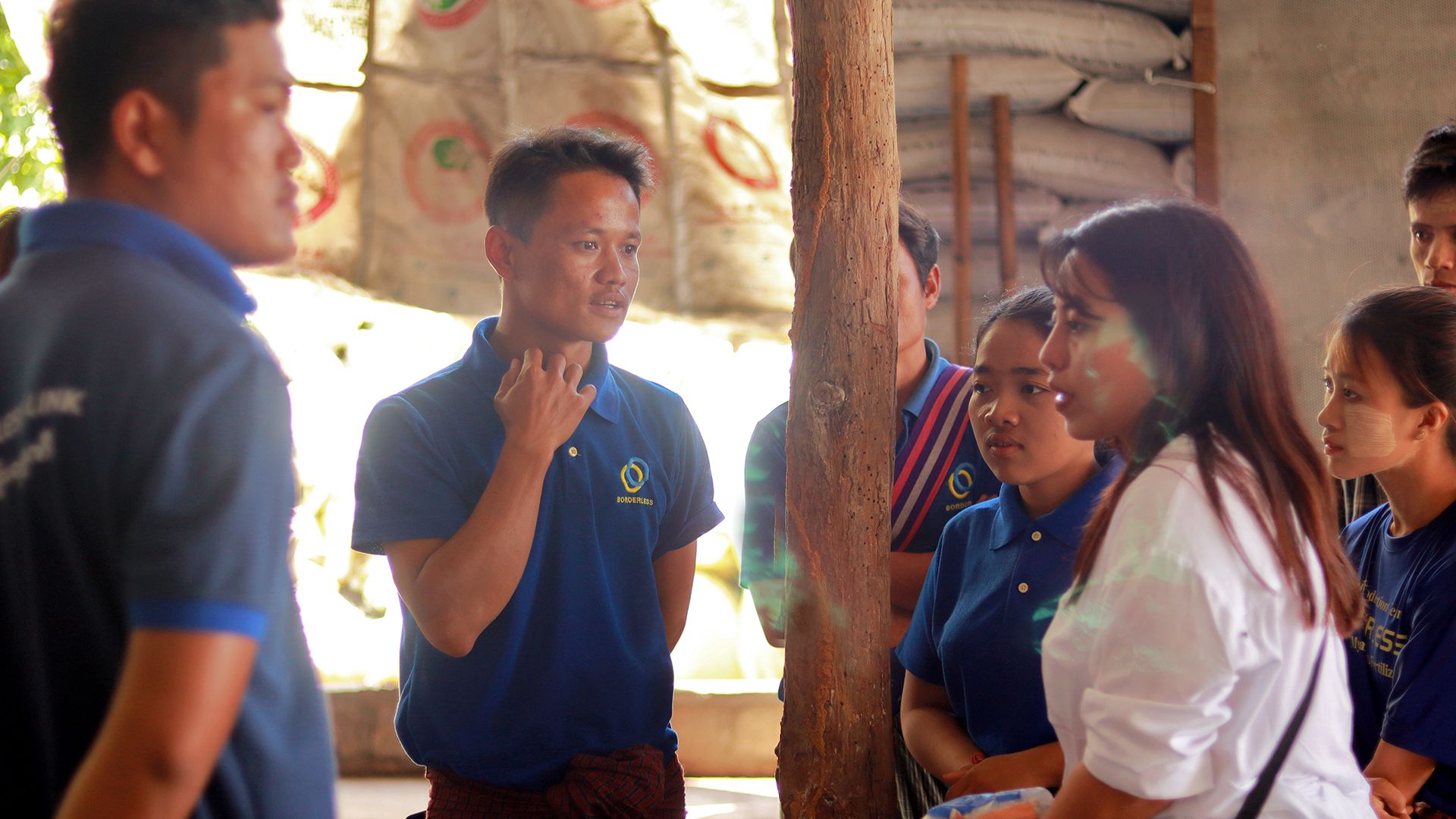
In the case of Shan state, the first prototype consisted of replacing the (expensive) synthetic fertilizer through an organic alternative. The market analysis showed that access to organic fertilizer was one the bottlenecks for the farmers, so the project cooperated with a local enterprise that produced Japanese style compost, called Bokashi. To incentivize the farmers to use the organic (and so far, not very known) fertilizer, the project opted to support the enterprise, so that when purchasing 6 bags of compost, 4 bags of Bokashi/compost were given for free to selected farmers after a needs assessment and stakeholder discussion.
The end survey in January 2023 showed some markable results: the project reached 810 smallholder farmers (216 women-lead household and 594 men-lead household), of which 90% said to continue to use Bokashi. Alongside with that, the enterprise employed up to 120 mostly landless people (incl. 13 IDPs from Kayah state due to rising conflicts) and the production were expanded to 8 warehouses with total production of 17,454 bags so far.
Further links:
Country Program Myanmar HEKS/EPER