
«Enset» an orphan crop that feed 20 million people in Ethiopia
Enset, the drought-tolerant «False Banana,» feeds millions in Southern Ethiopia but struggles with outdated processing methods. A transformative project led by the NGO «Education for Development Association» is empowering women, modernising techniques, and unlocking Enset's potential to combat food insecurity and climate change.
AFS Newsletter - Member Article by

«Enset» or False Banana (Ensete ventricosum) is an indigenous crop cultivated in Southern part of Ethiopia, where it provides staple food for approximately 20 million people. According to FAO, Enset provides more amount of foodstuff per unit area than most cereals. Each plant takes 4-5 years to mature and a single stem can yield about 40 kg of food. Enset is more drought tolerant than most cereal crops. The fermented pulp from the stem is used to produce different traditional dishes.
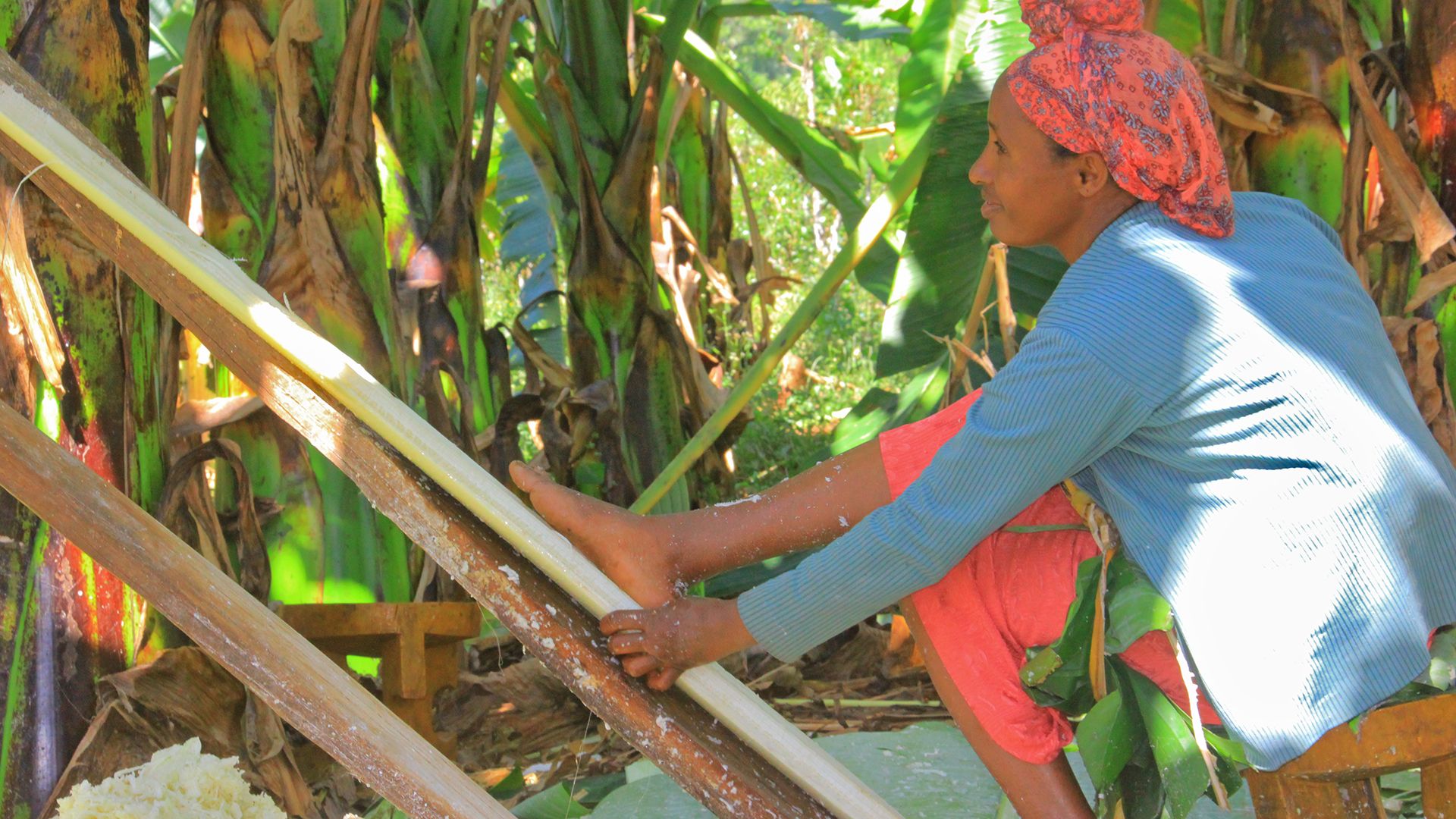
Enset processing is mostly done by women. Enset can be harvested at any time of the year and any growth stage of the plant. The harvest consists in cutting the pseudo-stem into small size pieces by removing the fiber and by chopping and grading into a pulp, which is then fermented in Enset leaves for a period of 1-6 months. Enset is adapted to a wide range of agro-ecological zones of Southern Ethiopia.
Despite its economic, environmental and social benefits, the traditional Enset processing hindered so far a full exploitation of its potential and its development on a larger scale. This is the reason why the Regional Program Horn of Africa of SDC supported a local NGO (Education for Development Association) to pilot improved Enset processing, with following results:
- Supported the establishment of 2 women cooperatives and the introduction of improved processing (scrapper machines, fermentation system, washing and filtering facilities) as well as the renovation of the processing centers;
- Establishment of an Enset platform, which created synergies among farmers, universities, research centers and agricultural extension services.
- Created relationship between the cooperatives, the private sector and the local authorities in order to improve market access and conditions;
- Assessed the market system of Enset products, which is affected by poor marketing, low productivity and quality, and therefore low income for farmers, and especially women.
Ways forwards: the project confirmed Enset’s potential to increasingly contribute to food and nutrition security in densely inhabited regions. The crop is highly resilient and able to cope better than others to increased threats caused by climate change. The Enset processing system done dominantly by women is however cumbersome and need increased attention by researchers, private sector, local authorities to be improved in form of quality and also in form of reduced workload.