
Grounding AI in Practice: Learning from Extension
GenAI promises many benefits in agriculture. But is it living up to the hype? What can AI systems learn from decades of person-to-person agricultural extension? We talk about extension’s obvious (and less obvious) limitations, what it gets right, and what AI can learn. We conclude that grounding AI in real-world extension practices is the only way to build tools that farmers will use, and trust. The piece is part of the AI for and with Food Systems Research Initiative blog series. The initiative brings together researchers and practitioners across CGIAR and its partners to explore how AI can be designed, governed, and applied responsibly in food systems research and innovation.
AFS Newsletter - Article by



Introduction
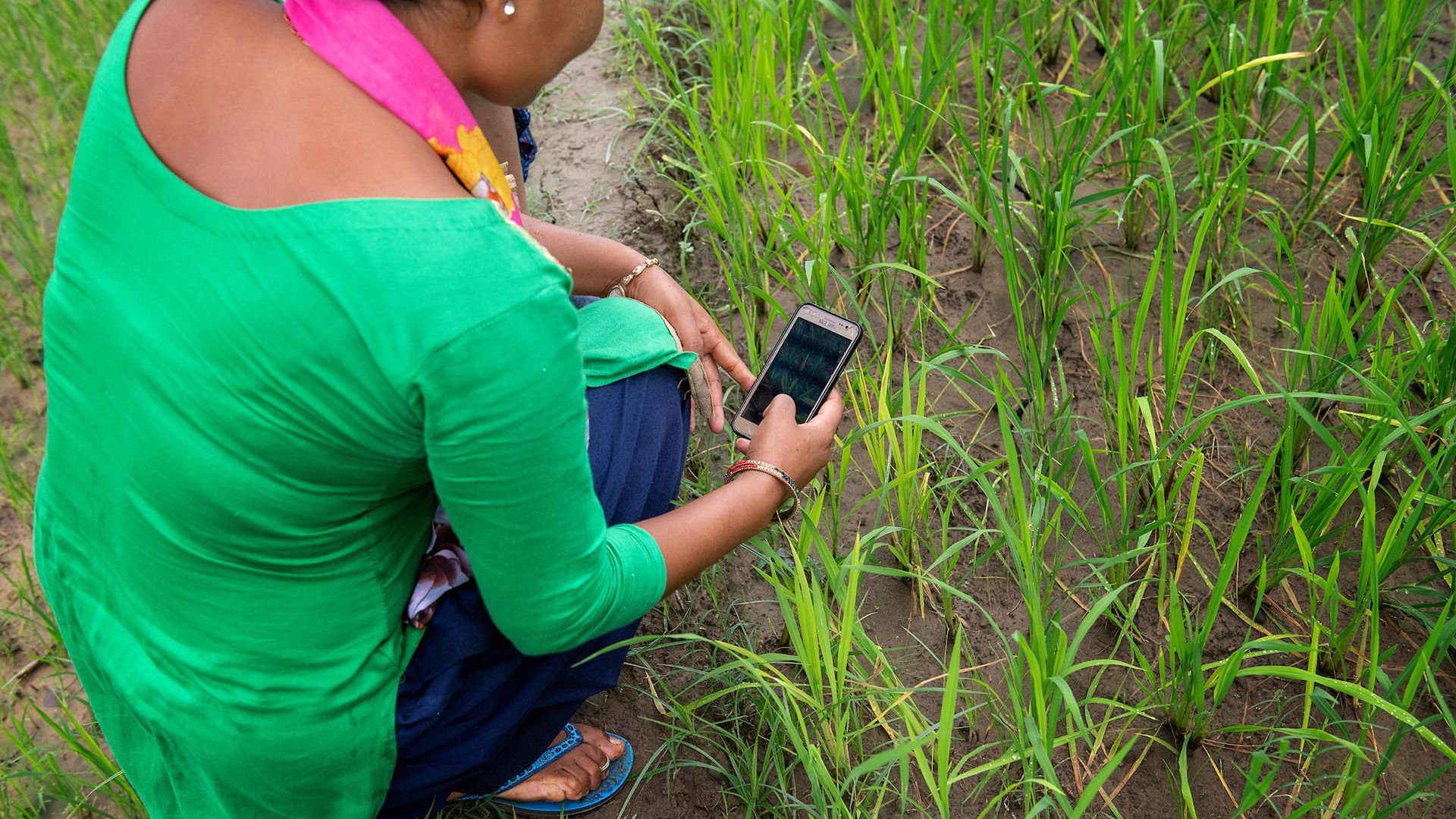
Generative artificial intelligence (or GenAI) promises many benefits in agriculture (e.g., scalability, efficiency, 24/7 service). More people can be reached with more information, which can be tailored to their specific circumstances with real-time data. This is “last mile” delivery, a way to reach remote smallholders with information and advice at a fraction of the cost of deploying field staff. But is AI living up to the hype? What can AI systems learn from decades of person-to-person agricultural extension?
As part of the AI for and with Food Systems Research Initiative blog series, we contribute to ideas on how AI can be designed, governed, and applied responsibly in food systems research and innovation—in this case, by better grounding AI in practice.
1. What Extension Gets Wrong
The obvious limitations
Extension’s more obvious limitations include human resources, costs, geographic constraints, and limitations to knowledge and skills. Human resources are the costliest component in extension budgets. While the recommended ratio of extension staff to farmers is about 1:500, in many countries it’s more like 1:5,000. This means limited time per farmer or per visit, and more generic advice that lacks tailored, context-specific prognoses. Extension staff are trained in technical areas before starting their job, but receive limited or no continuing education and insufficient training in “soft” skills (such as gender sensitivity or group dynamics). Budgets go mainly to staff salaries, leaving little operational funds for things like field visits or training. This coupled with insufficient staff means limited coverage in remote and hard-to-reach areas. The presence of many different extension providers—radio shows, agrochemical companies, NGOs, public agencies, and village agents—often leads to uncoordinated outreach and conflicting messages. This leads to inconsistencies in messaging which can be amplified in AI.
The less obvious issues
Less obvious, or less visible, are the power asymmetries within extension, and the dynamics between the so-called experts and laypersons. Extension’s clientele, the farmers, are rarely allowed a chance to provide evaluation of extension programs. As a field traditionally dominated by men, agricultural extension may systemically exclude women, youth, and other socially marginalized groups There is also the risk of exploitation (e.g., when advice is tied to sales or input promotion).
2. What Extension Gets Right
But what does extension get right? Human strengths that make good extension effective include
- Building trust through face-to-face relationships
- Responding to context, nuance, and emotion
- Adapting advice based on lived experience
- Listening and learning from farmers, not just instructing (and using that advice to inform practice)
- Offering accountability—farmers can ask follow-ups or raise concerns
3. What AI Can Learn
AI can learn from extension, particularly from what extension gets right. In March 2025 we undertook focus group discussions with about 30 field extension officers from all over Africa who were gathered for an international conference in Malawi to explore and document how real human agents diagnose farmer needs in low-context, trust-sensitive settings, to better train conversational AI extension agents, by understanding their conversational strategies, reasoning processes, and real-time adjustments in questioning. These insights will help assess the feasibility of multi-turn interactions and refine our assumptions about how a conversational agent might best gather and respond to information under real-world constraints, whilst remaining conscious of bias and inclusion. These discussions provide several insights:
- Trust building. Trust is at the heart of extension-farmer interaction and comes in part from building rapport (see next bullet). Trust is also built through good understanding of the farmer’s situation and background.
- Personal and social connection. Extension typically includes “small talk,” greetings and discussion of social issues. Extension officers may drink a cup of tea, offer a prayer, or dance with farmers during meetings.
- Natural conversational structure. Extension officers use practices of questioning, listening, and adaptive reasoning to help get to the bottom of farmers’ queries. This helps them deal with ambiguity, make decisions based on limited information, and surface values and challenges beyond what is verbally communicated
- Adapting formality level. Conversation content and formality—even dress—is adapted according to who the officer is interacting with. Officers will use more formal language with older people or leaders; with young people they may employ less formal speech and dress. Women often prefer to listen to other women.
- Bias recognition and mitigation. AI must be trained to actively identify and address biases historically present in extension practices, ensuring equitable and inclusive advice that does not reinforce existing inequalities among marginalized groups.
AI can learn to have more authentic, effective multi-turn conversations like humans to obtain better information on the farmer’s needs and even aspirations. But AI cannot have full emotional intelligence (EI). It may be able to perceive and express emotion, which is one component of EI. But AI cannot “assimilate emotion in thought, understand and reason with emotion, and regulate emotion in the self and others,” which are essential components of EI.
AI also cannot replace humans. AI is a support to institutions such as extension, and to farmers, vastly increasing timely and tailored information and reach if used right. But extension is not just about information, it is about empowerment, inputs, support services, and brokering linkages as well.
In conclusion, grounding AI in real-world extension practices is the only way to build tools that farmers will use—and trust. Large language models must be better trained in human interaction, recognizing and mitigating biases inherited from traditional extension services. Program developers and users must also take proactive measures to ensure inclusive, equitable interactions tailored to all farmers.