
Applying food system approaches in project design
A brief and practical guide on how to apply a food systems approach to your project. This stands along side the Food Systems Guidance Tool.

K-HUB > Design a Project > Food Systems > Applying food system approaches in project design
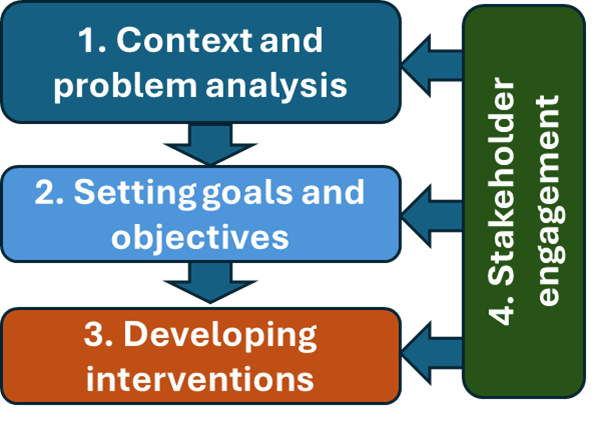
Context and problem analysis
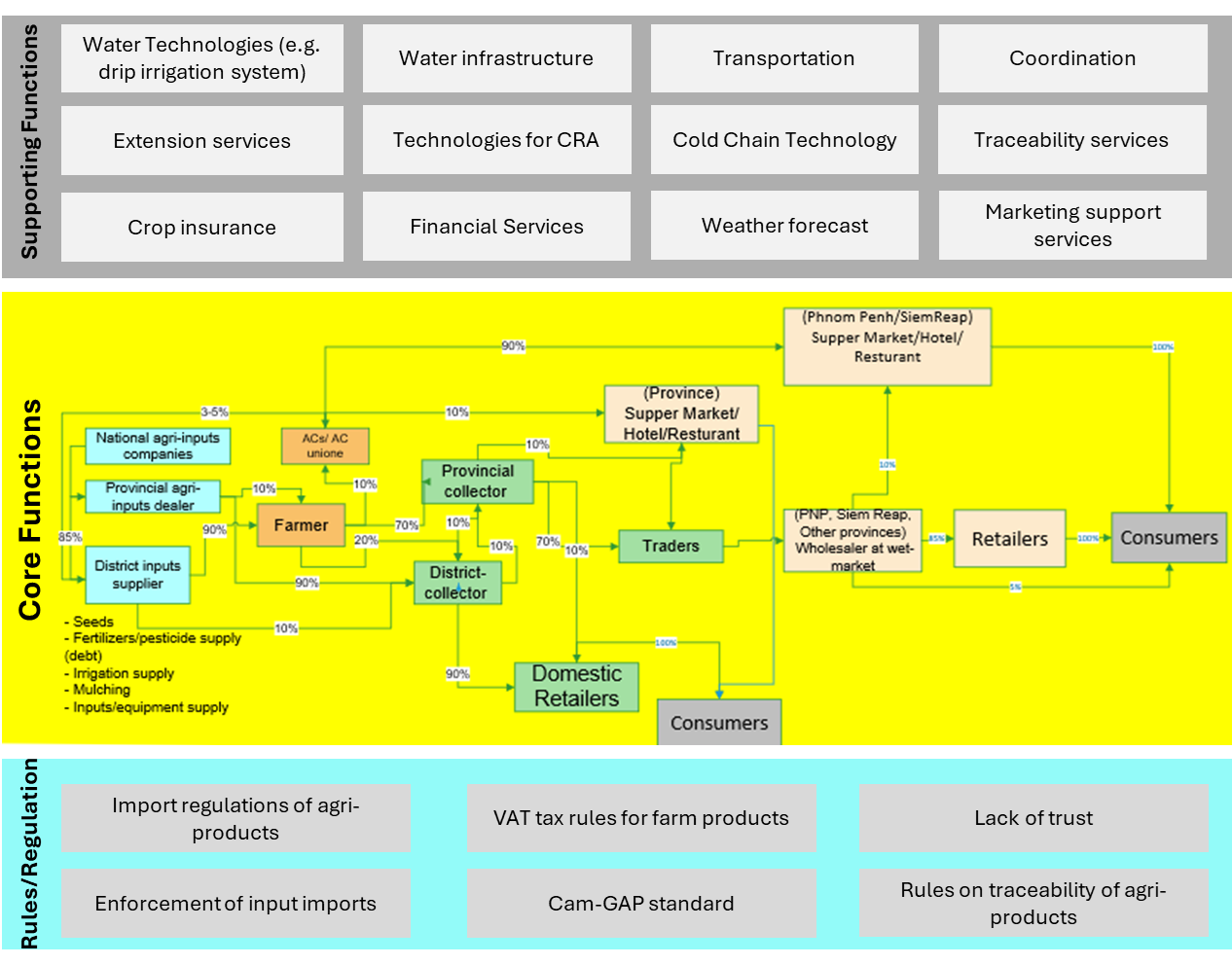
The food system approach helps analysing complex problems within a changing context. Begin by populating a generic food systems map with specific actors, factors, activities and relationships (see example below). Identify possible salient feedback loops between food system components and reflect on what (wanted and unwanted) outcomes the food system currently generates. Add exogenous and endogenous drivers and key trends that influence the food system (e.g. climate change, or the rise of convenience food). Assess why the system functions (or malfunctions) – what motivates or demotivates actors to behave and interact in ways that produce desired food system outcomes? Which barriers exist?
After having gained a holistic view of the situation, you need to define system boundaries. Boundaries in systems thinking refer to the limits or scope set around a system or its components. They define what is included or excluded from the analysis or intervention. Boundaries can refer to physical locations or jurisdictions (e.g. specified landscapes or districts), sectors (e.g. health system or livestock sector), focus areas (e.g. employment or nutrition) or time-frames (short to long term). While it is acceptable to draw boundaries that prevent the project from becoming overly complex, carefully consider unwanted effects and address critical risks. For example, if promoting vegetables improves nutrition but increases the use of hazardous pesticides and depletes water resources, you cannot ignore these effects by defining narrow system boundaries.
Setting goals and objectives
The food system approach helps maintain a holistic view without getting lost in complexity, providing a good starting point for defining the scope of a project. Start by analysing which food system outcomes need to change from a sub-optimal to a more optimal state. The three primary outcomes of food systems are:
- economic & social well-being, resilience,
- food & nutrition security, and
- environmental sustainability.
Ideally, the project should design interventions that generate positive results in all three dimensions (win-win solutions). Sustainable production and marketing of nutritious foods, for example, can at the same time increase incomes of farmers, reduce malnutrition among children and reduce environmental impacts while enhancing resilience to climate change. At a minimum, improving one outcome should not significantly disadvantage the other two. This may require specific measures to mitigate possible trade-offs and unwanted effects. Typical trade-offs in food systems include agricultural intensification versus environmental impact, the cultivation of cash crops versus improving nutrition, enhancing diversification versus increasing the workload for women, or enhancing market linkages versus power imbalances between market actors.
The next step is to define more specifically with whom and for whom food system outcomes need to change. Which stakeholders in the food system are expected to change their practices and behaviours? Examples include farmers adopting new techniques, SMEs offering new services and invest in scaling up, local authorities implementing food system strategies, and schools offering healthier meals. And who are the people who should ultimately experience improvements? Smallholder women farmers or youth entrepreneurs, malnourished rural or urban consumers?
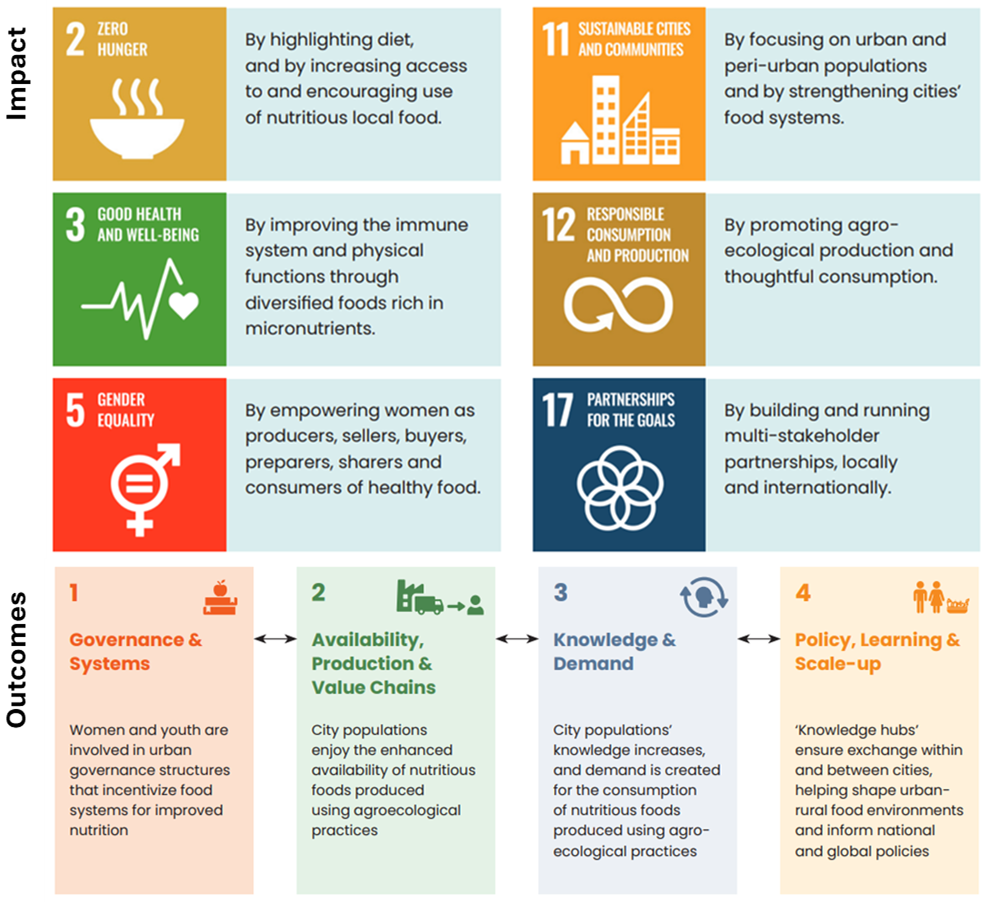
Combining these reflections with the previous food system analysis will help develop an architecture of goals, outcomes and outputs that form the basis of the project’s results frame. Aligning goals and objectives with the SDGs and with national strategies and priorities will enhance buy-in from responsible authorities and donors. It is also advisable to reflect early on the risks of not achieving the expected outcomes, and integrate mitigation measures in the project design right from the beginning.
Developing interventions
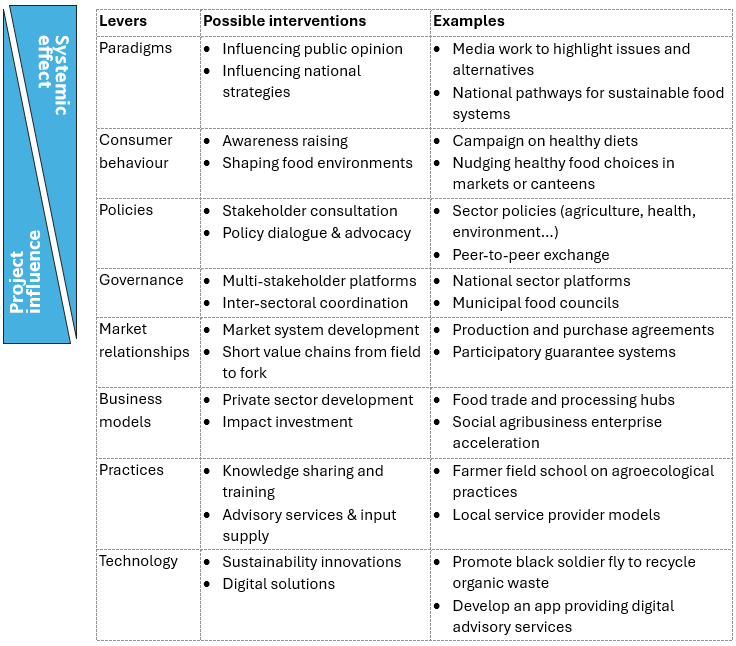
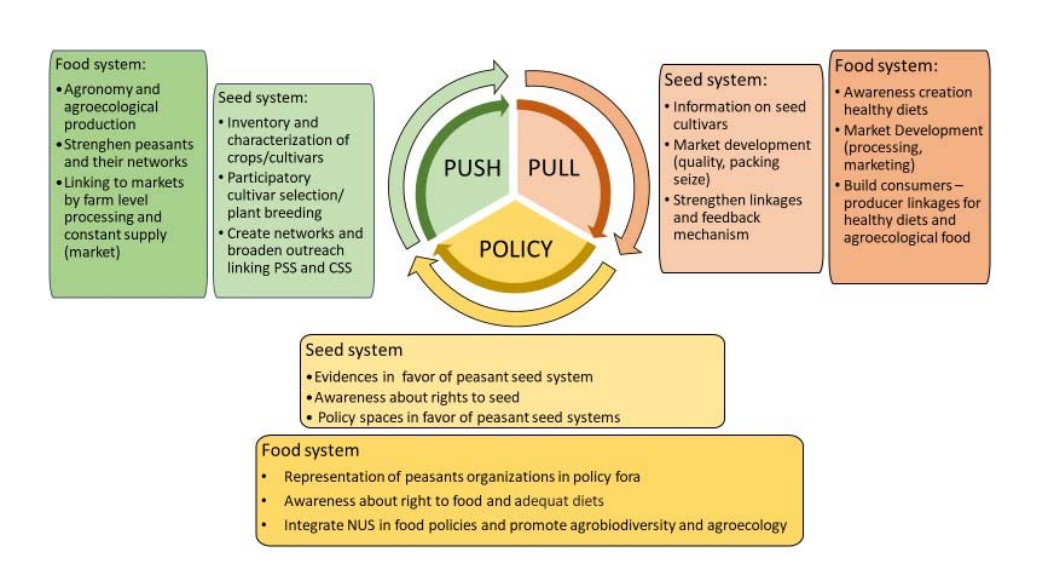
Based on the food system analysis and the defined outcomes, you can now identify key levers and interventions that can be used to catalyse the envisaged transformation. Choose levers that have a significant systemic effect, but that the project can also realistically influence (see below). Since you cannot simultaneously work on all possible levers and interventions, prioritise those most likely to have the biggest effect with available resources.
The next logical step is to formulate your theory of change by bringing the chosen interventions in relation with the desired outcomes. This can be formulated as a short narrative describing the underlying assumptions (“If…., then…”) or as a depiction of the logical framework (activities -> outputs -> outcomes -> impact). However, a graph showing the interrelations between interventions and outcomes is more suitable for a systems approach. Ideally, you can base such a graphical depiction on the food system map developed in the analysis step.
Stakeholder engagement
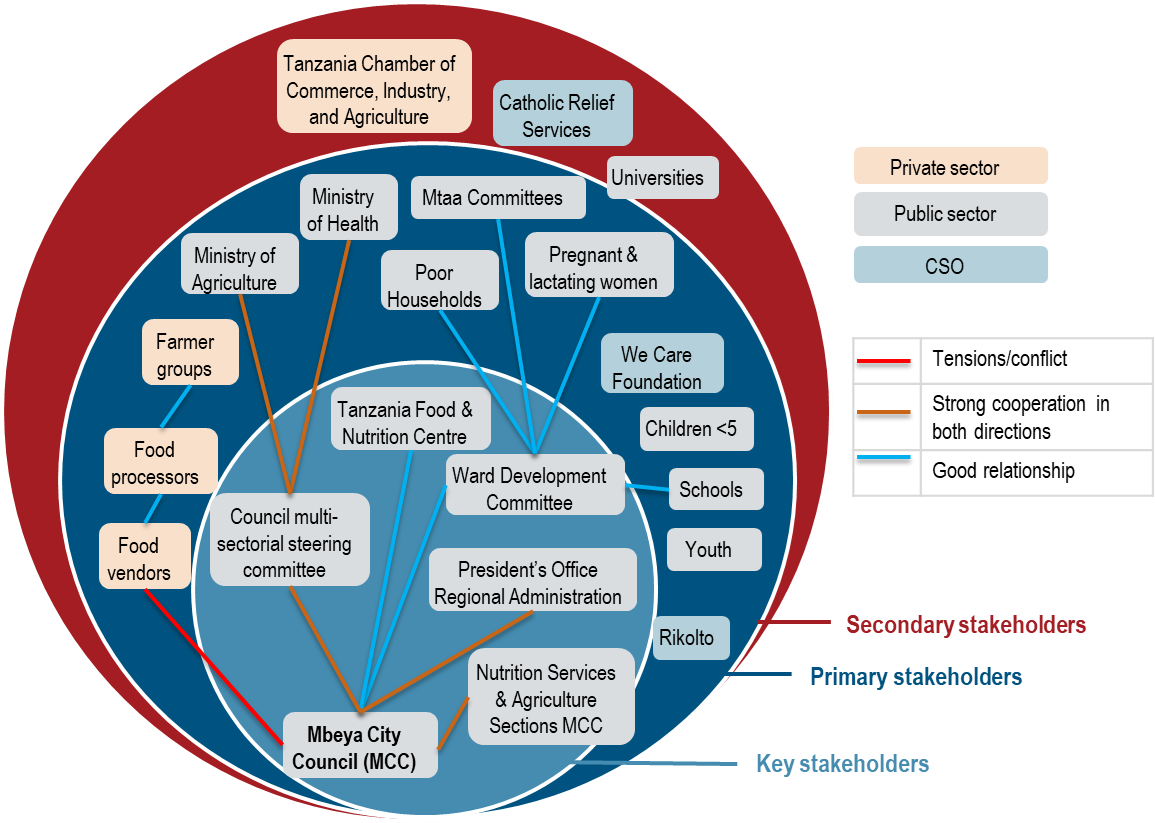
Involving relevant local food system stakeholders is absolutely essential in every step of project development. It is therefore important to design appropriate participatory processes to engage them effectively. They obviously need to be consulted during the context and problem analysis phase in order to get a comprehensive and realistic picture. Consultation will lead to a better understanding on who provides, who pays, who uses and who regulates services? Who does, or does not have access to resources, markets, financial services? Who makes decisions? A stakeholder map is a useful tool to identify the relevant stakeholders, their relationships with each other and existing power dynamics.
Stakeholder involvement is even more crucial when setting goals and objectives and when developing interventions. Following a food systems approach means recognizing that interventions are only sustainable if they are carried by existing food system actors, particularly by those who are in the driving seat to transform food systems. These are usually local or national authorities such as ministries, district departments or municipal governments. In some cases, associations of stakeholder groups such as farmers, businesses or consumers can also be legitimate drivers of food system transformation. It will be of great value if the project has a formalised partnership with such actors that ensures alignment on goals, objectives, interventions and processes.
An approach that has been proven useful in food system projects is to establish a multi-stakeholder platform involving representatives of relevant stakeholders. Depending on the specific context, these can include local authorities, producers, businesses involved in the food system (e.g. input and technical service providers, aggregators and traders, processors, retailers, canteens), consumer associations, academia and civil society organisations.
Most likely your project is not the only initiative to transform food system outcomes in your focus country or region. In recent years, a multitude of food system related projects and initiatives have come up all over the globe. It is therefore advisable to check who else is working on similar goals, coordinate interventions for best use of synergies and exchange information and learnings.
Index
K-HUB > Design a Project > Food Systems > Applying food system approaches in project design