
Introduction to Biodiversity and Ecosystems
A broad introduction to the importance of biodiversity for functioning ecosystems

K-HUB > Thematic Interfaces > Food Systems and Biodiversity > Main areas of action
Biodiversity refers to the “variability among living organ- isms from all sources including, inter alia, terrestrial, marine and other aquatic ecosystems and the ecological complexes of which they are part; this includes diversity within species, between species and of ecosystems.”1 A typical biodiversity hotspot, for instance, is the Amazon rainforest with its high diversity of plants and animals.2
An ecosystem is “a dynamic complex of plant, animal and micro-organism communities and their non-living environment interacting as a functional unit.”3 Ecosystems may be terrestrial (forests, grasslands and deserts), aquatic (rivers, lakes, and wetlands) or marine (oceans, coral reefs, and mangroves).
Ecosystem services are the benefits people obtain from ecosystems. The Intergovernmental Science Policy Platform on Biodiversity and Ecosystem Services (IPBES) uses the term “nature’s contributions to people” to describe ecosystem services. Examples include food provision, water purification, or flood control.4
Biodiversity is essential for maintaining ecosystem services. Biodiverse ecosystems are more resistant and resilient to environmental changes, such as climate change or disasters. In biodiverse ecosystems, for example, if one species is affect- ed by a disease, the others can continue to fulfil ecological functions and ecosystem services, such as pollination.5 In monocultural systems with low biodiversity, on the other hand, nutrients in soils are reduced, decreasing the variety of bacteria and microorganisms that are needed for soil fertility.6
Biodiversity and ecosystems underpin all aspects of life. The pharmaceutical industry, for example, relies heavily on plants and natural products for medicines,7 and 200 million jobs globally are tied to the fisheries value chain, which depends on healthy marine ecosystems.8 Freshwater ecosystems – such as wetlands, rivers, mangroves and aquifers – supply, purify and protect freshwater resources essential for economic growth, food security and health.9
As acknowledged by the international community when adopting the Convention on Biological Diversity (CBD) in 1992, neglecting to address the biodiversity challenge in a comprehensive manner will jeopardise the basis of our lives and achievements in development cooperation and economic development. The convention’s main goals are the conservation of biodiversity, the sustainable use of the components of biodiversity, and the fair and equitable sharing of the benefits arising out of the utilisation of genetic resources.10 The Kunming Montreal Global Biodiversity Framework and the Long-Term Strategic Approach to Mainstreaming, adopted by the parties to the CBD in 2022 and 2018 respectively, underline the importance of biodiversity and set targets for mainstreaming.11 Another milestone for biodiversity was the adoption of the 2030 Agenda for Sustainable Development and the 17 Sustainable Development Goals (SDGs) in 2015, recognising that economic development must go hand in hand with tackling social issues, such as health, education and inequality as well as protecting the climate and preserving biodiversity and ecosystems. While SDGs 14 and 15 are explicitly focused on biodiversity and ecosystems, SDG 6 and 13 are additional biosphere-related SDGs. As Figure 1 shows, these four SDGs provide the basis for achieving social justice and economic development. Biodiversity is also either included in targets or can otherwise be related to all other SDGs.12
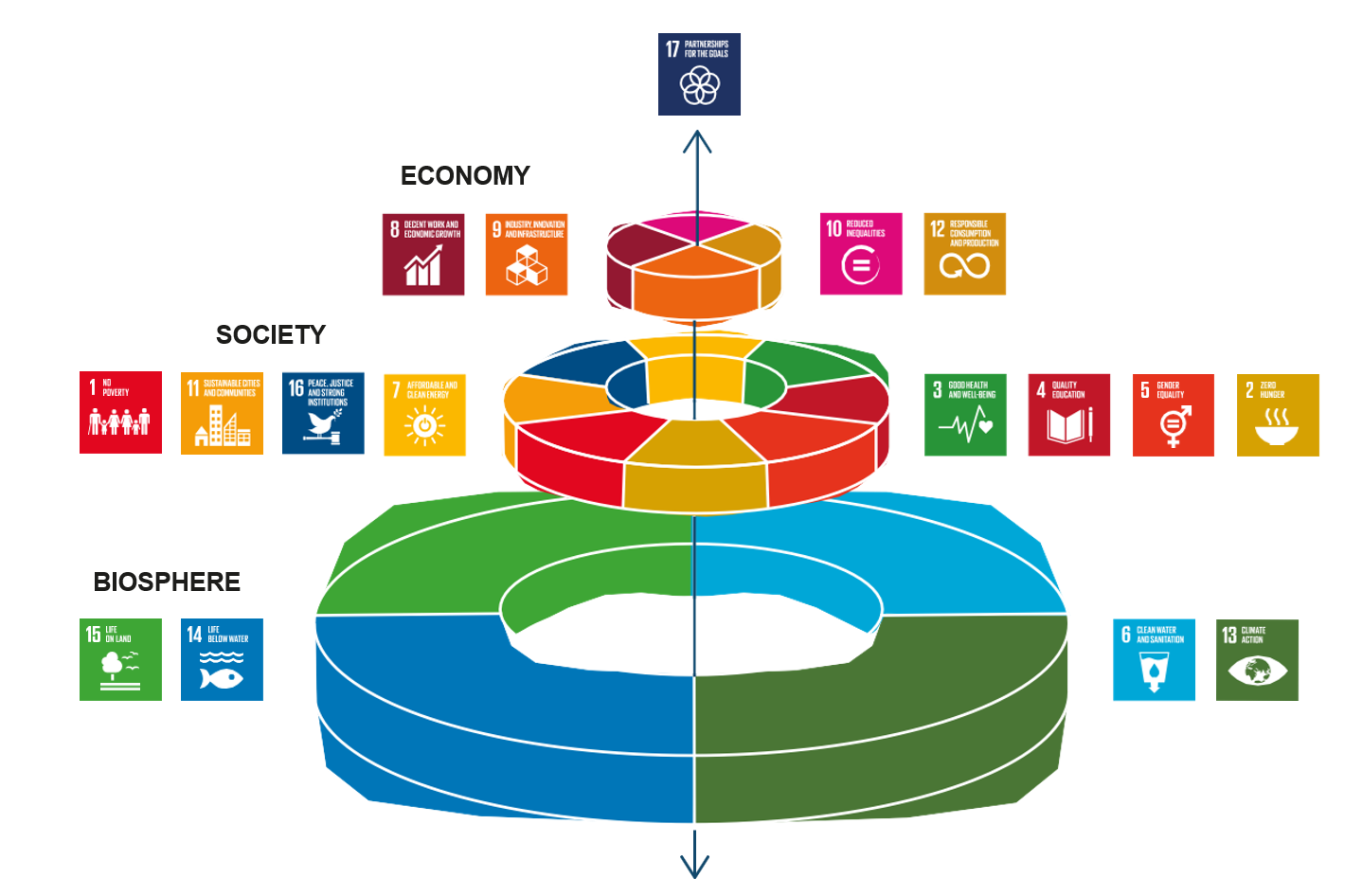
Even though the adoption of the CBD and other international treaties related to biodiversity13 present important steps to- wards the protection of global biodiversity and ecosystems, biodiversity is currently declining faster than ever. Our current way of life exceeds the rate of renewal of global natural resources, and we need the equivalent of 1.6 Earths.14 The degradation of forests, farmlands, freshwater, savannahs and coasts is already affecting the wellbeing of an estimated
3.2 billion people – 40% of the world’s population.15 The average size of wildlife populations has shrunk by 73% over the last 50 years, out of which freshwater populations are most heavily affected, followed by terrestrial and marine populations.16 The World Bank estimates that the collapse of selected ecosystems and their services, such as wild pollination, marine fisheries or timber from native forests, could reduce global GDP by USD 2.7 trillion annually by 2030.17
Further reading
- IPBES, Summary for policymakers of the global assessment report on biodiversity and ecosystem services (summary for policy makers), 2019.
- SDC, Biodiversity and Sustainable Development. Nexus Brief, Nr. 9, February 2022.
- WEF, The Global Risks Report, 16th Edition. Insight Report, 2021.
- WWF, Living Planet Report 2020 - Bending the curve of biodiversity loss. Almond, R.E.A., Grooten, M. and Petersen, T. (Eds). WWF, Gland, Switzerland, 2020.
Sources
- Convention on Biological Diversity, Art. 2.
- WWF, About the Amazon, 2024.
- Convention on Biological Diversity, Art. 2.
- IPBES Glossary, nature’s contribution to people, 2024.
- Nature & Culture International, Biodiversity: Understanding its Significance and Conservation, 2024.
- EOS Data Analytics, Monoculture Farming Explained: What Are The Pros And Cons?, 2024.
- Convention on Biological Diversity, Pharmaceuticals and Biodiversity: To protect ourselves we must safeguard our planet, 2021.
- World Bank, Biodiversity, 2024.
- UN Water, Water and Ecosystems, 2024; World Bank, Quality Unknown: The Invisible Water Crisis, 2019.
- Convention on Biological Diversity, Art. 1.
- Convention on Biological Diversity, Biodiversity Mainstreaming, 2023.
- United Nations, Transforming our World: The 2030 Agenda for Sustainable Development, 2015. Sida, Agenda 2030, Biodiversity and Ecosystems, 2022.
- Such as the Convention on International Trade in Endangered Species of Wild Fauna and Flora (CITES) or the International Treaty on Plant Genetic Resources for Food and Agriculture.
- UNEP, Becoming #GenerationRestoration: Ecosystem restoration for people, nature and climate, 2021.
- UNEP, Becoming #GenerationRestoration: Ecosystem restoration for people, nature and climate, 2021.
- WWF, Living Planet Report 2024. A System in Peril, 2024.
- World Bank, Accounting for the diverse values of nature to inform biodiversity policies, 2024.
Index
K-HUB > Thematic Interfaces > Food Systems and Biodiversity > Main areas of action