
Interactions between food systems, climate and the environment
An exploration of how climate and environment shape food systems, but inversely, how food systems contribute to climate change and impact the environment in which they are set.

K-HUB > Thematic Interfaces > Food Systems and Climate, DRR & Environment > Interactions
The biosphere, the sum of living things on Earth, and climate are inextricably bound. Through photosynthesis, plants help regulate the flow of greenhouse gases into the atmosphere. Forests and agricultural land with permanent vegetation cover – pastures, sylvo-pastoral systems, agroforestry – and the oceans act as carbon sinks and have a cooling effect on the environment through evapotranspiration and the reduction of greenhouse gases. The diversity of climatic zones on the planet has shaped ecosystems over time and defined the places where food can be collected or grown.
The structures created by the natural growth of living organisms modify landscapes, and, increasingly, so does the infrastructure built by humans. These modified landscapes influence climate, hydrology and biodiversity.
Human activity has shaped agricultural practices and ecosystems over time. Food is produced, processed, distributed, and consumed under different socioeconomic and cultural conditions, and food systems depend on
accessible natural resources, know-how, technology, and finance. Human activities and settlements in specific eco- logical and climatic zones have created food cultures that have evolved according to the availability and accessibility of resources, and that reflect the practices, beliefs, customs and traditions surrounding the production, preparation, consumption, and appreciation of food.
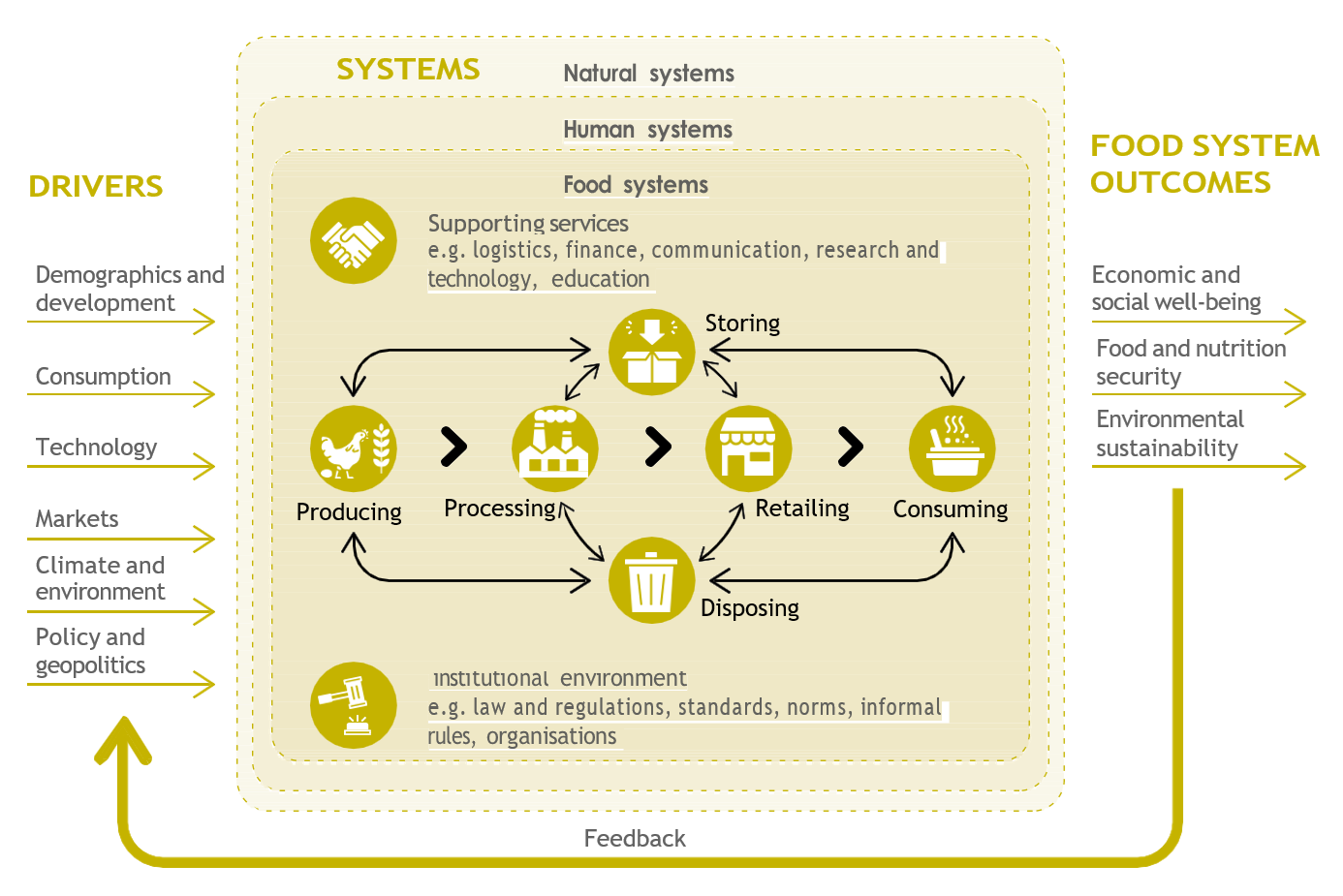
The objectives of food systems are to guarantee economic and social well-being, food and nutrition security, and environ- mental sustainability. The way food is produced, processed, distributed and consumed contributes to these objectives, but can also have negative consequences, such as excessive greenhouse gas emissions; water, soil and air pollution; loss of biodiversity; soil degradation; and negative impacts on human health. The negative consequences of modern food systems generate hidden costs (externalities) that reduce the planet's natural capital and human health in the medium and long terms.
This approach to food systems looks at the links among natural and human systems and at all the elements that govern food systems and their functions. It also considers the stakeholders. Food systems are constantly evolving and adapting. An understanding of the growing risks and impacts of food systems on the climate and the environment, and vice versa, is therefore essential to the planning of a transformation of food systems and to taking the mitigation and adaptation measures necessary to make them sustainable and resilient.
Risks related to climate change, natural hazards and environmental degradation on food systems
The following non-exhaustive list highlights how the interconnections among climate, disaster and environ- mental risks and the increasingly globalised agri-food systems affect the availability, accessibility, diversity, use, and safety of food products.
Direct effects
Extreme hydrometeorological events:
Rising global temperatures, high winds, storms, and changing and erratic rainfall pattern with prolonged periods of humidity and dryness— are increasingly exposing crops to stress and shocks. These developments also influence pests and diseases; affect plants, animals and humans; increase the risk of epidemics and epizootics; and reduce productivity and biodiversity.
Thawing of permafrost:
High latitude areas are likely to be exposed to the thawing of permafrost with consequences that may affect hydrology and biodiversity and generate erosion and landslides in mountainous regions leading to the loss of fertile land and damage to infrastructure.
Indirect effects
Droughts:
The increase in the frequency and duration of droughts contributes to the loss of biodiversity and accelerates desertification, which in turn leads to soil degradation and the loss of productive agricultural areas.
Knock-on effects
Health and nutrition:
Declines in global crop productivity generate steep increases in food prices that result in changes in nutrient levels in some foods, and affect overall caloric consumption and the nutritional quality of diets as people shift to cheaper, less nutrient-rich foods.
Economic and societal stress:
- Unstable and unpredictable yields encourage speculation on local, regional and global markets for agricultural and livestock products, and fuel inflation. High enough levels of inflation in staple crops can trigger social and political insecurity, and destabilise government systems.
- Food insecurity and hunger affect human health and behaviour, and can lead to popular uprisings or waves of migration.
- Natural events – such as floods, landslides, or pest infestations or man-made disasters – such as chemical spills or dam breaches – can lead to market disruptions, from the local to a global scale with interruptions in the supply of pesticides or fertilisers and the disruption of maritime routes. These events disproportionately af- fect vulnerable groups and undermine efforts to leave no one behind.
Impacts of food systems on climate and the environment
Food systems generate direct effects, hidden effects, and external costs that can be described as risks for the planet's climate and ecosystems. The following is a non-exhaustive list of the most significant risks and the direct and knock-on effects.
Intensive practices:
- The continuing increase in the world's population and a shifting nutrition pattern are leading to a rise in demand for food. To meet this demand, intensification and changes in land use are putting further pressure on soil, biodiversity, and water, and increasing humanity's ecological footprint.
- The conversion of natural ecosystems and changes in land use – from forest to agricultural land, from wetlands to farmland, from farmland to infrastructure – reduces the capacity of soils and vegetation to act as carbon sinks. More greenhouse gases are produced and re- leased, contributing to rising global temperatures and affecting the biodiversity and hydrology of ecosystems.
- Agricultural practices based on increased misuse of chemical fertilisers and pesticides, often combined with large-scale monocultures and industrial livestock systems, increase GHGs, reduce the organic content of terrestrial soils and water storage capacity, and contribute to increased loss of soil health and biodiversity.
- Declining land productivity and crop yields are likely to increase pressure on soil and water. The continued expansion of agriculture in areas of high biodiversity value (forests, pastures, wetlands) is likely to increase, jeopardise pollination services, and further unbalance the planetary ecosystem.
Supply chains:
- The presence of waste and contaminants through- out the supply chain (fossil fuel-based energy-intensive processing, chemical products, plastic packaging) is increasing. Poor waste management (chemical releases, open dumping, wastewater releases without treatment) is contaminating soil, water, and air, and is reducing the capacity of ecosystems to provide services.
- The complex, interconnected, and increasingly mul- ti-tiered globalised food supply chains increase the km per unit of food transported, and hinder the implementation and monitoring of practices related to land-water-energy use, transparency, and traceability, and disrupt competition between local markets and exports.
- Food losses (after harvest, during storage and trans- port) and food wastage (at the retail and consumer levels) increase GHG emissions, reduce food availability, waste energy, water, and other resources used through- out the value chain to produce the food, and affect the livelihoods of supply chain actors.
Eating habits and dietary changes:
- Suppliers may cater to consumer food preferences (including the expectation that food products will be available throughout the year) by increasing the number of food miles, thereby increasing the GHG emissions related to food transport.
- Rising per capita incomes, combined with urbanisation, are replacing traditional diets of starch, pulses, and vegetables with energy-intensive ultra-processed food products that are high in refined sugars, fats, and oils. These diets are often higher in meat content, have a higher carbon footprint, and given that malnutrition is a major driver of noncommunicable diseases, can be harmful to health.
Index
K-HUB > Thematic Interfaces > Food Systems and Climate, DRR & Environment > Interactions