Launch of the Knowledge Hub
Are you designing a project? Struggling with a concept? The A&FS Network is delighted to introduce you to the Knowledge Hub. Visit this one-stop shop for practical guidance, essential knowledge, and advice from our experts.
Why we created the Knowledge Hub
There is a saying, “If only SDC knew what SDC knows”. Our institution is home to many bright minds and even more among our partners. Yet we often struggle to explain what is relevant and where to find what is relevant.
At the end of the Food System Learning Journey a couple of years ago, we realised that knowledge of institutional importance was at risk of getting lost. First, we thought we could just create a large PDF-document with various internal links, but then we thought, why not go all the way and create an online repository of knowledge that can be expanded, updated, and improved continuously?
The result is this one-stop shop for SDC-relevant information on food systems, which should also serve the whole network. It is not a finished static product, but rather a dynamic platform that we want to gradually develop over time. To that aim, we would be delighted to include contributions from you as network members, and we welcome any feedback, whether on content or usability. That will allow us to gradually but continuously improve the K-Hub.
Our goal is simple: if you work within SDC and seek information on food systems, the K-Hub should be the first place you come to. Similarly, if you are a member of the A&FS Network, working in the complex frame of food systems, we hope that you will also find this an illuminating and helpful site to call up for information.
What you will find in the Knowledge Hub
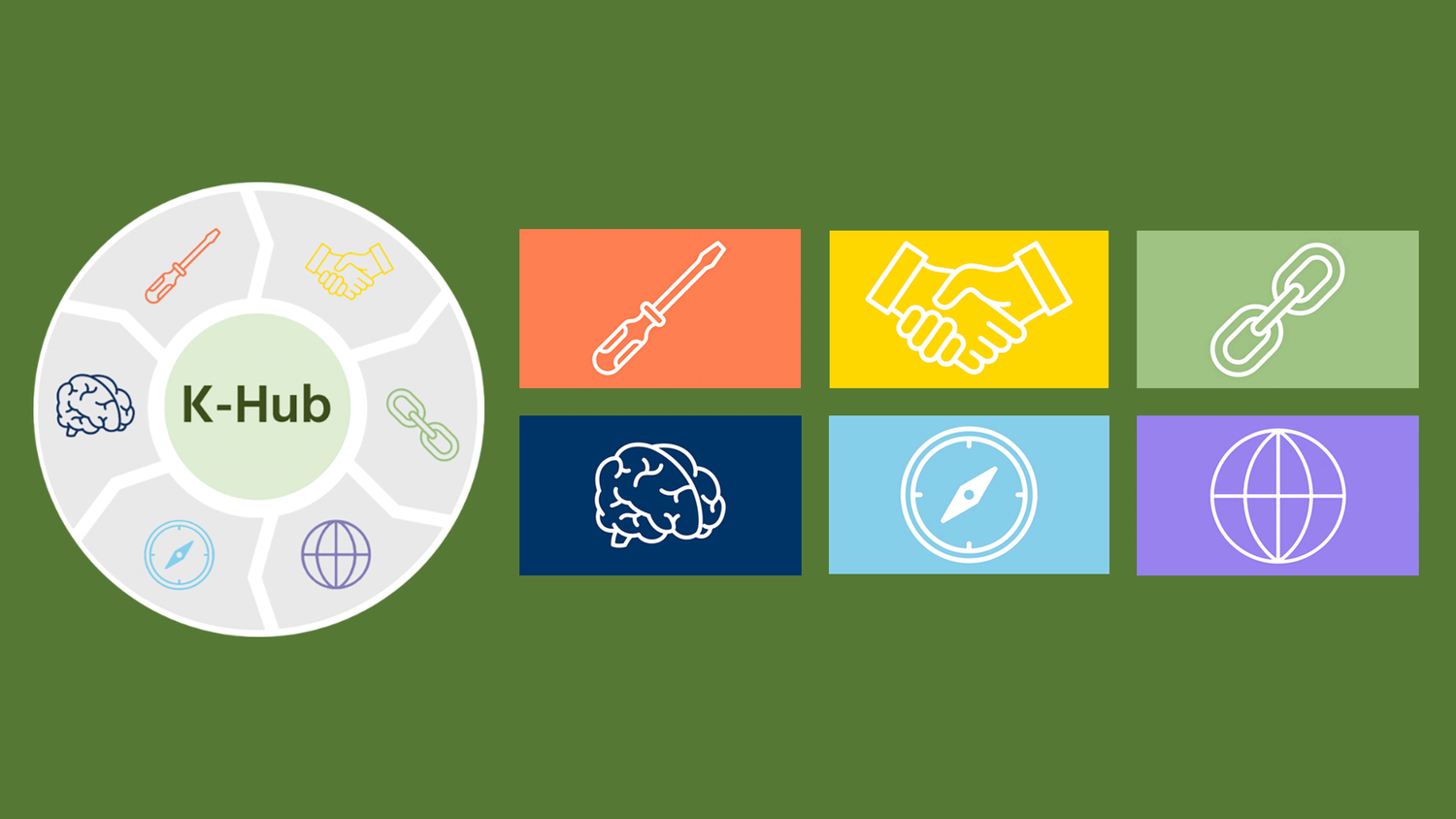
Now that you know why this Knowledge Hub was created, let’s explore its structure. The home page is organised into six boxes, ordered from practical to theoretical. In the first row, there is the knowledge that will support project design. In other words, if you are creating a project and quickly need hand-on information, these are the boxes you will use. The second line is if you want to go a little bit deeper and spend more time to think conceptually, with an access to theoretical knowledge, that can help you take a deeper dive into various topics and explore concepts.
What you should not miss are the How-to's in the orange section about how to design a project. There you can get practical advice on topics such as agroecology, seeds systems, sustainable land management, food systems, or nutrition, be it with key principles, examples and good practices.
Another highlight is the Food Systems Learning Guide, which progressively takes you through the knowledge harvested by the Food Systems Learning Journey. As systems thinking is not just theory but a practical skill set, this guide emphasis interconnectedness through effective way of analysing and intervening. Learn the basics in 1-2 hours, immerse yourself using the secondary sources, or use it to run your own courses to train your colleagues up on food systems



The following three chapters give you access to theoretical knowledge, that can help you take a deeper dive into various topics and explore concepts.


Now it's time to explore it for yourself!
www.sdc-foodsystems.ch/en/k-hub
Don’t hesitate to share your feedback with us by e-mail.