
Improving laser cutting with acoustics: The self-guiding laser
Thun, 13.08.2026 — Laser cutting of metals is a powerful and flexible process. However, depending on the material’s thickness and properties, adjusting the cutting machines can be a time-consuming process. Researchers at Empa, the University of Applied Sciences and Arts of Southern Switzerland (SUPSI), and the machine manufacturer Bystronic developed a method in an Innosuisse project that allows the laser to assess the cut quality itself using cameras and microphones and, if necessary, adjust it immediately.
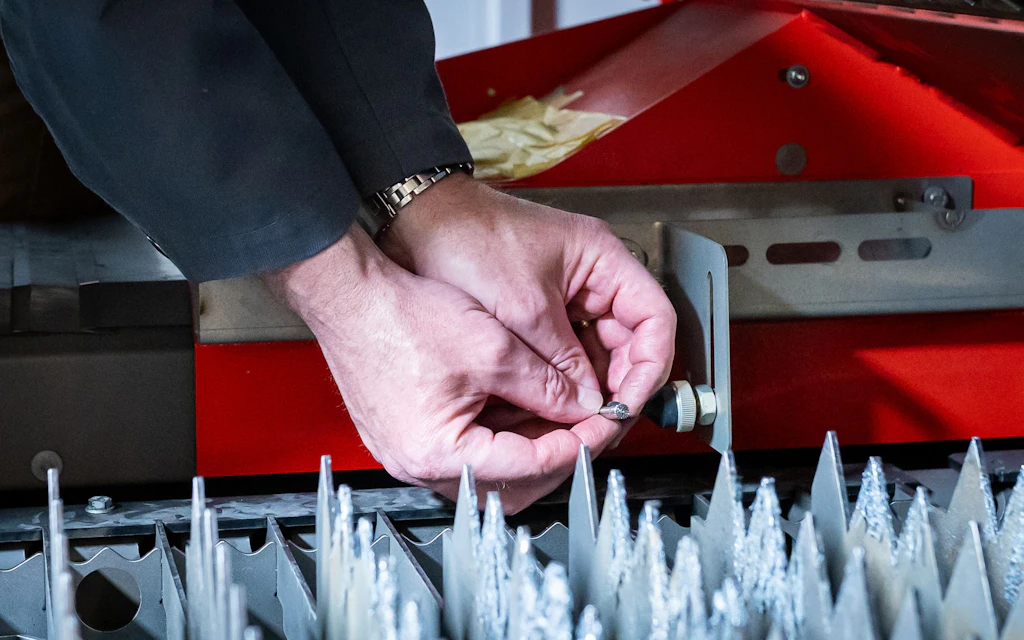
Can light penetrate a 2.5-centimeter-thick steel plate? With laser beam cutting, the answer is yes. Using wavelengths in the near-infrared range and high power, the laser melts the metal in a fraction of a second. Laser cutting enables fast processing and exceptionally precise cuts, even for workpieces with complex shapes or in small batches. It is therefore enjoying growing demand, for example in the automotive industry.
However, the process is somewhat volatile, especially with thick workpieces. To achieve the desired cut quality, the laser must be readjusted for each alloy and material thickness. It can take time for a manufacturer to perfectly configure its laser cutting machine through targeted test series. And even the slightest change in the material to be cut requires repeating this time-consuming process.
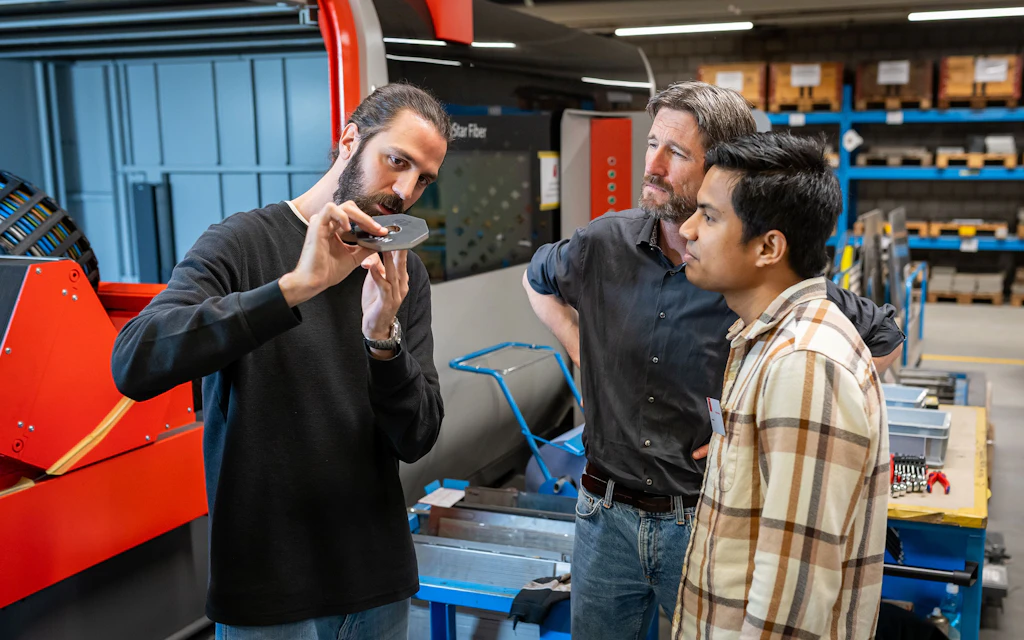
In an Innosuisse project, Empa, the University of Applied Sciences and Arts of Southern Switzerland (SUPSI), and the Swiss machine manufacturer Bystronic aim to address this issue. The goal is to give the laser “eyes” and “ears” so that the machine can continuously assess the cut quality and adjust it autonomously. “SUPSI is working on evaluating the cut using cameras. We are developing acoustic methods,” explains Empa researcher Roland Richter, who works in the Multifunctional Materials and Interfaces laboratory in the team of Elia Iseli.
“Hearing” the quality of the cut
Although cutting is done “only” with light, the process is loud. Where the laser hits the steel, molten and vaporized metal and plasma are produced. A process gas continuously flows over the cut to remove the ablated material. The Empa researchers use data from numerous experiments and machine learning models to extract clues about the cut quality from the chaotic background noise. “We were able to show that cut quality can be assessed acoustically almost as well as with cameras,” says Richter. “At the same time, the required equipment is significantly cheaper.”
Cutting quality is determined by two factors: the roughness of the cut edge – the smoother, the better – and so-called burr formation. Burrs form when the material blown out of the cut settles on the back of the workpiece. Thick workpieces in particular are prone to burr formation due to the high laser power required for the cutting process. The fewer the burrs, the less post-processing and material waste – resulting in time and cost savings.
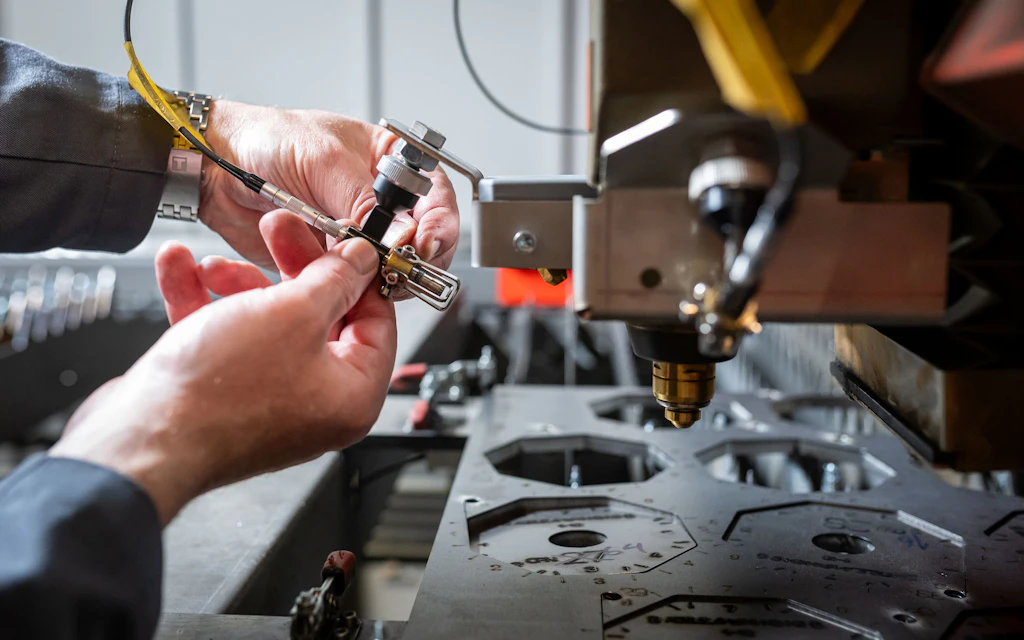
To train their models, the Empa researchers conducted a series of tests using four different material thicknesses: 6 mm, 10 mm, 15 mm, and 25 mm. In each test, they assessed the cut quality “manually.” At the same time, they recorded the ambient noise using nine microphones placed at various locations within the machine. They then refined the resulting models using smaller test series with different alloys. In parallel, the SUPSI team followed a similar approach using optical cameras.
Instant self-correction
The two-year project is scheduled to conclude in the fall of 2026. In the final phase, the Empa researchers are now working to link the acoustic and optical models to a central “brain” that allows the machine to evaluate the cut and immediately optimize its settings on its own. “With this model, the time-consuming test series are no longer necessary,” says Richter. Instead, the laser automatically adjusts to the optimal parameters for the respective material. Existing machines could be easily retrofitted with the system: All that is needed is a PC with the control algorithm, along with a few microphones and cameras.
The partners are pleased with the results. After all, such a collaboration not only benefits the industry partner but also research. “This project has enabled us to test and further develop our models for simulating and controlling laser cutting processes using very powerful industrial lasers to which we would otherwise have no access,” Richter concludes.
Further information
Dr. Roland Richter
Empa, Multifunctional Materials and Interfaces
Phone +41 58 765 63 04
roland.richter@empa.ch
Dr. Elia Iseli
Empa, Multifunctional Materials and Interfaces
Phone +41 58 765 63 28
elia.iseli@empa.ch
Dr. Andreas Lüdi
Bystronic Laser AG, Global R&D Innovation
Phone +41 62 956 36 46
andreas.luedi@bystronic.com