
Mapping Switzerland’s characteristic landscapes
Birmensdorf, 30.06.2026 — From moors to settlements to forests – Switzerland’s characteristic landscapes are changing because of climate change, construction activities and afforestation. A new method developed by researchers at the WSL could make this visible in the future. By allowing characteristic landscape types to be recorded across Switzerland, it can thus serve as a basis for targeted landscape development.
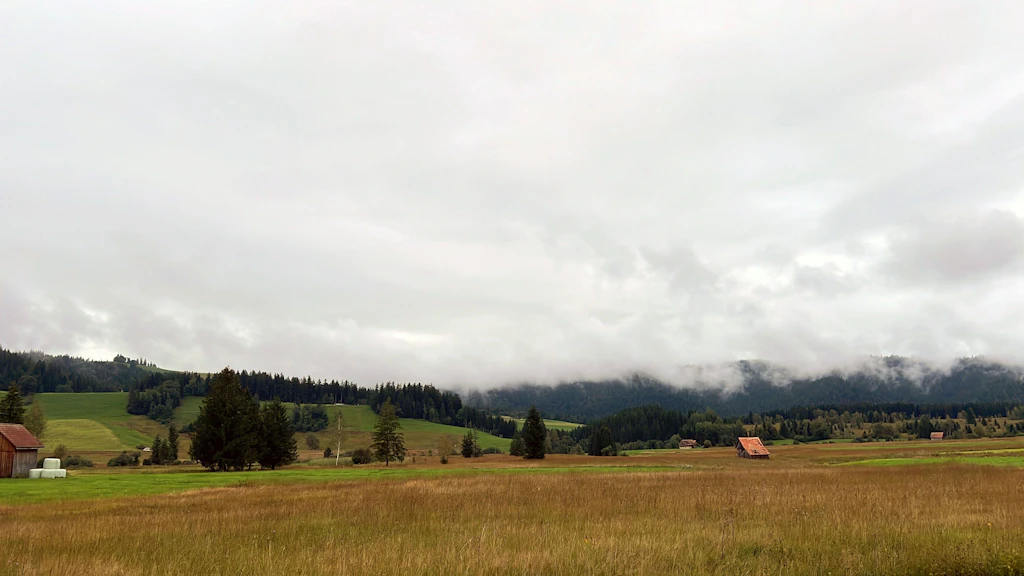
- Researchers at WSL have developed a new method for comprehensively mapping Switzerland’s characteristic landscapes and displaying them on maps.
- They base their work on existing landscape typologies, digital geodata and surveys on how people perceive the landscape.
- Using a prototype of the method, the researchers have produced maps of characteristic landscapes in the cantons of Zug, Vaud and Graubünden.
Switzerland is renowned for its scenic beauty and diversity within a small area. Often, certain landscape features such as scattered settlements, alpine meadows or river floodplains are characteristic of a region and help define its identity. “Preserving this diversity of characteristic landscapes and elements is one of the goals of Swiss landscape policy,” says Marcel Hunziker, a social scientist at the Swiss Federal Institute for Forest, Snow and Landscape Research (WSL). Yet the character of landscapes is changing – for instance, due to construction, afforestation and climate change. Therefore, a method to systematically record landscape characteristics across Switzerland and assess their development would be helpful.
The WSL and the Swiss Landscape Conservation Foundation have now jointly developed such a tool on behalf of the Federal Office for the Environment (FOEN). In the future, it could help planning authorities to better monitor the regional character of a landscape and preserve its quality. “To do this, we use existing landscape classifications, such as the catalogue of characteristic cultural landscapes in Switzerland, as well as digital maps and geodata e.g. on land use” explains Hunziker.
Switzerland, squared
The researchers divided Switzerland into squares with 100-metre-long sides and assigned each one a corresponding landscape type based on the characteristic elements found there. These can be near-natural landscapes such as wooded pastures or moors, but also areas dominated by settlements or industry. “For the canton of Zug, for example, there are a total of 22 different types,” says Hunziker.
Further, as landscape is perceived by people, the researchers integrated data from the Swiss Landscape Observation Programme (Landschaftsbeobachtung Schweiz, LABES). This data shows how people perceive the character of ‘their’ landscapes. The researchers consulted with local experts to verify the results.
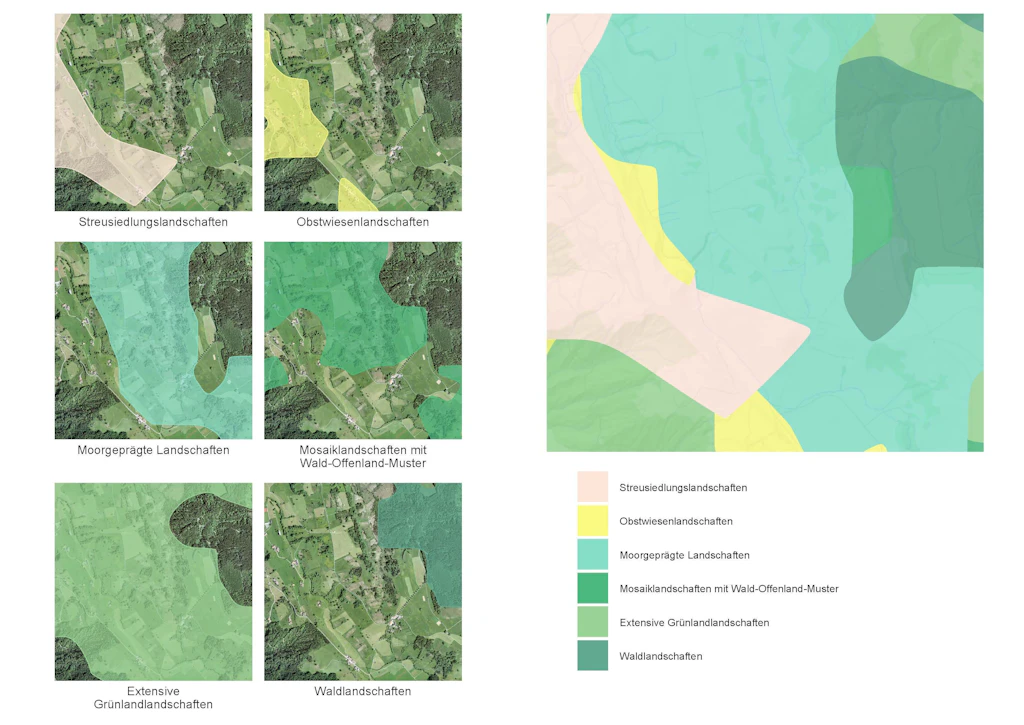
Maps of three cantons
So far, the research team has developed a prototype of the method for the canton of Zug, tested it in the cantons of Vaud and Grisons, and produced maps for all three areas. These show which types of landscape are particularly common in these cantons or are perceived as distinctive and therefore characteristic of an area. In the canton of Zug, for example, these include moorland and orchard landscapes. They have now published their results in a WSL report.
Contact:
Dr. Marcel Hunziker
Group leader, Social Sciences in Landscape Research, WSL Birmensdorf
marcel.hunziker@wsl.ch
+41 44 739 2459
Dominique Weber
Technical staff member, Remote Sensing, WSL Birmensdorf
dominique.weber@wsl.ch
+41 44 739 2342
Cécile Nyffeler
Technical staff member, Remote Sensing, WSL Birmensdorf
cecile.nyffeler@wsl.ch
+41 44 739 2270
WSL publication
Eine neue Landschaftscharaktertypologie für die Schweiz
Der Prototyp wurde für den Kanton Zug entwickelt und an den Kantonen Waadt und Graubünden getestet.
WSL Berichte 190(2026) Download Available languages: German
Copyright
WSL and SLF provide image and sound material free of charge for use in the context of press contributions in connection with this media release. The transfer of this material to image, sound and/or video databases and the sale of the material by third parties are not permitted.