
Why the actual fuel consumption of plug-in hybrids is often higher
Dübendorf, 16.07.2026 — Plug-in hybrids often consume more than officially stated. An Empa study now shows the reasons for this: Whether the vehicles can actually exploit their environmental advantage in everyday use depends heavily on usage, ambient temperatures, and vehicle design. Regular charging, individual driving behavior, and vehicle characteristics such as weight play a decisive role.
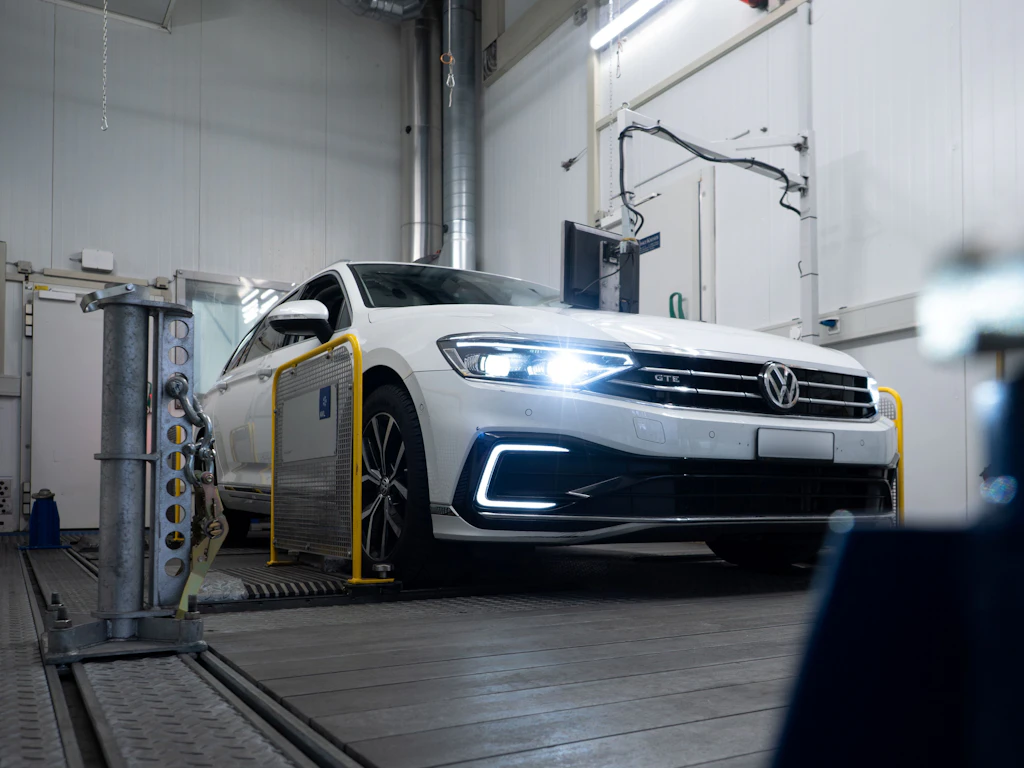
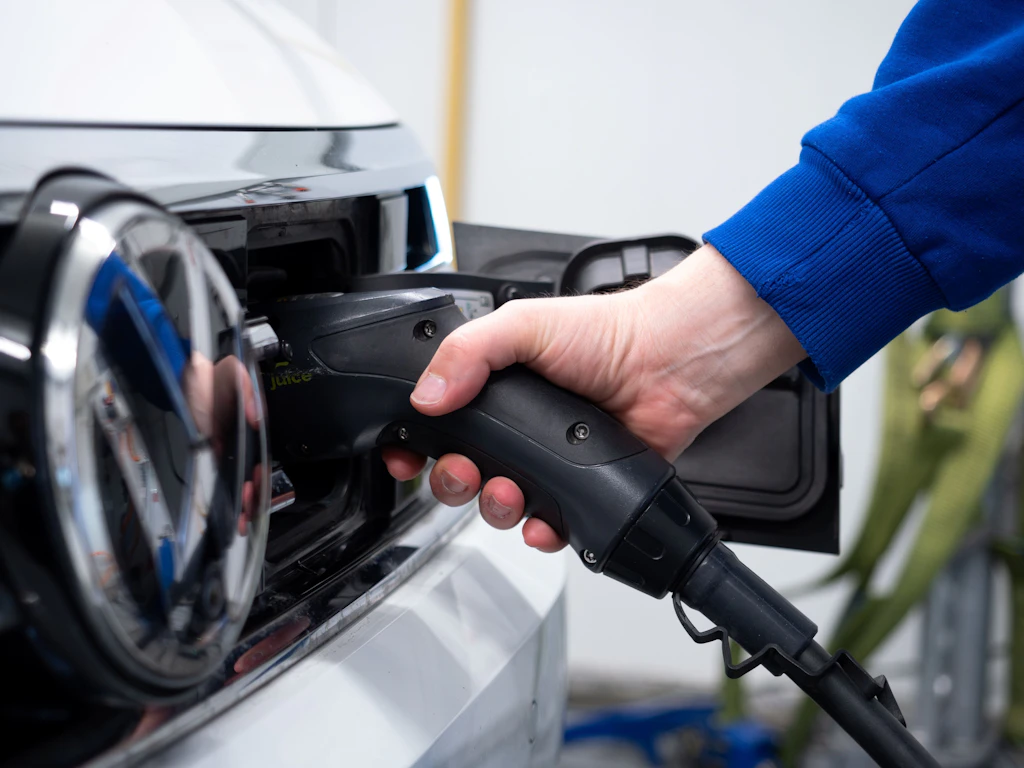
Vehicles with plug-in hybrid drives are intended to facilitate the transition to electric mobility. They can cover shorter distances purely on electric power and offer a combustion engine as a backup for longer trips. According to Empa studies funded by the Swiss Federal Office for the Environment (FOEN), the actual proportion of purely electric driving depends heavily on usage – and in particular on charging behavior. “If someone owns a plug-in hybrid and does not charge the vehicle regularly, that person is effectively driving a heavier combustion engine vehicle. Due to the additional weight of the battery and electric motor, consumption can even be higher than with a comparable conventional gasoline engine,” explains study author Miriam Elser. Vehicle design is therefore also crucial: Vehicle weight, drive design, and battery size influence how efficiently a plug-in hybrid performs on the road.
Poor conditions significantly lower the advantage
Until now, findings on the actual fuel consumption of plug-in hybrids have been based primarily on everyday data collected in vehicles. This data comes from the so-called On-Board Fuel Consumption Monitoring (OBFCM), which has been mandatory for vehicles on the European market for several years. The OBFCM data shows that actual fuel consumption is significantly higher than the official type-approval values. “From such everyday data collected directly in vehicles, we know that consumption is higher, but we don't know why,” explains Elser. Information on ambient temperature, heating operation, or driving style is usually missing and is not covered by standardized type approvals.
To close this gap, Empa researchers examined twelve current plug-in hybrid passenger cars on a roller test bench in the laboratory. They measured electric range, power and fuel consumption, and CO₂ and pollutant emissions at different outside temperatures – including 23 degrees Celsius, minus 7 degrees Celsius, and minus 7 degrees Celsius with the heating switched on. They also tested more dynamic driving profiles. “This enabled us to distinguish for the first time between the influence of cold weather, heating, and driving style on the electric share and combustion engine operation,” says Elser.
The results show a clear pattern: Under ideal conditions, plug-in hybrids drive electrically for long periods and produce correspondingly low emissions. Under realistic everyday conditions, however, their efficiency advantage can largely be lost. Low temperatures, the heating, and dynamic driving significantly reduce the electric range. The combustion engine kicks in earlier and more frequently, and fuel consumption as well as CO₂ and pollutant emissions increase, in some cases significantly.
A balance is needed between weight and battery size
Empa's analyses further showed that the overall design of plug-in hybrids also has an influence. “It's not automatically the smallest car that performs best – but lighter vehicles with moderate engines and balanced battery sizes achieve better overall efficiency values in our measurements,” says Elser. Such vehicles tend to strike a good balance between electric range, energy consumption, and emissions.
Heavy vehicles require more energy per kilometer. In plug-in hybrids, the additional weight of the battery and drive system exacerbates this effect and can cause the combustion engine to kick in earlier and more frequently. Under unfavorable conditions, the electric range decreases significantly, while fuel consumption and CO₂ and pollutant emissions increase. Even very large batteries only show their advantage if they are charged regularly and the driving profiles match the electric range – at the same time, their additional weight permanently increases energy consumption.
European assumptions for Switzerland probably too conservative
The so-called utility factor plays a key role in the type testing of plug-in hybrids. It is a measure of the proportion of distance traveled electrically and is between 70 and 85 percent for plug-in hybrid vehicles. Until now, the EU has based its calculations on older commuter data from the US. However, real European OBFCM driving data showed that plug-in hybrids are driven significantly less on electricity in everyday use. For this reason, the calculation methodology for the European utility factor was adjusted in 2025. This is to be done again in 2027.
Empa researchers investigated whether these European assumptions also apply to Switzerland. To this end, they calculated the electric driving share for the first time based on national mobility data from the Microcensus Mobility and Transport. Typical daily driving distances were linked to the emissions and energy consumption data of plug-in hybrids tested on a roller test bench and additionally compared with real consumption data.
The result: A utility factor adapted to Switzerland, i.e., the statistically driven electric share, would tend to be higher than the European one, as shorter distances are covered on average and the proportion of company vehicles – which are strongly represented in Europe and are charged even less frequently than private plug-in hybrids – is significantly lower in Switzerland. However, without real data on charging behavior, uncertainties remain, according to Elser: “For example, we assumed that all users charge their vehicles every day.”
Realistic usage factors are key
Overall, the studies argue in favor of country-specific and realistic utility factors. This is because the electric driving share specified in the registration guidelines has a significant impact on the official figures for fuel consumption, electricity demand, and emissions. However, overly conservative assumptions could lead to plug-in hybrids becoming less attractive from a regulatory perspective. “It would be a shame if this technology lost its significance solely on the basis of methodological assumptions,” says Elser. “For many who are not yet able or willing to buy a pure electric car, a regularly charged plug-in hybrid can be significantly better than a pure combustion engine.” The key is to ensure that plug-in hybrids are used correctly and that their actual electric driving range is specifically promoted in everyday life – for example, through reliable charging infrastructure at home and at work, clear guidelines for charging capacity in fleets, and incentive systems that favor electricity over fuel.
Literature
B Sandoval Guzmán, M Huber, P Zimmermann, B Zeps, C Bach, M Elser: Environmental performance of plug-in hybrid electric vehicles: Impacts of driving cycles, ambient temperature, and auxiliary loads; Atmospheric Environment: X (2025); doi: 10.1016/j.aeaoa.2025.100393
B Sandoval Guzmán, E Asikainen, M Huber, P Zimmermann, C Bach, M Elser: Utility factor frameworks for plug-in hybrid electric vehicles: A comparative assessment; Transportation Research Part D: Transport and Environment (2026); doi: 10.1016/j.trd.2026.105098
Further information
Dr. Miriam Elser
Chemical Energy Carriers and Vehicle Systems
Tel. +41 58 765 47 74
miriam.elser@empa.ch