
NICE continues to strengthen nutrition resilience
When it comes to food and nutrition, cities face a double burden: feeding growing populations while navigating climate shocks, economic instability, and nutrition crises. This is where the Nutrition in City Ecosystems (NICE) project has come in since August 2021. Co-funded by the SDC and co-implemented by Swiss TPH, ETH Zurich, sight and life, the Sustainable Agricultural Foundation and local government partners in Bangladesh, Rwanda and Kenya, NICE entered its second phase in July 2025, continuing its mission to improve nutrition resilience and reduce poverty among vulnerable populations in secondary cities of low- and middle-income countries.
AFS Newsletter - Article by

Helen Prytherch
Swiss Tropical and Public Health Institute
helen.prytherch@swisstph.ch | LinkedIn
Annette Wachira
Sustainable Agriculture Foundation Africa
netswachira@gmail.com | LinkedIn
As a result of urban population growth and strong rural-urban migration, 66% of the world’s population are predicted to live in urban areas by 2050, with much of this transition happening in small cities and towns in Africa and Asia. However, in urban settings, many people shift away from food farming and traditional staples such as millet or pulses towards staples prepared more conveniently (rice, pasta, or bread), or high-sugar foods. Lifestyles changes made themselves felt in other aspects of urban life as well - with work more likely to be office-based (sedentary, time needed to commute, leaving less time for shopping in open markets and traditional cooking). The food environment relentlessly advertises fast and convenient foods. This interplay of factors leaves city dwellers vulnerable to food price shocks and even results in nutritional disorders such as micronutrient deficiencies or diet-related non-communicable diseases and their precursors like overweight, high cholesterol, hypertension etc. Degradation of natural resources, as well as pollution and poor waste management are other phenomena accompanying the challenge of meeting the demand for food in urban centres.
While cities need to adapt to climate change, disasters, and social disruptions, urban populations require nutritional well-being, and an active healthy life, facilitated by stable food production, retail and consumption. And that’s where NICE comes in. NICE is supporting cities to improve their urban, nutrition, and food systems’ resilience defined as the “ability of people, households, communities, and systems to mitigate, adapt to, and recover from shocks and stresses in a manner that reduces chronic vulnerability and facilitates inclusive growth” (USAID, 2013). Aiming to improve nutrition and reduce poverty among vulnerable populations in secondary cities of low- and middle-income countries, and envisioning a healthy, equitable, shock-proof urban food environment, NICE continues its work at the intersection of nutrition, urban and food system resilience in a second phase.
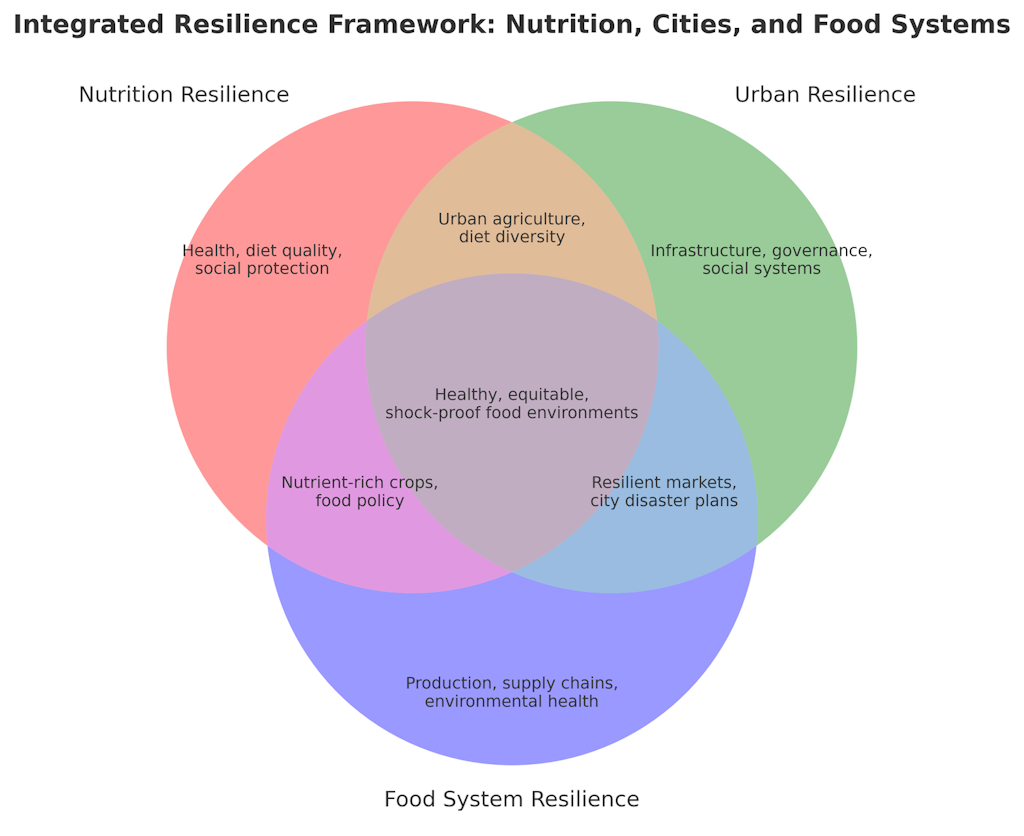
In NICE we support health and dietary quality through agriculture initiatives in the city foodshed, policy formulation support, and social behaviour change campaigns. By strengthening capacities of small holders through the farmers’ hub social business model, NICE supports cities to maintain supply during disruptions and to withstand shocks without losing function (absorptive capacity). Promotion of agroecological practices adapting to climate shifts and evolving diets are another key intervention channelled through the farmers’ hubs that offer training e.g. in compost making, natural cooling, integrated pest management etc. Furthermore, through NICE’s push for policy platforms, objectives to tackle the triple burden of malnutrition through multi-sectoral participation are embedded in municipal planning and governance. The co-existence of undernutrition (wasting, stunting, underweight), along with overnutrition (overweight, obesity) or diet-related non-communicable diseases (NCDs), and micronutrient deficiencies such as anaemia, within the same city, sometimes even the same household or even person (over the lifecycle) is not a sectoral problem but requires collaboration and attention from agriculture, health, education, planning and beyond. In Bangladesh, the cities of Dinajpur and Rangpur realized this need for intersectoral collaboration and formulated multi-sectoral city-led plans of Action of Nutrition as a first important step in applying a systemic approach. Building trust and understanding between the offices of different line ministries for open reporting and communication requires a persistent push, and evidence generation to show the tangible benefits. In Bungoma, Western Kenya, interdisciplinary stakeholders came together to draft, enact and launch the Bungoma County Food Safety Policy. The County Department of Agriculture, Livestock, Fisheries, Irrigation & Cooperative Development led the initiative, despite the (stalled) national-level Food Safety Policy chaired by the Ministry of Health.
Equity and Inclusion are other fundamental components of NICE, and women and youth the primary target audience for the project’s small grant program. As women and youth’s role and representation in food system governance, decision-making, and access to productive resources are limited, they often have only few opportunities to gain fair benefits from a food system that largely depends on them to function. By fostering women’s and youth’s entrepreneurship, NICE not only strengthens communities but also contributes to redundancy and diversity in food systems — creating multiple, locally driven pathways to nutritious foods avoiding dependence on single points of failure.
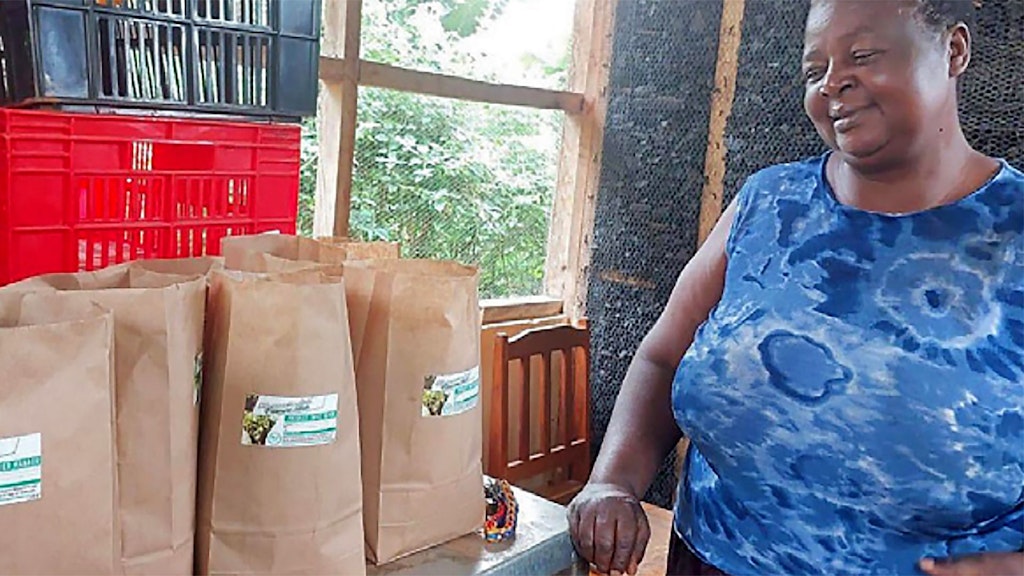
Margaret Atulo (see picture above), a farmers’ hub owner in Webuye, Bungoma County, Western Kenya exemplifies NICE’s integral systems approach supporting cities to improve their urban, nutrition, and food systems resilience. Grown-up as the daughter of a maize-grower, Margaret Atulo has been a farmer since 2005, but only in 2021 opened her Margaret Atulo Farmers’ Hub, a local aggregation centre for African Leafy Vegetables (ALV) thanks to training and organizational support from NICE. When hearing about the NICE Small Grant Scheme on social media, Margaret put in a proposal for a modern charcoal cooler. Charcoal is an ideal material for natural coolers. Its pores store water, what prevents a lot of outside heat from reaching the vegetables inside the storer. Thanks to this cooler, Margareth and the farmers supplying her farmers’ hub could extend the vegetables’ shelf life by 5-7 days. Still, this is not all, thanks to training in Good Agricultural Practice NICE also provides as part of its portfolio, quality management for safe food production and post-harvest handling could further be enhanced, allowing Margareth and her farmers to now ensure regular sales and to count two local schools as her customers.
Read more success stories from NICE Kenya’s Small Grant Scheme: Brochure NICE Small Grants Kenya