
Participatory research demonstrates the effects of agroecological practices in Tanzania
SWISSAID, in collaboration with Swiss and Tanzanian researchers, has conducted a five-year participatory research project to test agroecological practices in Tanzania. Utilizing participatory methods and innovative mobile technology for data collection and sharing, the research has provided valuable insights into the effectiveness of various agroecological farming practices for cassava and maize production. The findings will contribute to the advancement of agroecology in Tanzania and, amongst other things, inform the National Ecological Organic Agriculture Strategy recently launched by the Government.
AFS Newsletter - Member Article by

SWISSAID, in collaboration with Swiss and Tanzanian researchers, has conducted a five-year participatory research project to test agroecological practices in Tanzania. Utilizing participatory methods and innovative mobile technology for data collection and sharing, the research has provided valuable insights into the effectiveness of various agroecological farming practices for cassava and maize production. The findings will contribute to the advancement of agroecology in Tanzania and, amongst other things, inform the National Ecological Organic Agriculture Strategy recently launched by the Government.
In view of food insecurity, land degradation, and climate change many development actors promote the approach of agroecology. Even though evidence on agroecology is growing, in most cases, context-specific information on the effects of agroecological farming practices is lacking. To put its interventions on solid grounds, SWISSAID teamed up with Angelika Hilbeck from ETHZ and Tanzanian researchers from Sokoine University of Agriculture (SUA) to conduct participatory research to test various agroecological practices. The project employed a novel approach to facilitate participatory research by using specifically designed mobile phone applications. The results have recently been published in peer-reviewed journals and will also serve to inform the Tanzanian Government in the implementation of the National Ecological Organic Agriculture Strategy, launched in November 2023.
The five-year research project has examined common agroecological practices and their effects on the production of cassava and maize, two staple foods in Tanzania. The project is based on the research of Angelika Hilbeck, former Senior Scientist for Agroecology and Environmental Biosafety at ETH Zurich. In collaboration with the Sokoine University of Agriculture in Tanzania, SWISSAID and local civil society organizations, she explored how digitalization can help spread the adoption of agroecological farming among smallholder families in Tanzania, thereby sustainably improving their lives.
Although many agroecological practices have already been adopted, few scientific assessments of their effectiveness in the Tanzanian context have been conducted. Furthermore, there is a general lack of knowledge on the synergistic effect between different practices. This research aims to close these gaps.
The research is part of a larger project creating evidence for agroecological farming practices and advocating for a change of national food policies that started five years ago and the results will also back SWISSAID’s longstanding engagement for agroecology.
Research for the future
The recently published study provides interesting scientific insights into the potential of agroecological cultivation. It was conducted at three agroecological locations in Tanzania; Mtwara in Masasi District at Mumbaka village, Morogoro in Mvomero District at Vianzi village and Coastal Region in Bagamoyo District at Chambezi village investigating which common agroecological practice work best to improve agricultural production in Tanzania. Measures to increase soil fertility, such as mulching, manure and compost application, increasing biodiversity through intercropping, and biological pest control were examined and evaluated. In line with the agroecological principle of co-creating and sharing knowledge, farmers played an active role in the research project, conducting experiments on their own fields and collecting data.
With the app in the field
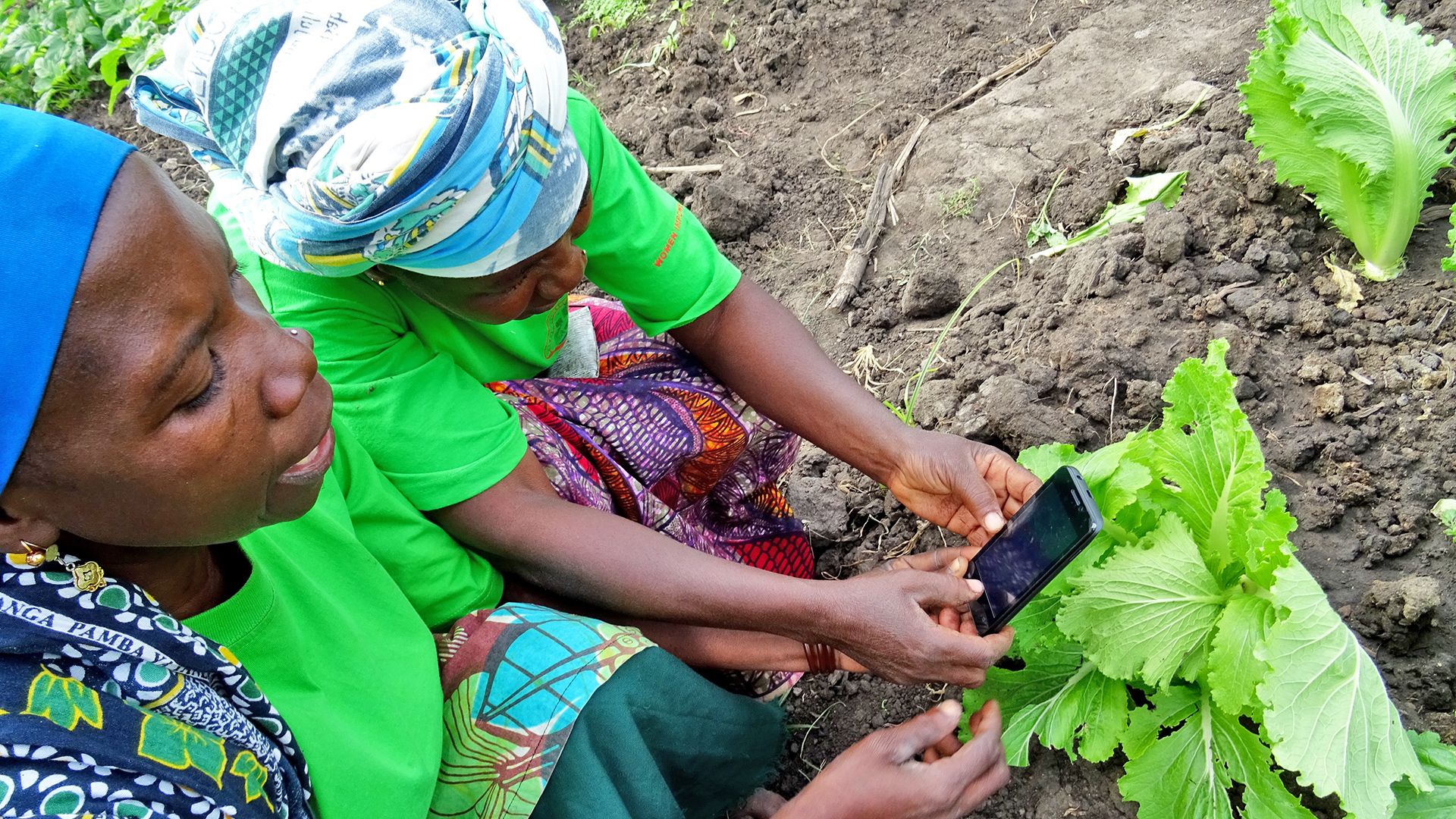
A crucial aspect of this research was the integration of information technology into agroecological practices. Three specially developed applications (apps) supported field research and significantly contributed to collecting, analyzing, interpreting and communicating data.
The «AgroEco Research» app allows for quick and systematic collection of field data and, most notably, the automized connection of this app with the appropriate statistical analysis tool (R) gives properly evaluated results in real-time while even still in the field. The «Ugunduzi» app gives farmers the opportunity to record and evaluate their own research data directly on their farms, enabling them to share their knowledge with each other. With the «Macho Sauti» app, farmers can quickly share their challenges by taking a photo of an incidence, recording an audio voice to explain the problem and sending the information to an internet platform where other farmers, agronomists, and scientists in Tanzania and other countries interact. Within a couple of days, the farmers receive advice on how to solve the problem.
Effective solutions for Cassava
The study results for cassava cultivation are particularly interesting. The results showed that locally adapted varieties such as Kiroba can yield higher returns, especially when grown in the lowland coastal regions of Tanzania.
Another finding is that labor-intensive and costly pest control methods may offer little benefit, especially when robust varieties like Kiroba are used. Therefore, making best use of diversity of crops is more promising than pest control. It seems that, especially for cassava, it is crucial to use locally well-adapted varieties.
Cassava is an important staple crop in Tanzania, thriving despite difficult conditions such as droughts and poor soils. It serves as a staple food for people, both in the form of flour, porridge, or snacks, and as leafy vegetables for proteins and vitamins. Despite its importance, the yield is low, and the government aims to triple cassava production by 2030.
Outcomes for maize cultivation
A surprisingly positive result of the study further showed that a good harvest of maize is possible on nutrient-poor soils when organic fertilizers are combined with legume intercropping, in our case, cowpeas. Combining different agroecological measures that improve the soil and increase biodiversity can be crucial for increasing maize production. This synergy has rarely been studied in research and offers a new way to increase maize yield in an ecological approach.
Promising path for all
The study demonstrates the effectiveness of agroecological practices in increasing agricultural production. It highlights the importance of locally adapted solutions and the need to invest in the development of resistant varieties. The results, supported by solid evidence from scientific sources, can be recommended to smallholder farming families, educational institutions, policymakers, and the general public.
Key findings:
- Soil improvement measures lead to better yields and offer further benefits. They conserve soil moisture, protect against floods and droughts, and promote soil health.
- Combining organic soil improvement with legume intercropping resulted in higher yields compared to when these practices were applied individually.
- Labor-intensive and costly biological pest control methods yielded mixed results. They require knowledge of the type and ecology of pests to be effective, which is lacking. To fully harness the benefits of biological pest control, much more research and consultation in the field of botany are needed.
Agroecology is a promising way to address the challenges of agriculture in Tanzania and to increase food security and livelihoods. «When implemented well, ecological farming has the potential to increase agricultural incomes. However, cultivation is complex, and smallholder farming families need in-depth knowledge of agroecological methods,» explains Angelika Hilbeck. The integration of information technological applications into agroecological research offers new possibilities to further improve efficiency and effectiveness while allowing the sharing of cultivation knowledge with other farmers.
A finding that also reflected in the perspective Miss Amina Mohamed of a farmer Bagamoyo district involved in the project: “I participated in the research work of SWISSAID and SUA using the Ugunduzi application. I established a baby plot at my household field where I tested the effectiveness of compost and mulching on the maize yield. I had two plots of maize intercropped with okra with and without soil amendments (compost and mulching). I harvested more yields from the treated plot compared to the untreated plot.
From there, I adopted the practice of using compost or manure in the whole field and luckily my agroecologically produced products are getting a good price at the market. But also, some of my neighbors have adopted agroecology after seeing it work on my research plots. Thanks to SWISSAID for engaging farmers in research activities so we can see things with our own eyes”, Miss Amina Mohamed, explains.
However, agroecological practices alone will not be sufficient to stimulate the much-needed transformation of food systems. Only when governments buy in and shift policies away from a green revolution approach can agroecology reach scale. Fortunately, Tanzania just made a step in this direction with its National Ecological Organic Agriculture Strategy, launched in November 2023. This move was not a surprise but the result of advocacy work in which SWISSAID, together with partners and allies, have engaged for years. However, there is no time to lean back. We must continue to advocate for and hold the government to its promise. Otherwise, the National Ecological Organic Agriculture Strategy is at risk of collecting dust in some drawers instead of being implemented.
Further links:
- ICT4 Agroecology: a participatory research methodology for agroecological field research in Tanzania, https://doi.org/10.1080/21683565.2023.2259828
- ICT4 Agroecology part I: outcomes for cassava production system, https://doi.org/10.1080/21683565.2023.2265318
- ICT4 Agroecology part II: outcomes for maize production systems, https://doi.org/10.1080/21683565.2024.2314048