
Walls of Strength - Protecting Farms in Dahan Khakrez, Afghanistan
In Parwan province, the village of Dahan Khakrez has turned the tide against recurring seasonal floods. Through the Food Security and Agricultural Sustainability for Livelihoods Improvement (FASL) project, funded by the Swiss Agency for Development and Cooperation (SDC) and implemented by the Aga Khan Agency for Habitat, community-led action and smart infrastructure, farmers are now safeguarding their land and livelihoods, proving that resilience in the agriculture and food sector is not just possible, but powerful.
AFS Newsletter - Article by
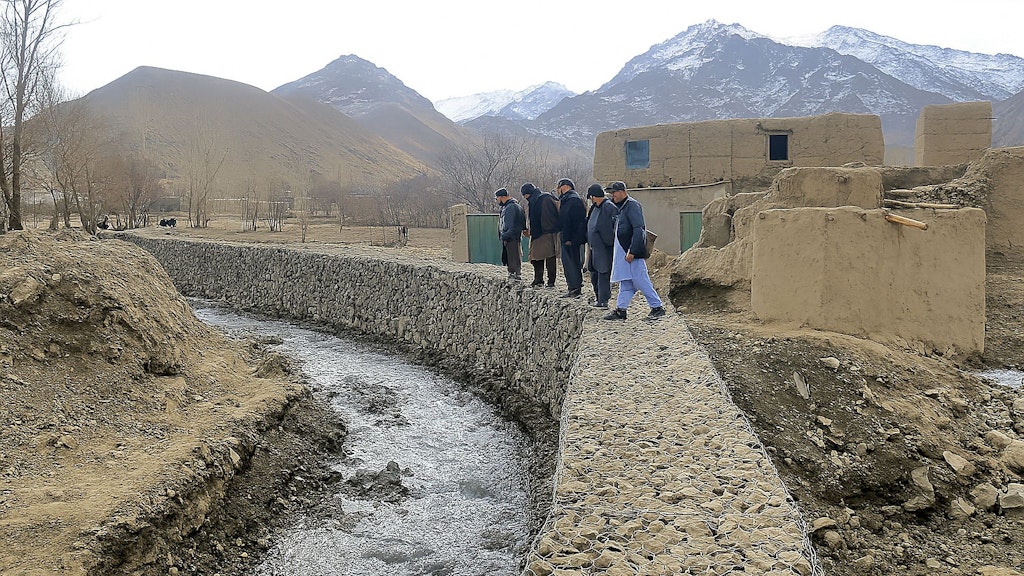
Dahan Khakrez, a village of 469 families in Surkh Parsa district, Parwan province, has long been vulnerable to recurring seasonal floods, rockfalls, and avalanches that threaten homes, farmland, and food security. The devastating flood of 2022 was a stark reminder of the fragility of rural livelihoods, leaving the community in fear and uncertainty. In response, the Food Security and Agricultural Sustainability for Livelihoods Improvement (FASL) project, funded by the Swiss Agency for Development and Cooperation and implemented by the Aga Khan Agency for Habitat, initiated a disaster risk reduction intervention by constructing gabion protection walls to shield the village from future hazards.
This effort was not only about infrastructure - it was a strategic investment in agricultural resilience and food system stability. Abdullah, a respected village elder, shared, “Our village was in constant fear. Floods destroyed our farmland and killed our animals. When FASL project came, it helped us identify the most vulnerable areas and acted quickly.”
FASL project empowered the community by creating local jobs, utilizing indigenous materials, and building technical skills. “Everyone participated actively, and the money invested went directly to our people,” Abdullah noted. The gabion walls now protect vital farmland, ensuring that crops can be planted and harvested without the looming threat of destruction.
This initiative has strengthened the village’s capacity to withstand future shocks, safeguarding both livelihoods and food production. The collaboration between the community, government, and implementing partners was key to its success. “This change was only possible because we worked together,” Abdullah emphasized.
Today, Dahan Khakrez stands as a model of resilience, where disaster preparedness, community engagement, and sustainable solutions have converged to protect agriculture, restore hope, and secure a more food-secure future.