
Promoting the WHO framework for Public Food Procurement Policies
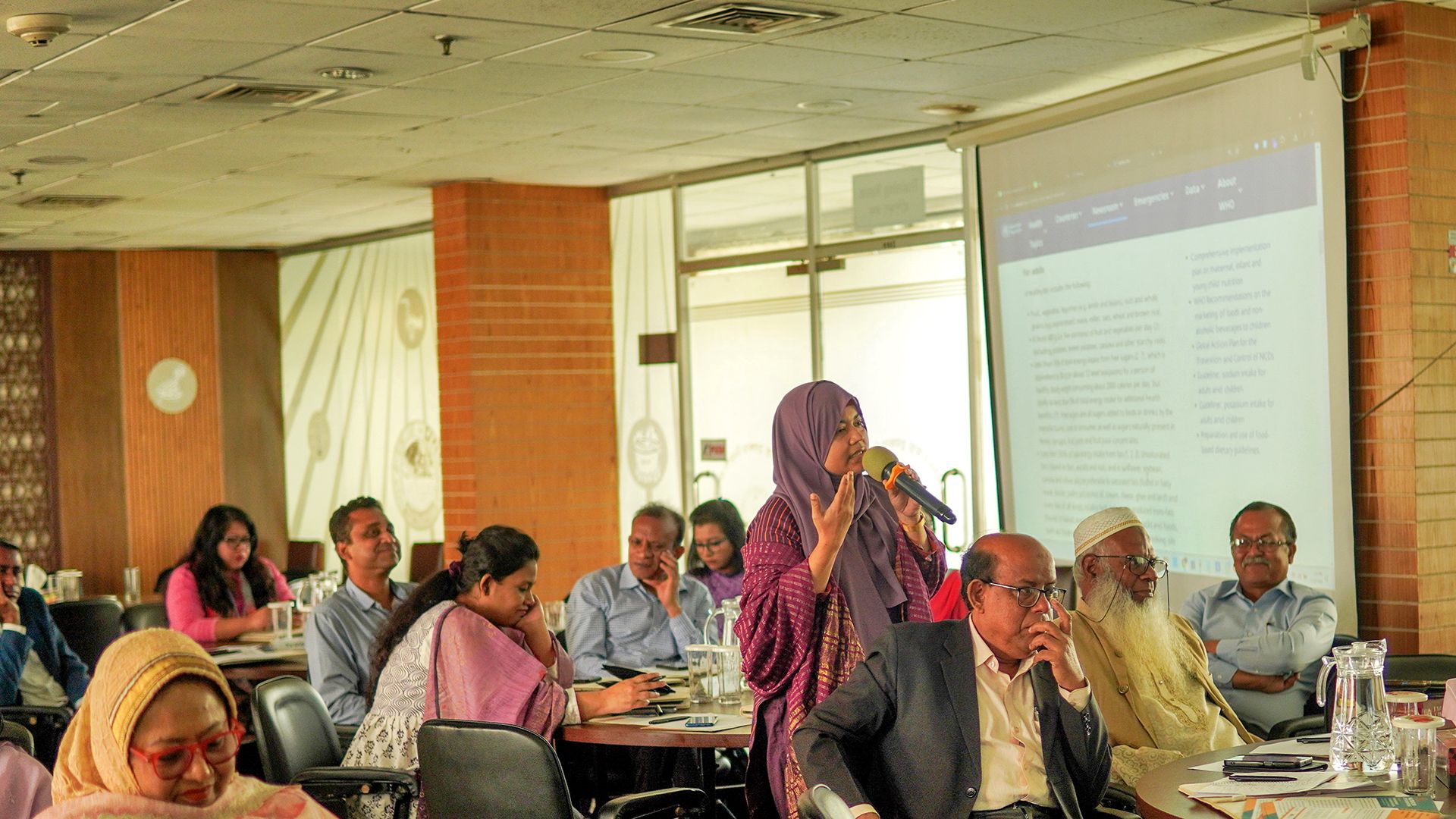
On 18 November 2024 a workshop was organised in Dhaka by the Bangladesh Food Safety Authority and the Nutrition in City Ecosystems (NICE) Project to examine the WHO Action Framework for Public Food Procurement Policies. The workshop debated the challenges faced by vulnerable urban populations to access diverse diets, and how public procurement could help to address this. Key discussions included forming a task force, policy advocacy, and promoting public procurement of nutritious, locally sourced foods to schools, and hospitals.
AFS Newsletter - Member Article by

NICE Project, Sustainable Agriculture Foundation Bangladesh
LinkedIn | Hafsa.khan@susagfoundation.org
The workshop took place at a period when Bangladesh is experiencing a growing health crisis where unhealthy dietary practices are the order of the day, mostly in urban areas. Currently, a large percentage of all deaths in the country are attributable to non-communicable diseases including cardiovascular diseases, diabetes, cancer, and chronic respiratory diseases. The contributing factors are eating adulterated and processed foods, lack of healthy and wholesome food options, and also ignorance regarding diets.
The workshop addressed the challenges of combating hunger and promoting good health in accordance with SDG 2 and SDG 3 by fostering policy discussions and actionable steps towards healthier diets backed by public food procurement. Attention was given to the WHO public procurement framework where government institutions, schools, hospitals, and other public facilities have a nutrition focus and serve locally sourced food.
The Chief Guest, Mr. Masudul Hasan, Honorable Secretary of the Ministry of Food; Bangladesh Government shared an insightful speech emphasizing the critical role public food systems can play in improving the health and well-being of the population. The keynote speaker, Mr. Hamidul Haq Khan, CEO of HK Consulting, presented an in-depth analysis of the WHO Action Framework. He explained how public food procurement systems, if designed and implemented effectively, can support the adoption of healthier diets, improve nutritional outcomes, and contribute to sustainable development. Dr. Farzana Akter Dorin, National Professional Officer, World Health Organization was in attendance to give more technical insights and expressed the possibilities of collaborative work in the future. She explained how the WHO framework underscores the importance of public food procurement policies in creating environments that promote healthy eating habits. Public food procurement refers to the process by which governments purchase food for institutions like schools, hospitals, and correctional facilities. By prioritizing nutritious, locally sourced food, these policies can reduce NCDs by ensuring healthier dietary options that lower the risk of diseases like diabetes, heart disease, and obesity, and can support agriculture & farmers by strengthening local food systems by sourcing from them. It can promote sustainability, improve health equity, and have an impact on the national economy. WHO framework guides governments in designing public food procurement policies to promote healthy diets. It focuses on policy development with clear nutrition criteria, implementation through training and collaboration, and monitoring and evaluation to assess and improve policy effectiveness.
The workshop concluded with key recommendations to advance healthy public food procurement in Bangladesh. It proposed forming a multisectoral task force with representatives from government, NGOs, the private sector, and communities to implement the WHO framework. Strengthening local food systems by linking procurement to sustainable farming was emphasized to ensure affordable, nutritious, and locally sourced food. Strategic advocacy for policy reforms prioritizing healthy diets and enhancing nutrition education in schools and institutions were also highlighted. The workshop marked a vital step toward addressing unhealthy diets, reducing NCDs, improving health equity, and strengthening food systems. Collaborative efforts from stakeholders will be essential in translating these recommendations into impactful actions. This initiative not only aligns with Bangladesh’s public health goals but also reflects its commitment to achieving the global SDGs, fostering a healthier and more sustainable future for all.
Related resources: