
Revitalizing Pomegranate Production in North Macedonia
The region of Valandovo in North Macedonia stands out as a prime location for cultivating pomegranates, olives, and persimmons, thanks to its unique climate and fertile soil conditions. The area benefits from a plentiful water supply from nearby rivers and irrigation systems, ensuring consistent hydration for the crops. These natural advantages, combined with the expertise of local farmers, have made Valandovo a key area for pomegranate cultivation in North Macedonia.
AFS Newsletter - Feature by
Increasing Market Employability Program - IME
The Palladium Group
ema.jakimovska@thepalladiumgroup.com
The region of Valandovo in North Macedonia has been known for producing pomegranates since the 1920s under former Yugoslavia. This region stands out as a prime location for cultivating southern fruit crops (pomegranates, olives, and persimmons) thanks to its unique climate and fertile soil conditions. The area benefits from a plentiful water supply from nearby rivers and irrigation systems, ensuring consistent hydration for the crops, thus making the region a key area for pomegranate cultivation in North Macedonia.
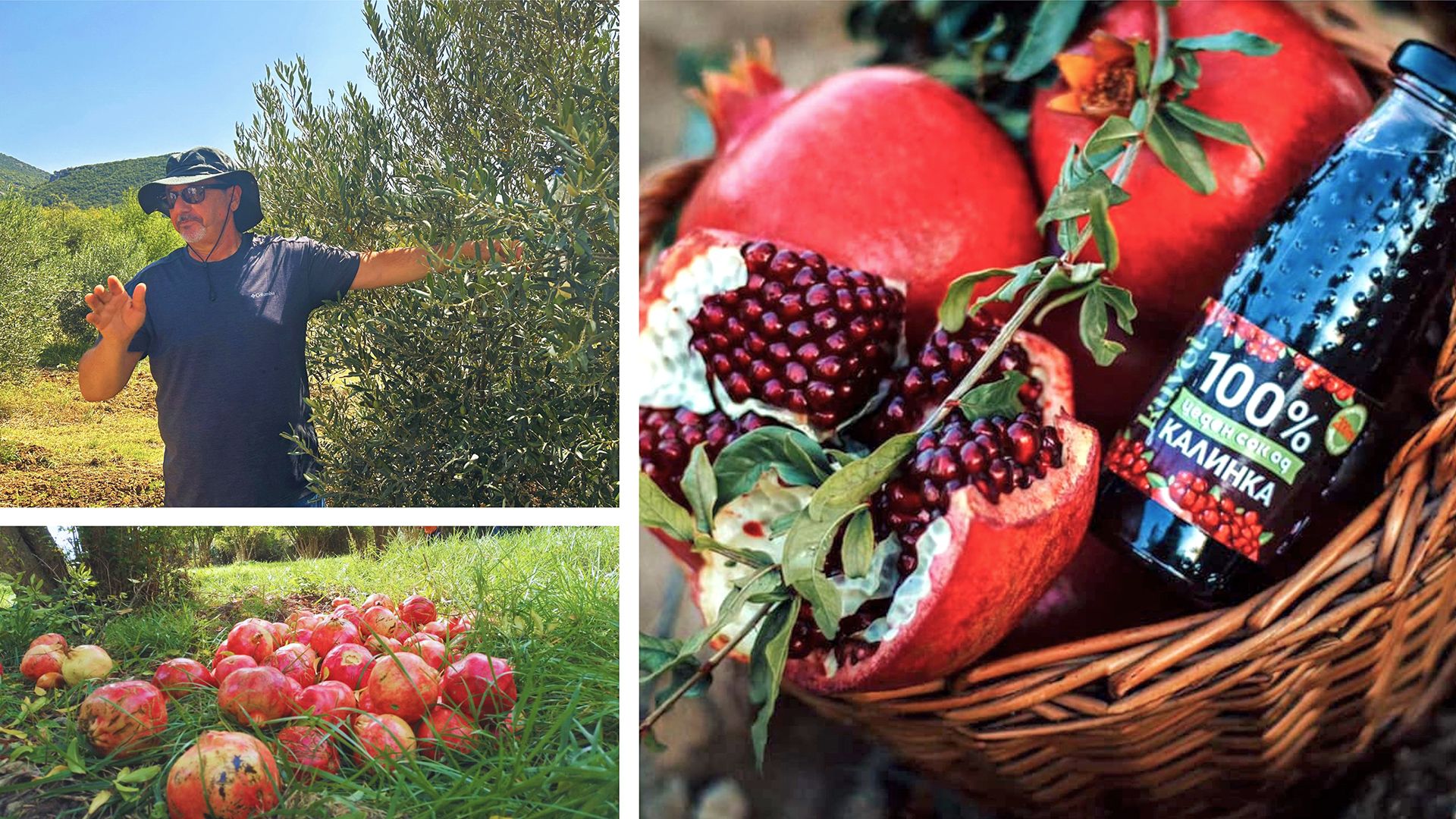
However, over the past few decades, due to socio-economic challenges, lack of organized market, use of old crop varieties, and no unified cooperative approach, the region's pomegranate industry struggled. The recent changes and a greater engagement of the private sector in introduction of new varieties and supporting farmers as well as establishing processing facilities revived cultivation, enabling better production and sale of pomegranate products. ‘ABG Investment’ operating under the joint brand ‘KUVET’, emerged as a leading company for acquiring and processing pomegranates, leading to the production of exceptional quality pomegranate juices. Switzerland through its Increasing Market Employability Programme – IME implemented by the Palladium Group supported ‘ABG Investment’ to implement the comprehensive project Revitalizing Pomegranate Production in North Macedonia: A Journey of Renewal. To strengthen the project's impact, the Private Sector Engagement (PSE) modality was used, where the private sector partner ‘ABG Investment’ played a crucial role in helping farmers increase their competitiveness and economic stability.
The initiative aimed to modernize the production processes for both organic and conventional pomegranates, focusing on the cultivation of high-quality seedlings, introduction of new varieties, and implementing expert agrotechnical measures guided by experienced international and local specialists. By integrating cutting-edge technology, this intervention through a series of activities helped enhance the quality and quantity of processed pomegranate products. With this holistic approach in mind, as part of the capacity building efforts, the company was visited by an experienced agronomist and consultant from Turkey that paved the way for local farmers to adopt advanced techniques and innovative approaches to address challenges unique to pomegranate farming in the region.
The PSE modality focused on collaboration among diverse stakeholders, specifically local farmers, agronomists, industry experts, and community leaders. By creating a cooperative environment, it ensured that the project’s objectives were aligned with the needs of all involved parties.
New Agricultural Techniques to Overcome Old Challenges
Valandovo’s pomegranate farmers have long cultivated local varieties that flourish in the regional climate. However, these varieties lack the durability required for export as fresh produce, necessitating the introduction of new export-ready varieties like ‘Hedges’ and ‘Wonderful’ to better satisfy international demand. While the local varieties are celebrated for their flavour, they are not ideal for fresh export, whereas international varieties are more fragile and demand specific agronomic measures.
Consultant recommendations emphasized enhancing irrigation systems and meticulous cultivation practices, which could revolutionize the region’s export potential. They also provided practical techniques for tackling common agricultural challenges, from proper irrigation methods to pest and disease prevention. These improvements have led to healthier crops, optimized resource use, and increased yields, thus enabling farmers to make their cultivation practices less costly, more profitable and sustainable.
Study Visit to Adana – Powerful Learning Experience
The Study Visit to Adana, Turkey, in August, served as a powerful learning experience for farmers. By observing advanced agricultural methods firsthand, farmers gained invaluable insights into the long-term benefits of careful pomegranate cultivation. This exchange of knowledge with Turkish farmers and processors was crucial for their further development, as it highlighted the potential to expand the market for pomegranates and open new channels for purchase, thus enhancing the quality and yield of their production. Additionally, this collaboration underscores the importance of international cooperation, continuous learning, and market expansion in advancing agricultural development. This learning experience accelerated farmers’ progress, providing insights that would have taken decades to acquire independently.
Promising Outcomes and Future Prospects
Farmers in the Valandovo region are well-positioned to achieve significant growth in pomegranate production and processing, driving them closer to a more profitable and sustainable agricultural future. All undertaken activities have led to tangible benefits, enabling cost savings and greater efficiency in agricultural practices. Farmers have refined their use of fertilizers and protective agents, and have reduced expenses while cultivating healthier, more resilient crops.
This intervention is driving a significant change in how agriculture operates and grows and is having a big impact on revitalizing Valandovo region. While the PSE modality is still relatively new in North Macedonia, it holds great potential for transforming the agribusiness sector. The Swiss funded Increasing Market Employability Programme - IME is one of the leading programmes championing this approach in the country, demonstrating its effectiveness in fostering great partnerships, sustainable development and economic resilience.