
Tackling soil acidity in Ethiopia and beyond
Many African countries suffer from soil acidity, which involves large yield losses for farmers. Lime application is an effective intervention to reclaim soil fertility. In Ethiopia more than 20 million hectares are moderately or severely acid. Liming these areas requires high investments, but additional benefits through yield gains will clearly exceed cost. SDC is supporting the Global Green Growth Institute (GGGI) as it develops a new policy framework that allows countries to scale up financial resources. While Ethiopia is the focus country, the project aims to reach out to other African countries to multiply its impact.
AFS Newsletter - Member Article by


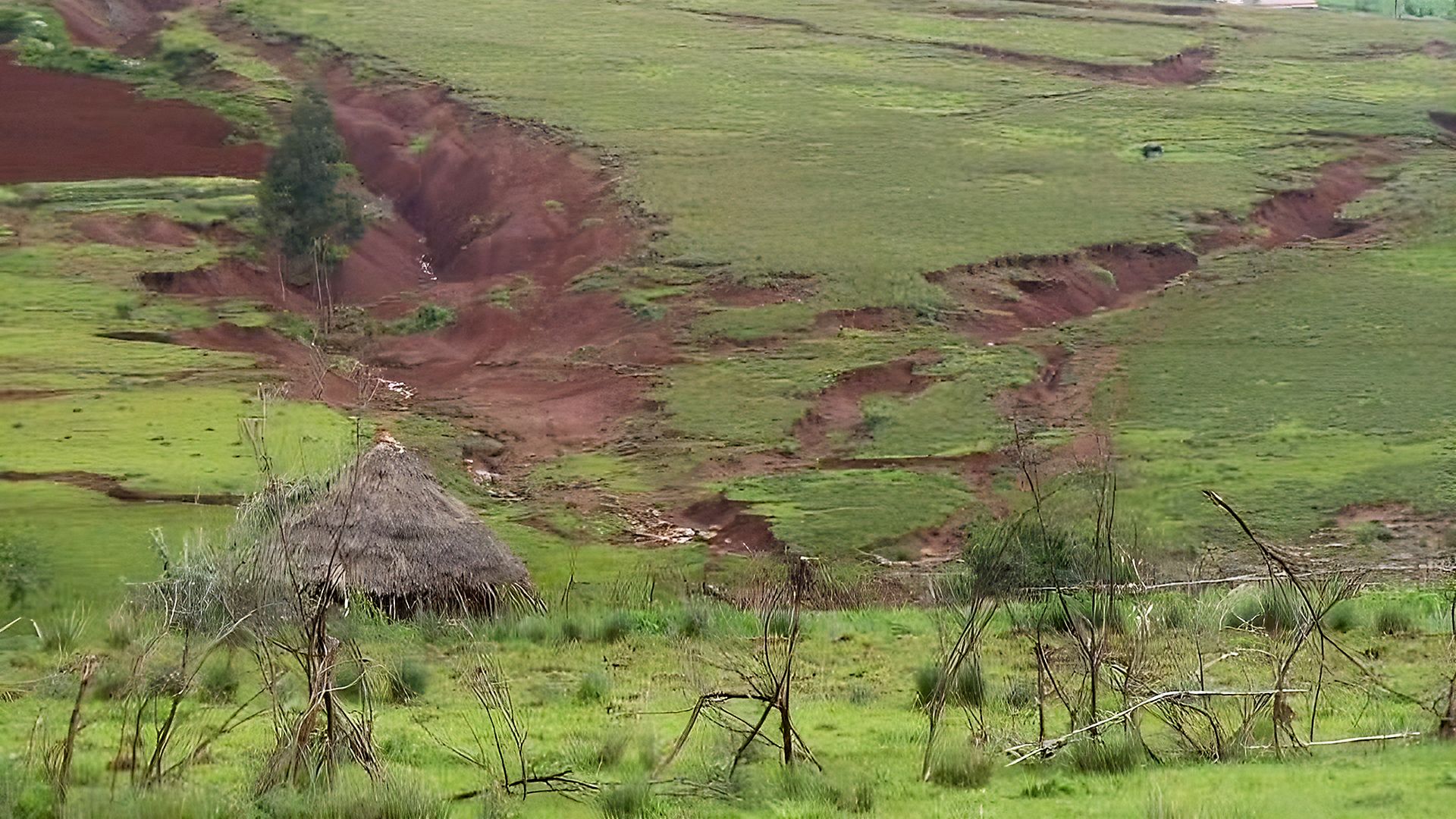
Much like other countries in Africa, Ethiopia faces severe soil acidity. In particular, 4 million hectares of agricultural land (approximately the area of Switzerland) are affected by severe soil acidity while another 10 to 20 million hectares face moderate acidity. Soil acidity is mostly caused by use of nitrogen fertilizer and exacerbated by rainfalls and erosion. In acid soils, soil nutrients are either missing or fixated with other minerals such that crops cannot benefit from them. As a result, farmers cultivating acid soils face significant output losses.
Agricultural lime is an effective cure for soil acidity, even more so when it is part of integrated soil fertility management that focuses on building and maintaining organic matter on soils. Evidence shows that yields increase by up to 70 percent already one year after lime application. At the same time, costs are significant as well. In Ethiopia, total costs of reclaiming the 4 million hectares of highly acid soils are an estimated USD 2 billion. Hence, even though benefits of liming soils clearly exceed costs, the latter are still a high barrier for small-scale farmers.
Mobilizing the immense financial resources required for large-scale soil reclamation is nearly impossible if they are to come from international donors or Ethiopia’s treasury. This is why the Global Green Growth Institute (GGGI) has developed a financing mechanism thanks to which this financial bottleneck can be overcome. By establishing a lime investment fund and endowing it with a loan backed by the Development Bank and the National Bank of Ethiopia, new money will be created. This money can finance liming activities ranging from production, transport, and application of lime in the field. Once farmers’ incomes have increased due to reduced soil acidity, they pay a small share of this income growth via the already existing land tax to cover the cost of the liming activity. The investment fund recovers its outlays and is able to repay its loan. The money created initially is destroyed again. This is how the country can finance the reclamation of its soils out of its own means without relying on enormous amounts of tax money or foreign finance.
While such an approach is familiar to many economists, it is new to most policymakers and stakeholders along the lime supply chain. Therefore, establishing this financing mechanism as a policy framework requires a lot of policy dialogue and stakeholder consultation by including the relevant ministries, financial institutions, experts, farmers, lime crushers, and transport companies.
To prepare the ground for this new approach, SDC is supporting GGGI with a grant, which co-funds a project implemented jointly with Deutsche Gesellschaft fuer Internationale Zusammenarbeit (GIZ), while the Gates Foundation, and the agricultural research center, CIMMYT, provide technical inputs. The project started in May 2024 and lasts until June 2025. The project team will use the provided resources to reach out to stakeholders, to develop the detailed policy frameworks, and to prepare a larger program for implementation. In parallel, the project team will also reach out to partners and stakeholders in other African countries suffering from soil acidity and intends to do analogous preparatory work in countries where interest is highest.
Futher links:
CIMMYT's soil acidity database