Private sector engagement
To achieve lasting impact, all market actors must be involved in global efforts to make food systems more sustainable, resilient, inclusive to ensure healthy diets for all. Read more, including some key resources and latest news.

Context
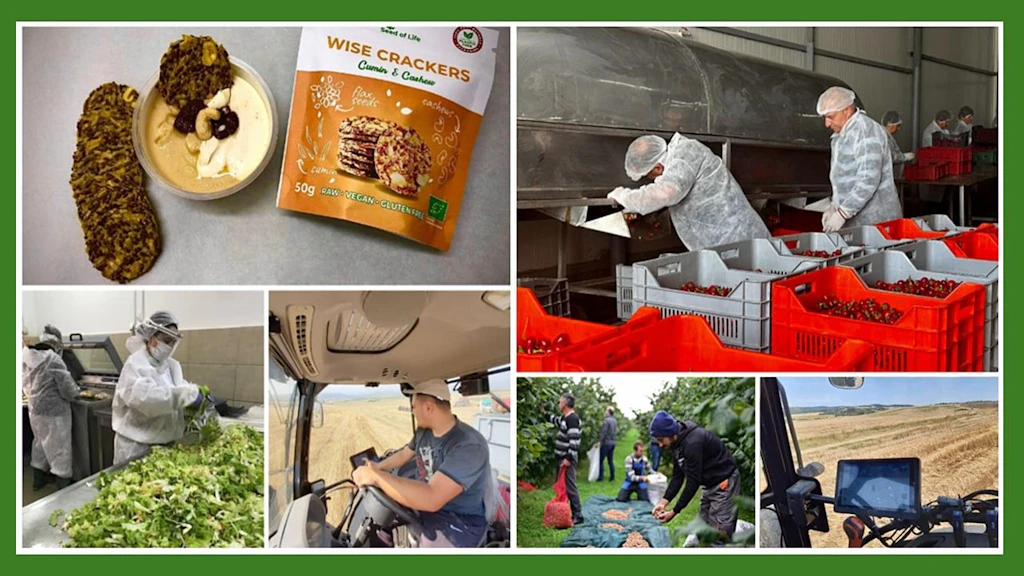
The private sector is omnipresent within a food system, and can entail all forms and scales of activity, from farmers and local small and medium-sized enterprises to multinational firms. In order to develop a sustainable and lasting impact, it is imperative that both market actors and private actors be involved in global efforts to make food systems more resilient, sustainable, efficient and inclusive to ensure healthy diets for all.
On the one hand, private sector engagement in food systems, especially in low- and middle-income countries, needs to be framed by strong accountability mechanisms. Switzerland supports the strengthening of private sector norms and regulations through standard-setting bodies and capacity-building for government to shape better food environments.
On the other hand, the private sector should be one of the driving forces for economic development and sustainable, healthy and inclusive food systems. As such, Small and Medium Entreprises (SMEs) need to be mobilised to bring to domestic markets sustainably produced diversified and nutritious food for low- and middle-income consumers, and to be able to contribute to local food systems innovations.
Just to achieve SDG 2, there is currently an investment gap of USD 33-50 billion per annum which development finance alone cannot aspire to fill. Accordingly, investment pathways must be developed, by demonstrating that there is also a business case for investing in food system transformation at various scales. Switzerland is as such strongly engaged in supporting and developing better financing schemes and modalities, notably via dialogues and partnerships with international financial institutions, notably IFAD, and inclusive-responsible impact-first funds which enable agroecological, nutritious-sensitive and competitive rural-urban value chains.
Key resources
Thematic Integration Brief on food systems & private sector (upcoming)
Knowledge Hub, SDC A&FS Network
Market systems development
SDC Education and Economy Network (see guidances at the bottom of the page)
International Fund for Agricultural Development (IFAD)
IFAD’s private sector engagement
A guide to investing in landscape restoration to sustain agrifood supply chains
IUCN, 2023
Principles for Responsible Investment in Agriculture and Food Systems
CFS-RAI, 2014